
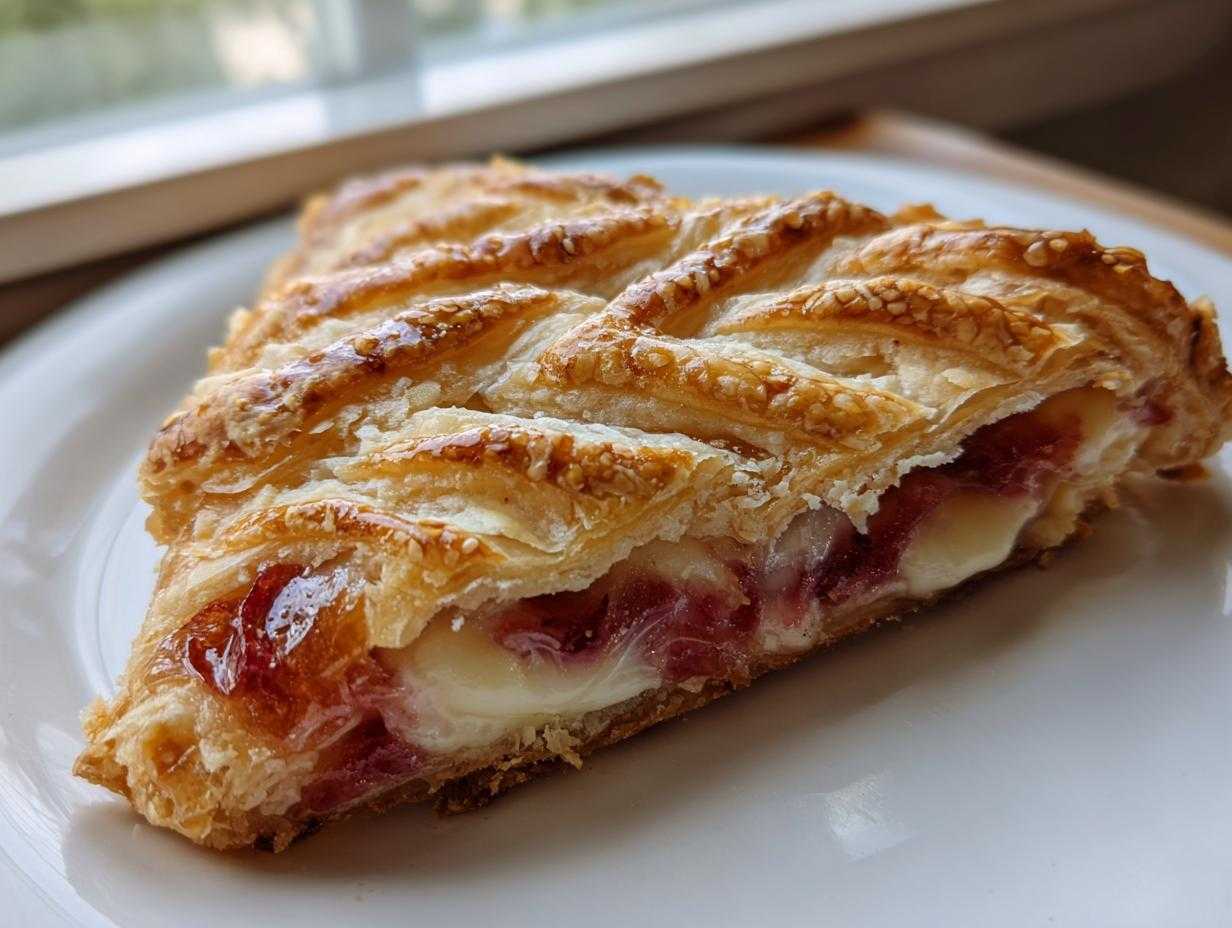
Forget the boring breakfast routine, friends! If you’re ready to truly elevate your weekend brunch game, you’ve come to the right spot. I absolutely live for those moments when a simple pastry looks like it came straight from a high-end Parisian bakery, but you know you made it yourself starting with a store-bought cheat sheet. That’s where this incredible Rhubarb Cream Cheese Danish (Chevron) comes in. Seriously, the combination of sharp, sweet rhubarb against that impossibly rich, tangy cream cheese filling tucked into buttery, flaky layers? It’s perfection.
I’ve spent years mastering how to handle puff pastry without stressing out, and I’m here to tell you that the secret weapon isn’t the dough—it’s the assembly. We’re going to tackle that gorgeous, zigzag fold to create the signature chevron look. Trust me, once you see how easy it is to execute this stunning design, you’ll be making these tangy fruit and cream cheese treats all spring long.
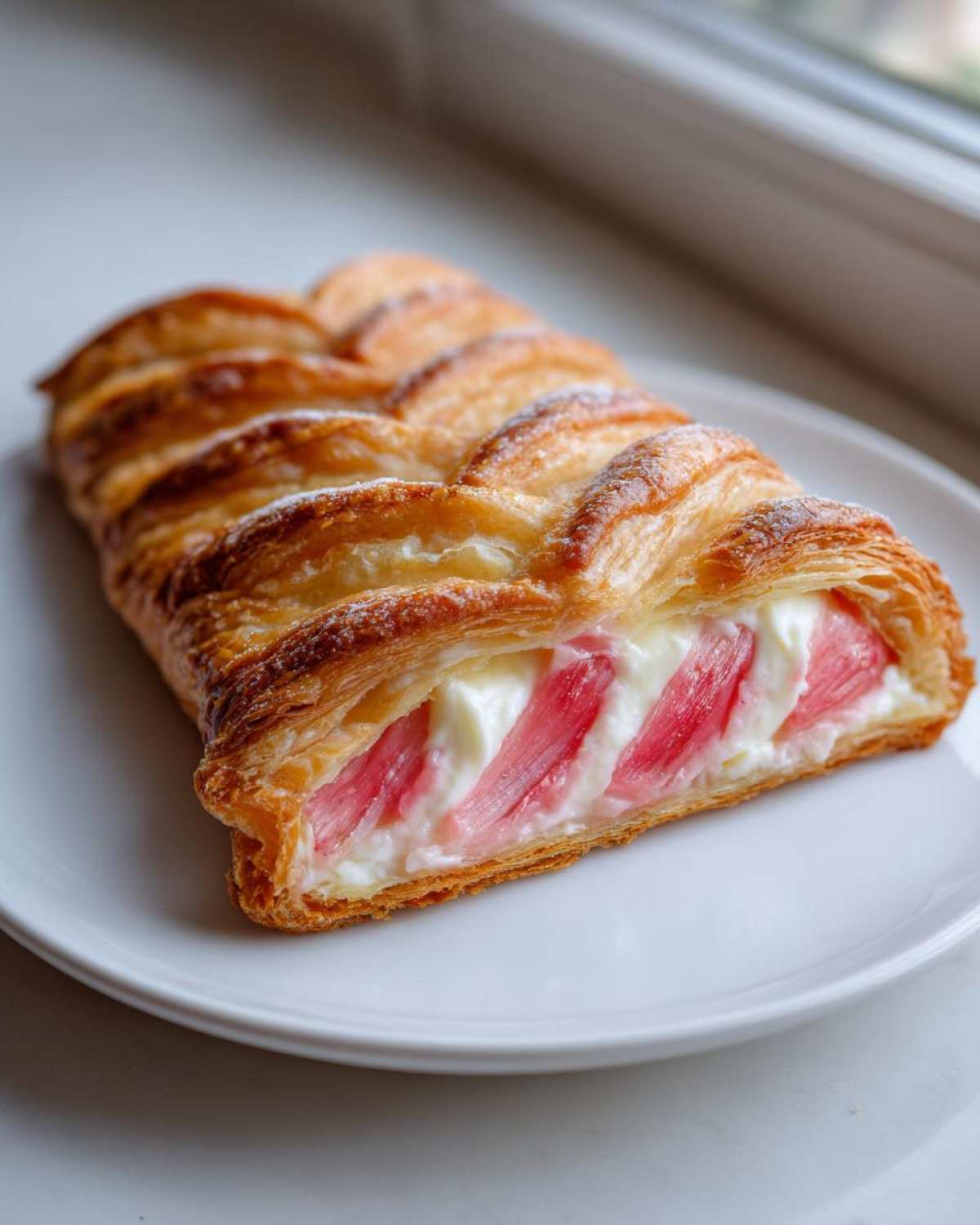
Why This Rhubarb Cream Cheese Danish (Chevron) Recipe Works
I know what you’re thinking: these look complicated! But I promise you, this recipe hits that sweet spot where impressive presentation meets approachable technique. It’s all about planning ahead and combining the right textures. We lean hard into balancing those bright spring flavors against the richness of the dairy and butter—it’s why people always ask for this recipe.
-
Perfectly Balanced Sweet and Tangy Flavor Profile
The slight pre-cooking of the rhubarb with just a touch of sugar and cornstarch tames its tartness perfectly. It sinks right into the dense cream cheese filling, creating a two-note flavor experience that screams springtime.
-
Achieving the Signature Chevron Fold Pastry Tutorial
This is the fun part! The specific way we cut and fold the pastry strips ensures the filling is beautifully showcased in that elegant zigzag pattern. You don’t need to roll out laminated dough from scratch to get an artisan look this good. If you ever want to use rhubarb in something warmer, check out my strawberry rhubarb crisp while you’re waiting for the filling to cool.
Ingredients for the Rhubarb Cream Cheese Danish (Chevron)
When you’re gathering your supplies for these elaborate-looking treats, don’t skip over the quality of your puff pastry! Since we’re relying on an all-butter sheet, you get that deep, rich flavor that yeast dough can sometimes lack in a quick bake. Remember, organization is half the battle here, so I like to mix up the three components separately before I even think about assembling them.
It might seem like a lot of separate mixing, but trust me, keeping the textures distinct until the very end helps achieve the absolute best results for the pastry and fillings. I always have my trusty cream cheese frosting recipe handy for inspiration when I’m whipping up the Danish filling!
For the Tangy Rhubarb Topping
This part needs to cook down just a tiny bit so it doesn’t water out your delicate pastry layers. You’ll need:
- 1 cup fresh rhubarb, finely chopped
- 1/4 cup granulated sugar (just for the rhubarb!)
- 1 tablespoon cornstarch
- 1/4 cup water
For the Best Cream Cheese Filling for Danish
Make sure your cream cheese is truly soft—like, leave-it-out-for-two-hours soft. No lumps allowed, this has to be silky smooth!
- 8 ounces cream cheese, softened
- 1/4 cup powdered sugar
- 1 teaspoon vanilla extract
For Assembly and Glaze
This is the structural part that gets beautifully golden right before your eyes:
- 1 package (14.1 ounces) all-butter puff pastry, thawed
- 1 large egg, beaten (for egg wash)
- 2 tablespoons milk (to thin the egg wash)
- For the drizzle: 1/2 cup powdered sugar and 1 tablespoon milk or lemon juice
Buttery Flaky Pastry Instructions: Dough Preparation
Okay, the fillings are ready, but now comes the critical part if you want that famous artisan pastry puff: handling the puff pastry itself. This is where people panic, but trust me, if you keep things cold, the pastry does all the hard work for you. Keep your bowl of cream cheese in the fridge while you work on the rhubarb; we want zero mixing between the two until the very last second.
Pre-Cooking the Rhubarb Filling
First things first, we need to cook down that rhubarb just enough. Pop the chopped rhubarb, the initial sugar, cornstarch, and water into a little saucepan. You cook it until it thickens up—maybe five to seven minutes. When it coils nicely off your spoon, you’re done! Pull it off the heat right away.
This is my absolute biggest tip for any fruit Danish: you MUST let this rhubarb mixture cool completely before you go anywhere near the pastry. Seriously, I cool mine in the fridge while I prep the other items. Warm, juicy fruit against cold, laminated dough? That’s a recipe for melted butter and sad, flat puff pastry. Don’t let your hard work melt away!
Mixing the Cream Cheese Filling
While the rhubarb is chilling out, it’s time for the fat layer—the cream cheese! Get that softened block into a bowl. You have to beat it until it’s totally, utterly smooth. I mean it, if you can feel any resistance when you stir, keep going! We are aiming for something that feels like thick, sweet frosting.
Scrape down the sides often, mix in your powdered sugar and that lovely vanilla extract, and then set it aside near the rhubarb so they’re both at a decent temperature when it’s time to layer everything up. If you want to read about other great ways to make quick breads without a lot of fuss, I have a great French bread recipe that uses wild temperature tricks.
Assembling the Rhubarb Cream Cheese Danish (Chevron)
This is where our elegant brunch pastry comes to life! Remember, we are working with cold puff pastry now, so move quickly but deliberately. We are layering the fillings down the center, and then we get to the fun part—shaping that signature look. If your kitchen is warm, don’t sweat it; just work fast!
Cutting and Preparing Strips for the Chevron Fold Pastry Tutorial
Take your sheet of puff pastry and cut it lengthwise right down the middle. Now you have two long pastry ribbons, and you’ll repeat the filling process on both. Spread half of your cream cheese mixture right down the center of one strip. Make sure you leave that comfortable 1-inch border all the way around, okay? We need that margin to seal the edges later.
Next, gently spoon half of your perfectly cooled rhubarb filling right over that cream cheese layer. Try to keep the filling contained within that perimeter. Repeat this exact layering process on your second strip. Now, take a sharp knife—not a serrated one!—and cut each filled strip into roughly 2-inch wide rectangles. You should have four filled pieces total.
Here’s the trick for the visual impact: on the first rectangle, start making diagonal cuts from the edge of the filling right out to the edge of the pastry. You want those cuts about a half-inch apart. Crucially, stop cutting when you hit the edge of the filling. You are cutting strips on *both sides* of that central filling line, but you must leave the filling itself uncut!
Folding the Twisted Cream Cheese Pastry Shapes
This is the moment of truth for that striking look! Take your first cut rectangle. Starting at one end, you’re going to fold one of the cut strips over onto the filling, pressing just gently to anchor it. Then, take the strip right next to it and fold it over in the opposite direction. See how it creates a little zigzag? That’s your chevron starting!
You alternate the folding pattern all the way down the strip. Fold the left strip across, then the next right strip across, and so on. It sounds complicated, but your hands will figure out the rhythm of the Chevron Fold Pastry Tutorial instantly. Make sure you press the little exposed ends gently onto the center so they don’t just pop open while baking. Once you get the hang of it, you’ll want to practice a few scrap pieces first, but honestly, these twisted cream cheese pastry shapes are so impressive for just a few little folds.
Baking Your Rhubarb Cream Cheese Danish (Chevron)
We’re almost there! After all that folding work, we need to ensure we bake these beauties until they’re flaky, not soggy. This step requires a little patience—mostly waiting for the oven to get hot enough and then leaving them alone while they puff up!
First, get your baking sheet lined with parchment paper; this is non-negotiable for puff pastry, trust me. Next, whisk that one egg with the two tablespoons of milk. This is your egg wash. You just want a light coating brushed over the exposed pastry edges. Don’t let the wash drip too far down into the seams of your chevron folds—that can make the layers stick together instead of lifting!
Now, here is a pro tip I learned the hard way when testing out these elegant brunch pastry ideas: Chill them! After you’ve brushed on the egg wash, pop the whole tray into the freezer or fridge for about 15 minutes. This quick chill makes the butter in the pastry super firm again, guaranteeing maximum flaky separation when they hit the heat. It really helps maintain those sharp folds.
Preheat your oven to 400°F (200°C). Once they’re cold and the oven is hot, slide them in. Bake them for 18 to 22 minutes. You’re looking for deep golden brown color and puffiness all around. If the tops look done but the pastry edges still seem pale, just turn the oven down slightly and let them bake a few more minutes. Perfect finish!
Finishing Touches: Glazing the Homemade Rhubarb Danish Recipe
Once those beautiful chevron pastries come out of the oven, the hard part is done, but we can’t forget the final flash of sweetness!
You want to let them cool just slightly, maybe five minutes on the pan, before you drizzle them. If you glaze when they are piping hot, the sugar melts right into the pastry and disappears. If you wait too long, it will just sit there in a powdery lump. A slightly warm pastry is the perfect temperature for this.
For the glaze, it’s super simple, but getting the consistency right is key to that fantastic drizzle effect. In a small bowl, whisk together that remaining half-cup of powdered sugar with just one tablespoon of liquid. I usually use milk, but sometimes I swap in lemon juice if I want the tanginess to really pop against that rhubarb. You want a fairly thin, pourable mixture—almost like heavy cream, but thicker.
If it looks too thick, drizzle in milk or juice a half-teaspoon at a time until you reach that perfect drizzly texture. Then, use a small spoon or even a fork to zigzag the glaze back and forth across the top of your danishes. If you’re feeling extra fancy, you can peek at how I make my super-fluffy vanilla frosting—though for these vanilla buttercream frosting recipe techniques, you might want to try a thin layer instead of a thick frosting!
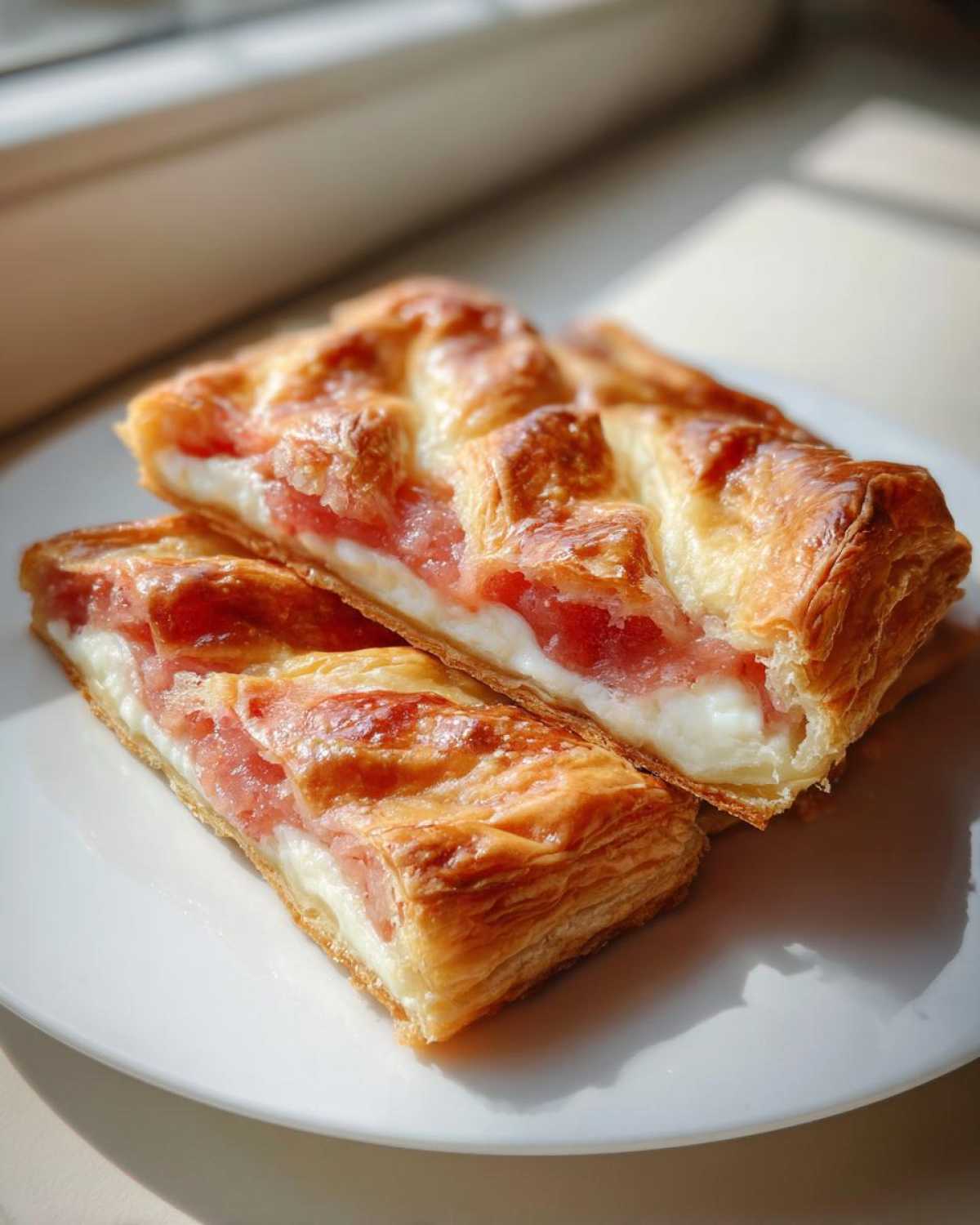
Tips for Success with Artisan Breakfast Pastries
I love baking things that look difficult but are actually quite manageable with a couple of little cheats, and these danishes are the perfect example! When dealing with puff pastry and fruit fillings—especially juicy ones like rhubarb—moisture control is the absolute game-changer. These tips are what separates a nice pastry from one that truly flakes apart beautifully on the plate.
Preventing a Soggy Bottom in Your Rhubarb Cream Cheese Pastry
We talked about cooling the rhubarb, but I have one more trick for that dreaded soggy bottom. After you spread the cream cheese layer down the center of your pastry strip, grab a small bowl and beat *one egg white* by itself until it’s just frothy—don’t whip it to stiff peaks! Before you spread the rhubarb mixture on top of the cream cheese, brush that little bit of egg white right onto the cream cheese layer.
The egg white acts like an invisible barrier. It sets up faster than the rhubarb filling cooks, creating a seal that locks moisture inside the filling where it belongs, rather than letting it seep down and steam-cook the bottom of your buttery pastry. It’s such a simple step, but wow, does it make a difference in keeping these tangy fruit and cream cheese treats crisp!
Working with Puff Pastry: Temperature is Key
When you buy that all-butter puff pastry, it comes folded up tight, right? Those folds are layers of butter separated by dough. If that butter gets warm, it mixes right into the dough, and boom—you lose loft. You want those layers to stay separate so they trap steam and puff up high!
If you are having a warm day, or if you just work slowly, don’t hesitate to put the entire sheet of dough, or even the filled strips, back into the fridge for 10 minutes. Let that butter firm back up. If you’re assembling and the pastry starts getting ‘sticky’ or soft where it should be slightly yielding, stop! Chill it. It’s the biggest secret to mastering any buttery flaky pastry at home without having to laminate it yourself.
Storage & Reheating Instructions for Rhubarb Cream Cheese Danish
So, you made a dozen of these gorgeous pastries, and naturally, you have leftovers! Don’t worry, these hold up pretty well, but you do have to treat them gently, especially since they have that lovely glaze on top.
If you have made them plain—without the glaze—they are best stored in an airtight container at cool room temperature for up to two days. I wouldn’t stack them directly on top of each other, though; maybe put a sheet of parchment paper between them if you have to pile them up. The glaze, honestly, is best applied right before serving because that powdered sugar crust can get a little sticky if it sits in the humidity of a container overnight.
If you glazed them, you can still keep them at room temp for about a day, but they might get a bit soft. For longer storage, wrap them individually in plastic wrap and keep them in the fridge for up to four days. That 400-degree oven did a great job setting the pastry, but refrigeration is going to soften that butter up again.
Reheating is absolutely key to bringing back that bakery-fresh snap! Forget the microwave entirely—it turns puff pastry into chewy rubber. You want to use a low oven or a toaster oven.
Set your oven to just 300°F (150°C). Pop the danish directly onto a baking sheet. Heat them for about 5 to 7 minutes. You’re not cooking them; you’re just gently warming them through and letting the heat evaporate any trapped moisture in the pastry layers. They come out much crisper and wonderfully flaky again. It really gives you that second-day magic when you’re looking for a quick treat!
Frequently Asked Questions About This Danish Recipe
I get so many questions every time I post these chevrons on social media, and usually, they come down to substitutions or technique. Don’t be intimidated by the folding process; if you’re nervous about committing your whole batch to the zigzag pattern, I totally get it!
Baking should always be fun, and these rhubarb muffins with Greek yogurt are proof that even simple ingredients can make for amazing spring bakes. Let’s tackle the most common things folks ask me when they put together these wonderful sweet rhubarb dessert breads!
Can I use frozen rhubarb instead of fresh for this Rhubarb Cream Cheese Pastry?
Oh yes, absolutely you can, especially if fresh rhubarb is out of season! The good news is that since we pre-cook the rhubarb anyway, it handles the transition really well. Just make sure you don’t thaw it first. Toss the frozen rhubarb straight into the saucepan with the sugar, cornstarch, and water.
You will need to cook it for a little longer—maybe an extra minute or two—just to get rid of all that icy water and let it thicken up properly. Remember the golden rule: it still has to be completely cool before it meets the best cream cheese filling for Danish! You want to ensure that moisture is locked in, not steamy.
What is the best way to practice the Chevron Fold Pastry Tutorial?
This is such a smart question! If you’re looking at that pattern and thinking, “No way my hands can do that,” I’ve got the perfect low-stakes solution. Before you chop up your four filled pastries, take one of the scraps left over from trimming your strips (you usually have a couple of skinny ends). Cut that scrap into a small, filled segment and practice the alternating fold just on that tiny piece.
Once you see the zigzag ripple naturally appear as you alternate folding one strip over the next, you’ll get the muscle memory for the larger pieces. It’s all about alternating sides. Really, once you’ve done one, the rest are just repetitions!
Can I substitute the puff pastry with a yeast dough?
You certainly *can*, but I have to warn you, you are making a very different pastry then! When you substitute yeast dough for puff pastry in this recipe, you’re moving away from that delicate, layered shatter and moving toward a richer, slightly chewier texture, less like a Danish and more like a sweet roll. It’s still delicious, especially with these flavors, but you lose the airy flakiness that makes the chevron shape hold up so well.
If you’re switching doughs, you’ll need to look up specific timelines for yeast dough proofing, as it will drastically increase your total time. For this particular look, sticking to the all-butter puff pastry is the best way to nail the presentation required for these how to make artisan breakfast pastries.
Print
Rhubarb Cream Cheese Danish (Chevron Fold)
- Total Time: 55 min
- Yield: 8 servings
- Diet: Vegetarian
Description
A recipe for flaky pastries filled with sweet-tart rhubarb and rich cream cheese, assembled using a distinct chevron folding technique.
Ingredients
- 1 package (14.1 ounces) all-butter puff pastry, thawed
- 1 cup fresh rhubarb, finely chopped
- 1/4 cup granulated sugar (for rhubarb)
- 1 tablespoon cornstarch
- 1/4 cup water
- 8 ounces cream cheese, softened
- 1/4 cup powdered sugar
- 1 teaspoon vanilla extract
- 1 large egg, beaten (for egg wash)
- 2 tablespoons milk (for egg wash)
- 1/2 cup powdered sugar (for glaze)
- 1 tablespoon milk or lemon juice (for glaze)
Instructions
- Prepare the rhubarb filling: Combine chopped rhubarb, 1/4 cup granulated sugar, cornstarch, and water in a small saucepan. Cook over medium heat, stirring constantly, until the mixture thickens and the rhubarb softens slightly, about 5 to 7 minutes. Remove from heat and let cool completely.
- Prepare the cream cheese filling: In a bowl, beat the softened cream cheese, 1/4 cup powdered sugar, and vanilla extract until smooth. Set aside.
- Prepare the pastry: Unroll the thawed puff pastry sheet onto a lightly floured surface. Cut the sheet lengthwise into two equal strips.
- Assemble the filling base: Spread half of the cream cheese mixture evenly down the center of one pastry strip, leaving a 1-inch border on all sides. Top the cream cheese with half of the cooled rhubarb filling, spreading it gently over the cream cheese. Repeat this process with the second pastry strip.
- Form the chevron shape: Cut each filled strip crosswise into 2-inch wide rectangles. You now have four rectangles, each filled down the center. Take one rectangle. Using a sharp knife, make diagonal cuts from the edge of the filling toward the edge of the pastry, creating strips about 1/2 inch wide on each side of the filling. Do not cut through the filling.
- Fold the chevron: Starting at one end, fold the cut strips alternately over the filling, creating a zigzag or chevron pattern across the top of the filling. Press the ends gently to seal. Repeat for all four pieces.
- Prepare for baking: Place the formed danishes on a baking sheet lined with parchment paper. Whisk the egg and 2 tablespoons of milk together for the egg wash. Brush the pastry edges lightly with the egg wash.
- Bake: Preheat your oven to 400°F (200°C). Bake for 18 to 22 minutes, or until the pastry is puffed and golden brown.
- Glaze: While the danishes cool slightly, whisk together the 1/2 cup powdered sugar and 1 tablespoon of milk or lemon juice until smooth. Drizzle the glaze over the warm danishes.
Notes
- Ensure the rhubarb filling is completely cool before assembling; warm filling will melt the cream cheese and make the pastry soggy.
- For the sharpest chevron folds, chill the assembled danishes for 15 minutes before brushing with egg wash and baking.
- Use all-butter puff pastry for the best flaky texture.
- Prep Time: 30 min
- Cook Time: 25 min
- Category: Breakfast
- Method: Baking
- Cuisine: American
Nutrition
- Serving Size: 1 Danish
- Calories: 350
- Sugar: 25
- Sodium: 250
- Fat: 20
- Saturated Fat: 12
- Unsaturated Fat: 8
- Trans Fat: 0.5
- Carbohydrates: 38
- Fiber: 2
- Protein: 6
- Cholesterol: 55


Comments are closed.