
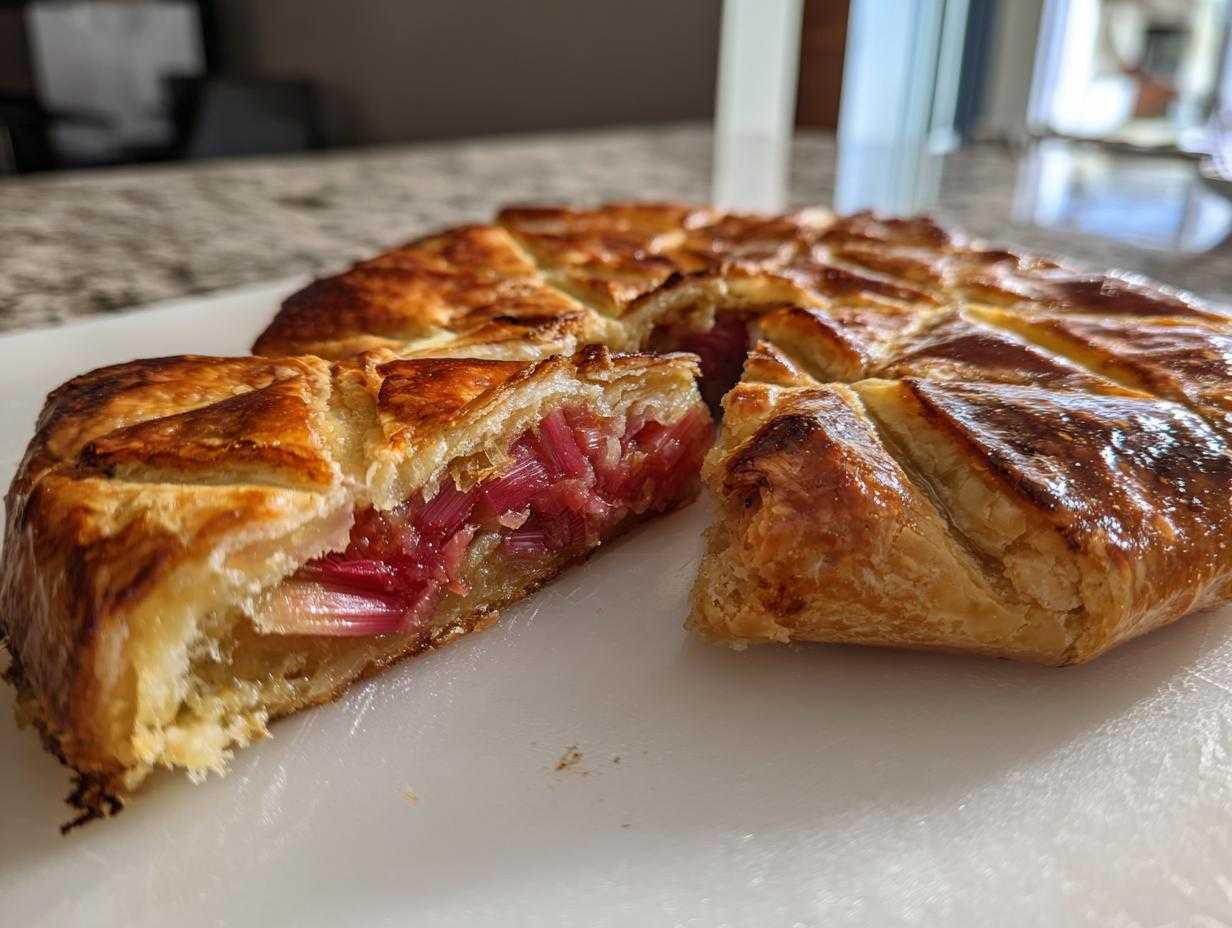
Oh my gosh, are you ready for a showstopper? I’m always looking for that next perfect combination, especially when we have these spectacular seasonal fruits showing up around the same time—you know, that magical window where the last of winter citrus meets the first brave stalks of spring rhubarb. It sounds wild, right? Tart green sticks and those unbelievably gorgeous, almost crimson blood oranges? Trust me on this one; they are soulmates.
This recipe isn’t just about tossing fruit into dough. We are making the stunning Blood Orange and Rhubarb Geometric Galette. It’s rustic because it’s free-form, but the way you fold the crust creates these sharp, intentional pleats that look like they came from a fancy French bakery. It’s my absolute favorite way to use them together, and people always go absolutely wild over the look of it!

Why This Blood Orange and Rhubarb Geometric Galette Stands Out
You could make any old free-form tart, sure, but this one is special, and I promise it’s worth the minute extra you spend on the folding technique! It’s all about giving you that ‘wow’ factor without needing a springform pan or fancy tricks. People expect dessert to taste good, but when it looks this artful, it just elevates everything.
Here’s why you need this recipe in your rotation:
- The flavor balance is unbeatable. The sharp snap of fresh rhubarb melts perfectly against the mild sweetness and slight bitterness of the blood orange.
- The presentation is next level. That intentional, folded edge makes this an Impressive Dessert for Brunch or Tea Party, even though the base is just a simple rolled-out dough.
- It screams elegant rustic vibes. You get that lovely, home-baked charm while hinting at advanced baking skills. We love this visual inspiration!
Ingredients for the Flaky Crust and Flavorful Blood Orange and Rhubarb Geometric Galette Filling
When you’re making something this beautiful, clarity in the ingredients list is absolutely vital. This builds my trust in the recipe, and I want you to feel totally confident going into this. The crust is everything here; it needs to be sturdy enough to hold the juicy fruit but unbelievably flaky. We stick to all-butter for the best flavor!
We’ve separated these into two main groups so you can prep everything before the fun part begins. Check out these tips for a flaky tart crust recipe for fruit—it really makes the difference!
For the All-Butter Crust
Remember: butter must be extremely cold. This is how we guarantee those gorgeous little pockets of steam that give us flakiness. Don’t skip the chilling step; it’s non-negotiable for a good result!
- 1 1/2 cups all-purpose flour
- 1/2 teaspoon salt
- 1 tablespoon granulated sugar
- 1/2 cup (one whole stick!) cold unsalted butter, cut into little cubes
- 4 to 6 tablespoons ice water (keep that ice handy!)
For the Oranges and Rhubarb Filling Ideas
This filling is where the actual magic of the Blood Orange and Rhubarb Geometric Galette happens. The cornstarch is important—it thickens up all those wonderful juices so your pastry doesn’t turn into a soggy mess.
- 1 pound rhubarb, trimmed up and cut into small 1/2-inch pieces
- 3 medium blood oranges, sliced very thinly (seriously, thin!), plus 1/4 cup of reserved juice
- 1/4 cup granulated sugar for the filling
- 2 tablespoons cornstarch (this is our thickener!)
- 1 teaspoon vanilla extract
- 1 large egg, just beaten for the egg wash
- 1 tablespoon coarse sugar to sprinkle on top for crunch
Step-by-Step Instructions for the Blood Orange and Rhubarb Geometric Galette
Okay, this is where the real fun begins! My goal when writing out these instructions is to make sure you feel like I’m right there in the kitchen guiding you. Baking this Blood Orange and Rhubarb Geometric Galette is really just about following the steps in order and not fussing too much with the dough. Remember what we talked about: cold ingredients are your best friends!
Making the Flaky Dough for Your Blood Orange and Rhubarb Geometric Galette
First things first, let’s get this crust ready to chill. You whisk the dry ingredients together—flour, salt, that tiny bit of sugar—and then you get your cold butter in there. I use my hands for this part now; you just work it in until you see pieces about the size of little peas. If you see bigger chunks, that’s fine, that just means extra flakiness later!
Next, we add the ice water, just a tablespoon at a time. Stop adding water the second the dough looks shaggy but holds together when you pinch it. Don’t mix it until it’s smooth—serious rookie mistake! Form it into a flat disk, wrap it up tight, and tell it to chill out in the fridge for at least an hour. Seriously, don’t rush that hour!
Assembling the Fruit Filling and Rolling Out the Blood Orange and Rhubarb Geometric Galette Base
While the dough is chilling, gently toss your cut rhubarb and those thin orange slices with the filling sugar, cornstarch, vanilla, and reserved juice. Don’t mash them; we want them coated, not pulverized. Set that mixture aside so the flavors can start mingling.
When the dough is properly chilled, pull it out and roll it out on a lightly floured surface until you have a rough circle that’s about 14 inches across. It doesn’t need to be perfect at all—that’s the beauty of a galette! Carefully transfer this big circle onto a baking sheet lined with parchment paper. Now, pile that fruit right into the center, but this is key for getting that geometric look: leave a good 2-inch border completely clear all the way around the edge. That border is going to become our beautiful crust wall!
How to Fold a Geometric Galette Edge
This technique gives us that stunning look described in the recipe title. You’re going to take that 2-inch edge and start folding it over the fruit, but instead of one smooth fold, you’re going to make tiny, structured pleats all the way around. Think of it like you are tucking a giant napkin around a pie. Overlap each tiny fold just slightly over the previous one so you create lots of texture and angles—that’s the geometric part! Do not cover the center of the fruit; keep the middle open so everything bakes evenly.
Once you’ve gone all the way around and your edges are secured, grab that beaten egg wash and brush only the folded crust areas. This gives it that amazing shine. Then, sprinkle that coarse sugar right over the wet egg wash. That crunch? Unbeatable. For more detailed thoughts on this, check out this geometric pastry design tutorial.

Baking Times and Temperature for the Blood Orange and Rhubarb Geometric Galette
Time to bake! Get your oven preheated to 400 degrees Fahrenheit (that’s 200 degrees Celsius). You want that heat to be ready to crisp up the bottom crust right away. Pop that galette directly onto the middle rack.
It’s going to take about 40 to 50 minutes. You’re looking for two main things: the crust needs to be deeply golden brown—not pale, but rich brown—and the filling in the middle must be bubbling like crazy. If you see those rhubarb juices thickening and bubbling happily, you’re golden! Once it’s done, pull it out, but here’s a big tip for serving: let it cool right there on the baking sheet for at least 20 minutes before you even *think* about slicing it. If you try to move it too soon, all those delicious juices we thickened might run right out! You can find great advice for this homemade galette step by step process online, but mine is the best, of course!
Tips for Success with Your Blood Orange Rhubarb Tart Recipe
Even though this is a free-form tart, a few little tricks will make all the difference between ‘nice’ and ‘OMG, what is this incredible thing?’ My biggest piece of advice, which ties right back to making sure we get the best flavor profile for our seasonal citrus and tart fruit baking, is about managing moisture.
Rhubarb releases a TON of water when it bakes, even with the cornstarch! To combat this, I sometimes pre-mix the rhubarb pieces with the sugar only, let them sit for 10 minutes, and then pour off just a tiny bit of the liquid *before* I mix in the cornstarch and oranges. This means less liquid pools in the bottom.
Also, don’t be shy with the egg wash on the edges. A thick, generous layer makes sure that crust gets deeply golden and crisp, which contrasts beautifully with the soft, warm fruit center. And please, preheat that baking sheet for 10 minutes while the oven comes up to temperature; an already hot surface helps the bottom crust set faster!
Ingredient Notes and Substitutions for Seasonal Citrus and Tart Fruit Baking
One thing I’ve learned over the years of baking with seasonal produce is that you simply can’t write a recipe in stone when nature has its own schedule. Blood oranges are wonderful, but they might disappear from the shelves, and you can’t always get perfect rhubarb. Don’t panic! This gorgeous rhubarb dessert recipe is built to adapt.
If you can’t find blood oranges, feel free to use Navel oranges, but you might need to increase the filling sugar slightly because blood oranges have that lovely touch of tartness that balances the rhubarb so well. If you use sweeter oranges, maybe add a teaspoon of lemon juice just to keep that zing!
When it comes to swapping rhubarb, I’ve had great success using mixed berries—think strawberries and raspberries, or even firm plums cut small. If you use sweeter berries, definitely cut back on the ¼ cup of sugar in the filling. If the rhubarb you find is really young and tender, you might even skip par-cooking it, but if it’s thick and tough, a quick 5-minute simmer in a little water first won’t hurt, just to soften it up before it goes into the galette.
The key here is tasting as you go. If your fruit mixture tastes one-note—too tart or too flat—that’s your cue to add a tiny bit more sugar or a squeeze of lemon or orange juice to brighten it up before it hits the dough!
Serving Suggestions for Your Impressive Dessert for Tea Party
When you’ve put this much effort into achieving that stunning Blood Orange and Rhubarb Geometric Galette look, you want to serve it right! The greatest thing about a galette is that it looks beautiful whether it’s piping hot from the oven or completely cooled down. It has such an impressive, elegant but rustic vibe.
If you’re serving this fresh out of its 20-minute cool-down period, I highly recommend a simple dollop of something cool and creamy right alongside that warm, spiced fruit. A scoop of high-quality vanilla bean ice cream is classic for a reason; the cold hits those warm citrus and rhubarb flavors perfectly. For a slightly more sophisticated pairing, try a big spoonful of crème fraîche.
Crème fraîche gives you that wonderful cultured tanginess that cuts right through the sweetness of the crust and balances the tartness of the rhubarb. If you aren’t into dairy, a little drizzle of thick, good-quality honey over the top works wonders, especially if your blood oranges weren’t super sweet to begin with.
And remember what Grandma always said? Sometimes less is more! If the crust browned up beautifully, sometimes all you need is a very light dusting of powdered sugar over the whole thing just before serving. No fuss, maximum impact. People will be buzzing about how you managed that beautiful fold!
Storage and Reheating Instructions for Leftover Blood Orange and Rhubarb Geometric Galette
Okay, if you actually have leftovers of this amazing galette—which is rare in my house—you need to treat that crust right! I never store leftover fruit galettes in the fridge if I can help it, because the moisture makes the crust sad and soft. Keep it tightly wrapped at room temperature for up to two days. That beautiful Geometric Pastry Design Tutorial we spent time on deserves better than sogginess!
To bring that crust back to life, ditch the microwave completely! Pop a slice back into a 350-degree oven for about 8 to 10 minutes. That little bit of dry heat crisps the bottom perfectly and warms the fruit up just enough to smell incredible again. Trust me, reheating is the key to enjoying those leftovers!
Frequently Asked Questions About This Unique Fruit Tart Presentation
I know when you make something that looks this stunning—truly an unique fruit tart presentation—you have lots of questions brewing! It’s completely normal. Baking with seasonal fruit and mastering that unique fold takes practice, but I’m here to help you nail it every time you whip up this beauty.
Can I make the dough for the Blood Orange Rhubarb Tart Recipe ahead of time?
Absolutely, and I often recommend it! Making the dough for your Blood Orange Rhubarb Tart Recipe ahead of time is actually a huge benefit for the crust texture. You can mix the dough, form the disk, wrap it up tight, and keep it in the fridge for up to three days. The longer it rests and chills, the more hydrated the flour gets, which usually translates to a flakier finished product. Just remember you might need to let it sit on the counter for about 10 to 15 minutes to soften just slightly before you roll it out!
What is the secret to achieving the geometric fold on this galette?
This is my favorite part! The secret to that beautiful look, as detailed in the geometric pastry design tutorial, is making sure your folds are intentional and small. You’re not just roughly tucking the dough over; you are creating distinct, slightly overlapping pleats all the way around the edge. Treat each fold like you’re creating a sharp little corner or angle. Don’t try to make one giant fold. The slight overlap locks everything in place and creates that stunning, structured crust wall around the fruit!
How do I balance the tartness in the Oranges and Rhubarb Filling Ideas?
Balancing the tartness is key to making these Oranges and Rhubarb Filling Ideas sing without being overly sour! I always taste my fruit mixture after adding the initial ¼ cup of sugar and the reserved blood orange juice. Rhubarb acidity can vary wildly depending on when you harvest it. If the mix still makes your face pucker a little bit, add another teaspoon of sugar at a time until it tastes pleasant but still bright. The tartness is supposed to shine through—it pairs perfectly with the sweet crust—but it shouldn’t make you wince!
Estimated Nutritional Data for One Serving
Now, I know some of you are watching macros, and some just want to know if you should feel guilty eating two slices instead of one! Truthfully, whenever I bake our Blood Orange and Rhubarb Geometric Galette, guilt is not invited into my kitchen, but I do like to give you a ballpark idea of what you’re consuming.
Because we use so much glorious butter in that flaky crust, it does have a bit of richness—but wow, is it worth it! These numbers below are just estimates based on the recipe ingredients, so they will change slightly depending on the exact brand of flour or how much sugar you decide to add to your specific fruit batch.
- Serving Size: 1 slice
- Calories: 350
- Sugar: 22g
- Sodium: 150mg
- Fat: 18g
- Saturated Fat: 11g
- Carbohydrates: 45g
- Protein: 5g
If you’re swapping out the butter for something else, or using a different kind of sweetener, just know that the fat and sugar counts are definitely going to shift. But honestly, when you’re making something this special, just enjoy every moment!
Print
Blood Orange and Rhubarb Geometric Galette
- Total Time: 1 hour 30 min
- Yield: 6 servings
- Diet: Vegetarian
Description
Follow this recipe to create a free-form tart featuring a balanced filling of tart rhubarb and sweet-tart blood orange, shaped using a specific folding technique for a geometric presentation.
Ingredients
- 1 1/2 cups all-purpose flour
- 1/2 teaspoon salt
- 1 tablespoon granulated sugar
- 1/2 cup (1 stick) cold unsalted butter, cut into small cubes
- 4 to 6 tablespoons ice water
- 1 pound rhubarb, trimmed and cut into 1/2-inch pieces
- 3 medium blood oranges, thinly sliced (reserve 1/4 cup juice)
- 1/4 cup granulated sugar (for filling)
- 2 tablespoons cornstarch
- 1 teaspoon vanilla extract
- 1 large egg, beaten (for egg wash)
- 1 tablespoon coarse sugar (for sprinkling)
Instructions
- Prepare the crust: In a large bowl, whisk together the flour, salt, and 1 tablespoon sugar. Cut in the cold butter using a pastry blender or your fingers until the mixture resembles coarse crumbs with some pea-sized pieces of butter remaining. Gradually add ice water, one tablespoon at a time, mixing until the dough just comes together. Form into a disk, wrap in plastic, and chill for at least 1 hour.
- Prepare the filling: In a bowl, gently toss the cut rhubarb and blood orange slices with the 1/4 cup sugar, cornstarch, vanilla extract, and reserved blood orange juice. Set aside.
- Preheat your oven to 400 degrees Fahrenheit (200 degrees Celsius). Line a baking sheet with parchment paper.
- Roll out the chilled dough on a lightly floured surface into a rough 14-inch circle. Transfer the dough to the prepared baking sheet.
- Arrange the fruit filling in the center of the dough, leaving a 2-inch border clear around the edge.
- Create the geometric fold: Fold the dough border up and over the edge of the fruit, creating pleats or folds that overlap slightly to form a rustic, geometric edge around the filling. Do not cover the center fruit completely.
- Brush the folded crust edges with the beaten egg wash and sprinkle with coarse sugar.
- Bake for 40 to 50 minutes, or until the crust is golden brown and the fruit filling is bubbling.
- Cool on the baking sheet for at least 20 minutes before slicing and serving.
Notes
- For the best geometric look, try to keep the fruit filling relatively flat in the center before folding the edges.
- If your blood oranges are very sweet, reduce the filling sugar slightly.
- Chill the dough thoroughly; cold butter makes a flakier crust.
- Prep Time: 30 min
- Cook Time: 50 min
- Category: Dessert
- Method: Baking
- Cuisine: American
Nutrition
- Serving Size: 1 slice
- Calories: 350
- Sugar: 22
- Sodium: 150
- Fat: 18
- Saturated Fat: 11
- Unsaturated Fat: 7
- Trans Fat: 0
- Carbohydrates: 45
- Fiber: 3
- Protein: 5
- Cholesterol: 55

Comments are closed.