
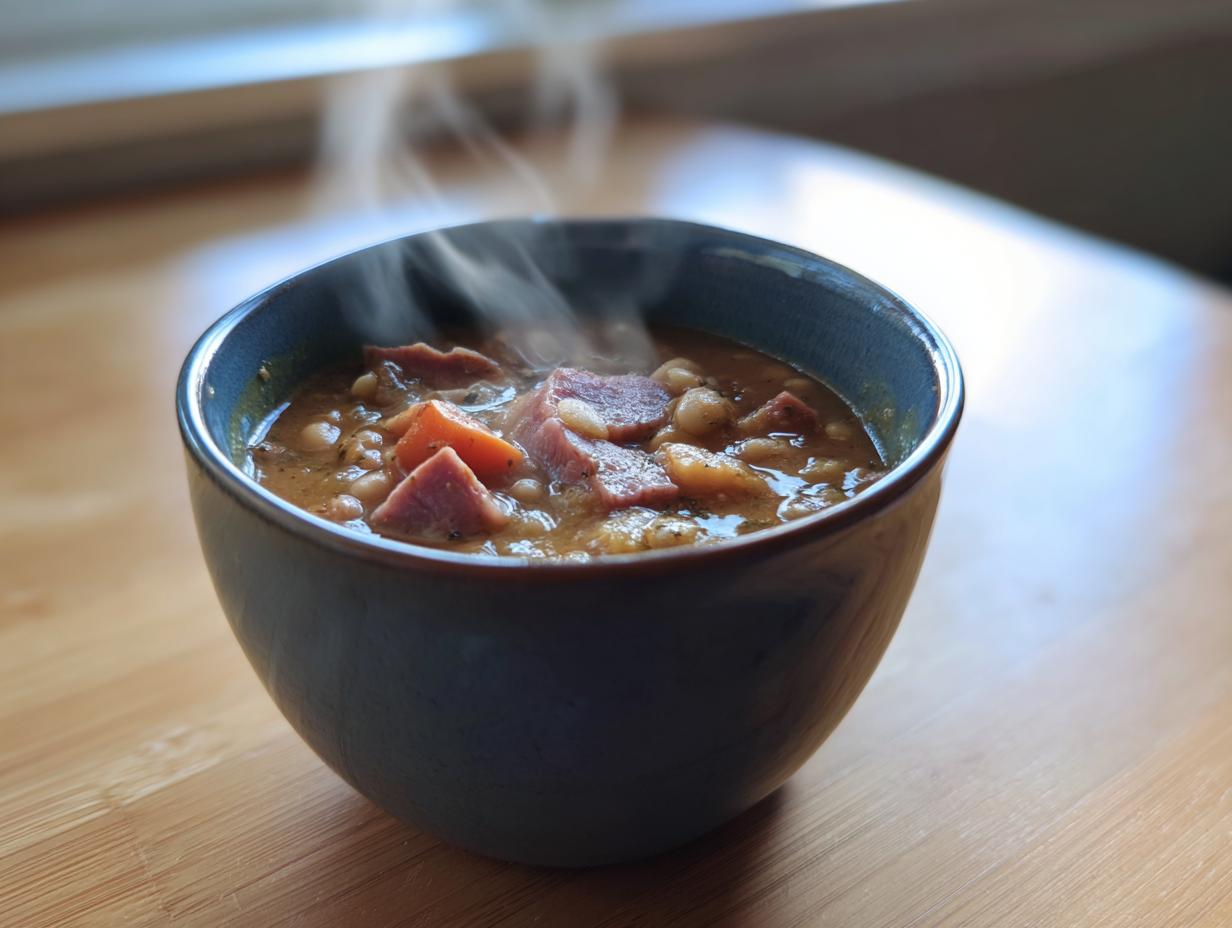
Ah, the glorious, slightly weary feeling the day after a big holiday meal! The decorations are still up, but the house smells less of roasting spices and more of… what to do with that massive ham bone? Don’t you dare throw it out! Back in my kitchen, this is the signal that it’s time to make the most comforting, soul-satisfying dish imaginable: a rich, smoky ham and bean soup. It tastes like pure love and zero waste. I remember my grandmother always having a pot simmering after Christmas; the gentle bubbling sound was the soundtrack to happy, cozy days indoors while the cold air pressed against the windows. This recipe takes that treasured, salty bone and transforms it into a thick, hearty stew that heals the exhaustion of hosting.
Why This Ham and Bean Soup is the Perfect Post-Holiday Soup Recipe
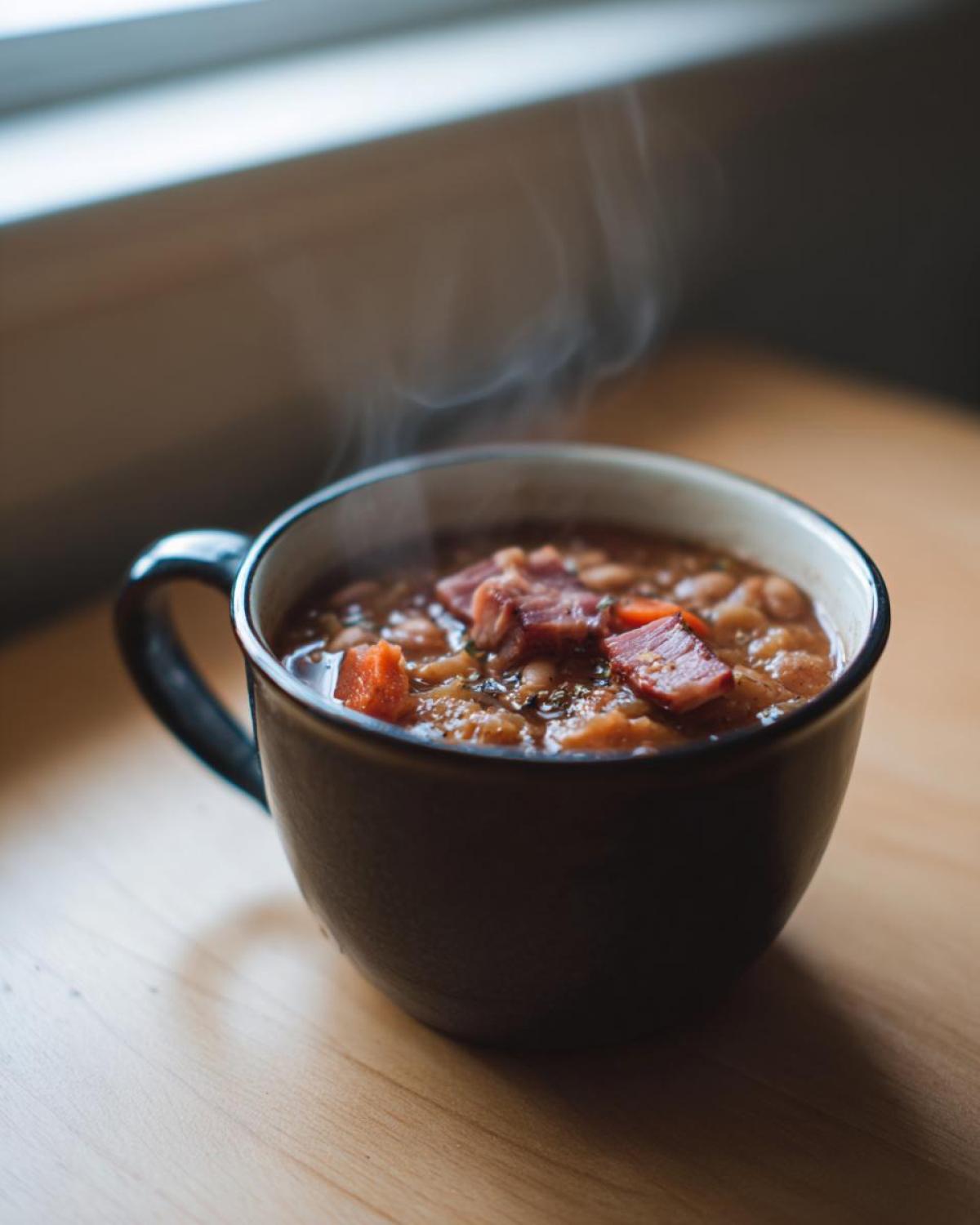
If you’re looking for the ultimate post-holiday soup recipe, stop right here! Using that magnificent leftover ham bone soup is pure genius. It’s comforting, it feeds the family for days, and frankly, it proves that the best meals often come from resourceful beginnings. It tastes like a hug in a bowl, I promise you. When that bone simmers all day, it infuses every single bean with deep, smoky flavor that you just can’t buy in a can.
We can aim for a wonderful meal using what we already have. I always feel so satisfied when I keep things moving in the kitchen, even after the big event is over. These leftovers are gold!
Key Benefits of Making Ham and Bean Soup Now
This soup turns scraps into sensational flavor. It’s about maximizing that gorgeous, salty flavor locked inside the bone while minimizing waste. It’s frugal and deeply satisfying, which is exactly what we need after the holiday rush. Plus, I’ve included a link to my slow-cooker beef barley soup if you’re already looking ahead to future comfort food projects!
- It completely utilizes every last bit of your holiday ham.
- The long, slow simmer creates an incredibly rich, smoky broth.
- It freezes beautifully if you decide you can’t face beans for three straight days!
Gathering Ingredients for Your Soul-Satisfying Ham and Bean Soup
Now, let’s talk about what you need to pull this miracle out of that bone. The beauty of this ham and bean soup is how simple the supporting cast is—it’s all about letting that ham shine! First, you absolutely must have that large leftover ham bone. If it still has a good amount of meat clinging to it, that’s even better because that meat is going right back into the pot later. Make sure you’ve rinsed your pound of navy beans, or the Great Northern ones if you prefer, and take a quick moment to pick them over for any little pebbles—it happens!
Next, we need our aromatics to build that warm, savory base. Think classic—one large yellow onion, chopped; two nice carrots, peeled and sliced; and two celery stalks, also sliced. These vegetables are the backbone of any great stew, and they cook down beautifully.
For seasoning, keep it simple: two bay leaves and perhaps a teaspoon of dried thyme—that’s my little Italian touch sneaking in! If you happen to have some extra diced leftover ham, feel free to toss that in with the bone for an extra burst of porkiness. My mother always said the more ham meat you can get in there, the richer the final soup will be. It’s just gorgeous!
Expert Tips for Perfecting Your Navy Bean Stew Base
Before we even think about turning on the stove, we need to treat those dried beans right! This step is what separates a good navy bean stew from something truly spectacular. I’m always so careful here because dry beans can be stubborn cooks if you rush them, and nobody wants hard beans hiding in their comforting soup, right?
My absolute favorite, and the method I learned from the way back in my grandmother’s kitchen, is to give them a long soak. It softens them up beautifully and makes them digest a bit easier later on. If you’re planning ahead—which, in my opinion, is half the joy of cooking—set them aside the night before. This preparation makes the rest of the cooking process so much smoother!

If you’re rushing because a cold snap hit unexpectedly, don’t worry! We can work around it, but you must adjust the simmering time in the main pot. For more insights on getting creamy texture from dried legumes, you might want to check out my thoughts on perfection when I make my classic hearty split pea soup recipe.
To Soak or Not to Soak: Timing Your Dried Beans
If you soak your beans overnight, you’ve done the hard work, and the actual stovetop simmer will only take about two to two-and-a-half hours until they are just right. If you skip that soaking step, no *panico*! It just means you need more time on the stove—plan for a full three hours, or maybe even a bit longer, just keep tasting them until they are perfectly tender when you press them. Patience is the secret seasoning here!
Step-by-Step Instructions for Ham and Bean Soup
Alright, my friends, it’s time to bring this beautiful thing together! This is where the leftover bone truly pays off. Don’t be intimidated by the long simmer time; most of that time, the pot is just humming away quietly on the back burner. You’ll want a large stockpot—or maybe your favorite sturdy Dutch oven—for this adventure. Remember, we are nurturing these flavors, not attacking them with high heat!
Building the Flavor Foundation
First things first, get your ham bone, your rinsed beans, and your liquid—I use 8 cups of water or a low-sodium chicken broth if I have some—all into that big pot. Now, toss in all those lovely chopped vegetables: the onion, the carrots, the celery. Don’t forget the flavor jewels—the two bay leaves and that teaspoon of dried thyme. Give it a gentle stir. Now, turn that heat up high and bring the whole glorious mess to a rolling boil. As soon as you see those big, happy bubbles starting, that’s your cue. Immediately reduce that heat down low. We want a gentle burble, my dear, not a raging flood! Cover the pot partially and just let it let it simmer away for at least two and a half, maybe three hours.
Achieving Tender Beans and Shredding the Ham
This is the patience test! Keep an eye on it and give it a gentle stir now and then so nothing sticks to the bottom. After about three hours, the beans should be meltingly tender. Taste one! If it’s still tough, just give it 30 more minutes. Once you’re satisfied with the texture, carefully fish out that ham bone. Set it on a plate to cool down—be careful, it will be hot! Once you can handle it, use your fingers or two forks to shred off any remaining bits of ham meat. That smoky meat is precious, so scrape every last bit off! Then, toss that clean bone into the compost or trash. Return all that delicious, shredded ham meat back into your pot. Stir in your black pepper. Be careful with salt right now; the bone has already seasoned everything beautifully.
The Secret to Thickening Your Ham and Bean Soup
If you want that luxurious, creamy texture that makes this ham and bean soup just sing—that thick body that grabs your spoon—we need a little trick my mother taught me. This avoids adding any flour which would change the flavor profile completely. Take about one full cup of those cooked beans right out of the pot, put them in a small bowl, and mash them thoroughly with a fork or a potato masher until they are a rough paste. It only takes a minute!
Now, stir that mashed bean paste right back into the soup. It will look a little grainy at first, but as you let it simmer for just 10 more minutes, those starches will release, and *voilà*—your soup will thicken naturally! It’s magic, I tell you. If you’re looking for another easy stovetop fix that whips up quickly later, check out my recipe for simple homemade applesauce; sometimes we just need easy cooking!

Ingredient Notes and Substitutions for Ham and Bean Soup
I always get questions about what happens if you don’t have *exactly* what I listed, and that’s totally fine! Remember, this is your kitchen, not a chemistry lab. If you don’t have navy beans on hand for your ham and bean soup, don’t you worry one bit. Pinto beans or Great Northern beans work absolutely beautifully in this recipe; they give you that same creamy melt down at the end. They might adjust the cooking time slightly, but the flavor profile remains rich and comforting.
Also, about the liquid: I often use water because the ham bone has so much natural sodium and flavor locked in that it creates its own broth as it simmers. But if you have some low-sodium chicken broth sitting there, go ahead and use it! It just adds another layer of savory depth. If you want to explore other great layered flavor dishes, you can see how I layer flavors when I make my easy chicken parmesan recipe. It’s all about building those simple flavors up!
Serving Suggestions for Your Leftover Ham Bone Soup
When this beautiful, smoky leftover ham bone soup is finally ready, you need something sturdy and wonderful to scoop up every last drop. For me, there is truly nothing better than pairing this with a slice of homemade cornbread—the slightly sweet, crumbly texture just sings alongside the salty beans. It’s the quintessential match, you know?
If cornbread isn’t your style, a fresh, crusty Italian loaf is just divine for dipping. You want something that soaks up that savory broth without dissolving immediately! If you haven’t mastered your bread yet, you might enjoy looking at my recipe for soft and chewy homemade breadsticks—perfect for mopping up soup bowls!
Storing and Reheating Your Ham and Bean Soup
The best part about making a big pot of this hearty ham and bean soup is that you truly make dinner for the whole week! This soup is incredibly forgiving, which I love. If you have any leftovers that won’t be eaten within the next three or four days, you must freeze it. Honestly, this leftover ham bone soup freezes like a dream because those beans are so robust.
When storing it in the fridge, make sure you give the soup a good stir before transferring it to smaller, airtight containers. Don’t leave it sitting on the counter to cool for too long before refrigerating, especially in the summer—we want to keep those good bacteria happy! It keeps beautifully in the fridge for about four days. I always try to remove the bay leaves before storing, just so nobody accidentally bites into a stubborn one later!
Now, for reheating, which is where people sometimes go wrong. If you’re heating a portion from the fridge, you might notice it looks a little thicker than when you first made it. That’s just the magic of the starches settling overnight! Add a splash of water or broth—just a little bit—as it heats slowly on the stovetop. Don’t blast it on high heat; low and slow reheating keeps the texture creamy, not broken. It’s the same gentle approach we used when we first cooked the beans!

Frequently Asked Questions About Navy Bean Stew
It makes me so happy when you all dive into these recipes! I know sometimes your kitchen puzzles don’t match my pantry exactly, so let’s tackle a few common things people ask me about making a perfect navy bean stew. Don’t hesitate to ask if you have another question—that’s what this community is for!
How do I make this ham and bean soup thicker without adding flour?
This is one of my favorite kitchen secrets! We absolutely do not need any flour or cornstarch here, which can feel heavy. Remember that step where I told you to scoop out about one cup of the cooked beans and mash them up? That’s your secret weapon! Those mashed beans release their natural starches when they go back into the pot. As you let the soup simmer for those last ten minutes, those starches work hard to give you that wonderful, creamy thickness in your ham and bean soup, all while keeping the flavor pure! Trust me, give that technique a try.
Can I use dried beans other than navy beans for this leftover ham bone soup?
Yes, absolutely! While navy beans are traditional because they break down so beautifully to give that classic creaminess to your leftover ham bone soup, you certainly have options. Great Northern beans are a fantastic substitute; they are very similar in texture and hold up well during that long simmer time. Even small white beans will work in a pinch! The main thing is that you use a dried bean breed that softens nicely. If you try pintos, you’ll get a much earthier flavor, but it’s still delicious! If you’re looking for other cozy meals to explore for those cold days, you might adore my loaded baked potato soup recipe—it’s another hearty favorite!
Nutritional Estimates for This Comforting Ham and Bean Soup
Because we are making such a wonderful, restorative meal from what we already have, I always get questions about what exactly we are eating! I’ve done my best to put together some general estimates for a single generous serving of this amazing ham and bean soup. Remember, these numbers can shift quite a bit depending on how much meat you managed to salvage off that ham bone—some bones are much fattier than others, which affects the sodium and the fat content!
When I look at these numbers, I see a meal that is packed with fiber and protein, which is exactly what I want when I’m recovering from the busy holidays. It’s wholesome! I always feel so satisfied knowing this bowl is nourishing us.
Here is what you can typically expect for one serving size of about 1.5 cups:
- Calories: Around 350 (This is a hearty meal calorie count, not too light!)
- Protein: A whopping 25 grams—that keeps you full for hours, *bellissimo*!
- Fiber: About 18 grams—fantastic for your digestion!
- Fat: Generally around 5 grams total.
- Carbohydrates: Roughly 55 grams, mostly complex carbs from the beans.
- Sodium: This one varies the most, but expect around 750mg, so please remember to taste before you add any extra salt!
Please take these as a guideline, *mia cara*. The true measure of this soup is how wonderfully it tastes and how deeply comforting it is on a cold afternoon!
Print
Hearty Ham and Bean Soup from a Leftover Ham Bone
- Total Time: 3 hr 20 min
- Yield: 6 servings
- Diet: Low Fat
Description
Make a soul-satisfying ham and bean soup using your leftover holiday ham bone for a comforting, frugal meal.
Ingredients
- 1 large leftover ham bone (with meat attached)
- 1 pound dried navy beans or Great Northern beans, rinsed and picked over
- 8 cups water or low-sodium chicken broth
- 1 large yellow onion, chopped
- 2 carrots, peeled and sliced
- 2 celery stalks, sliced
- 2 bay leaves
- 1 teaspoon dried thyme
- 1/2 teaspoon black pepper
- 1 cup diced leftover ham (optional, for later)
Instructions
- If you have time, soak the dried beans in water overnight. Drain them before starting the soup. If you skip soaking, you will need to increase the simmer time.
- Place the ham bone, rinsed beans, water or broth, onion, carrots, celery, bay leaves, and thyme into a large stockpot or Dutch oven.
- Bring the mixture to a boil over high heat. Once boiling, reduce the heat immediately to low, cover the pot partially, and let it simmer gently.
- Simmer for 2 to 3 hours, or until the beans are completely tender. Stir occasionally to prevent sticking.
- Remove the ham bone from the pot. Once cool enough to handle, shred any remaining meat from the bone and discard the bone. Return the shredded ham meat to the soup.
- Stir in the black pepper and any additional salt if needed (the ham bone adds a lot of salt already).
- For a thicker soup, mash about 1 cup of the cooked beans against the side of the pot with a spoon, then stir them back in.
- Simmer for another 10 minutes to allow flavors to meld. Serve this navy bean stew hot with cornbread.
Notes
- Soaking the beans reduces the cooking time significantly.
- Taste before adding extra salt; the ham bone releases a lot of sodium.
- This leftover ham bone soup freezes well for future meals.
- Prep Time: 20 min
- Cook Time: 3 hr
- Category: Soup
- Method: Stovetop Simmering
- Cuisine: American
Nutrition
- Serving Size: 1.5 cups
- Calories: 350
- Sugar: 5
- Sodium: 750
- Fat: 5
- Saturated Fat: 2
- Unsaturated Fat: 3
- Trans Fat: 0
- Carbohydrates: 55
- Fiber: 18
- Protein: 25
- Cholesterol: 30



Comments are closed.