
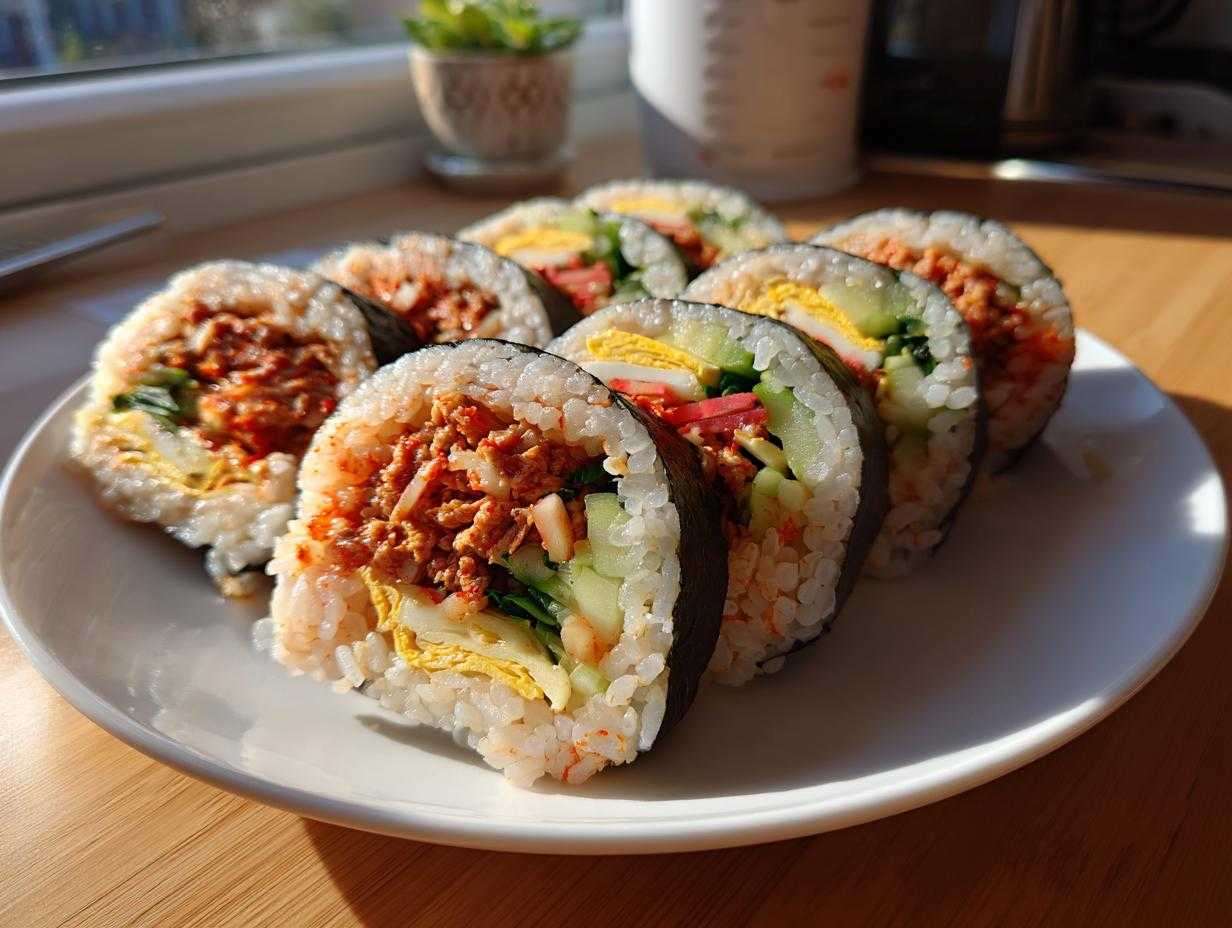
Oh my gosh, are you having one of those days where you just need something incredibly flavorful but don’t want to spend hours cooking? I totally get it! That’s when I run straight for my **tuna kimbap** recipe. This isn’t just any seaweed roll; this is the vibrant, slightly fiery version we call Chamchi Gimbap, thanks to my perfectly tweaked spicy mayo filling. I spent ages experimenting to get that creamy, spicy kick just right—it’s honestly addictive!
This recipe is my secret weapon for those busy weekdays or when I need a genuinely fantastic picnic food idea Korean style. Seriously, this version of **tuna kimbap** is so straightforward, even if you’re brand new to making homemade gimbap. Forget fussy side dishes; this quick Korean lunch packs everything you need into one perfect bite!
Why This Spicy Tuna Kimbap is Your New Favorite Korean Seaweed Rolls
If you’re looking for a fast, delicious answer to “what’s for lunch?” I’ve got you covered. This particular **tuna kimbap** is my go-to because it just hits differently.
- It’s lightning fast—truly a quick Korean lunch solution.
- That spicy tuna mayo filling packs a massive flavor punch without needing complex sauces!
- It’s one of the most forgiving and Easy Kimbap recipes I’ve ever perfected for beginners.
- Perfect for stuffing into a bento box filling Korean style the next day!
Essential Kimbap Ingredients for Perfect Tuna Kimbap
When you’re making **tuna kimbap**, the magic almost entirely lives right here in the ingredient list. Don’t skimp on the quality of your gim (the seaweed sheets)—we need the good stuff for strong, easy rolls!
The list looks long, but trust me, most of this is just prepping the crispy vegetables that give the roll texture. Since this is a canned tuna recipes kind of day, the filling is the star. Make sure you drain that tuna really well; nobody wants soggy rolls!
For the ultimate creamy texture in the spicy tuna mayo filling, some people swear by making their own mayonnaise. If you’ve never tried making mayo at home, you absolutely have to check out my easy guide on how to whip up homemade mayonnaise for incredible richness!
Here’s what you need to gather up for four glorious Korean seaweed rolls:
- Sheets of gim (seaweed for kimbap) – 4 sheets
- Cooked short-grain white rice – 3 cups
- Sesame oil – 1 tablespoon
- Salt – 1 teaspoon
- Canned tuna in water – 1 (5 ounce) can, thoroughly drained
- Mayonnaise – 1/4 cup (Japanese mayo if you have it!)
- Sriracha or gochujang for that kick – 1 tablespoon
- Sugar – 1 teaspoon
- Rice vinegar – 1/2 teaspoon
- Carrot – 1, cut into thin strips (julienned)
- Cucumber – 1/2, also julienned
- Yellow pickled radish (danmuji) – a few strips
- Eggs – 2, lightly beaten for garnish
- Vegetable oil for cooking everything up!
Step-by-Step Guide to Making Easy Kimbap
Finally, let’s get rolling! This section walks you through creating amazing **tuna kimbap**. It’s designed to be a fantastic **Easy Kimbap** tutorial, even if you’ve never touched a bamboo mat before. We’ll go through the rice prep, assembly, and sealing process quickly!
Preparing the Rice Base for Your Tuna Kimbap
The rice is the foundation, so treat it gently! We mix our warm, cooked short-grain white rice with a splash of sesame oil and a teaspoon of salt. It has to be warm—not piping hot, but warm enough that the oil mixes in nicely. This seasoning stops the rice from tasting bland against all that amazing filling. Just fold it together carefully until everything is incorporated, and set it aside!
Creating the Signature Spicy Tuna Mayo Filling
This is where we kick the flavor up! Grab that drained tuna we talked about and mix it vigorously with the mayo, your Sriracha or gochujang, that little bit of sugar, and the vinegar. You want this **spicy tuna mayo filling** to be completely uniform—no dry clumps allowed! I use a fork to mash out any big chunks of tuna before mixing, which makes the final **Chamchi Kimbap recipe** so much creamier. Honestly, if you love tuna casserole, you’ll adore this spicy upgrade!

- Check out my easy classic tuna casserole—it’s where I first learned to love canned tuna!
Assembling and Rolling Your Korean Seaweed Rolls
Lay your gim shiny-side down on the bamboo mat. Spread maybe 3/4 cup of that seasoned rice evenly over the seaweed, but stop about an inch short at the far top edge—that dry border is your seal! Now, carefully line up your prepped fillings right across the middle: egg strips, then carrot, cucumber, radish, and finally, that awesome spicy tuna filling right on top. Pick up the bottom edge of the mat closest to you, fold it up and over the fillings, giving it a gentle squeeze to hold things tight. Now, roll it away from you smoothly, keeping the pressure even, until that top dry edge meets the rest of the roll.

Finishing and Serving Homemade Gimbap
Once the roll is sealed (moisten that top edge with a tiny bit of water if it won’t stick!), take it off the mat. Brush the outside lightly with a little more sesame oil for that gorgeous sheen and flavor. Repeat the process for the rest of your **Homemade Gimbap**. The secret trick for slicing is crucial: use a very sharp knife and moisten the blade slightly between cuts. This stops the rice from tearing. Slice into perfect bite-sized pieces, and you are done!

Tips for Perfect Tuna Kimbap Every Time
You’ve made it this far, so let’s nail those final details so your **tuna kimbap** looks professional! If you struggle with slicing the rolls cleanly, the trick is chilling them. Pop the completed rolls in the fridge for about ten minutes before you use your sharp knife. It really firms everything up!
Also, please use good quality gim. The sheets labeled specifically for kimbap are thicker and less likely to tear when you’re rolling them, which is a lifesaver for **kimbap for beginners**. Remember, fresh is best, but if you prep ingredients a little ahead of time, you’re set for a super quick assembly!
Variations on Classic Tuna Kimbap
While this spicy version is fantastic, the great thing about **tuna kimbap** is how adaptable it is! If you’re looking to mix things up, try swapping out the raw veggies. Cooked spinach is a classic sub for cucumber sometimes, and imitation crab sticks are always a welcome addition for texture.
Feeling adventurous? You could easily turn this into a poke-inspired roll by dicing up some high-quality sushi-grade tuna and tossing it in a light soy/sesame dressing instead of using canned tuna. If you love poke bowls, you’ll appreciate this flavor profile! Remember, the key to easy kimbap is usually keeping the fillings simple and not overstuffing!
Serving Suggestions for Your Tuna Kimbap
You’ve made this incredible **tuna kimbap**, and now you need the perfect partners! Because this is such a satisfying **quick Korean lunch**, it doesn’t need much help. We usually pack these for **picnic food ideas Korean** style. A tiny dish of soy sauce mixed with a drop of sesame oil makes a great basic dipping sauce. If leftovers are around, a small side of kimchi is always welcome on the table!
Storage and Reheating Instructions for Tuna Kimbap
The absolute best way to eat **tuna kimbap** is right after you’ve sealed and sliced it—when the rice is still perfectly room temperature and the fillings are crisp. But let’s be real, leftovers happen!
If you have extra **seaweed rice rolls**, wrap them tightly in plastic wrap or put them in an airtight container before you refrigerate them. Try to eat them within a day; the seaweed (gim) will start to soften up as it sits.
Now, here’s the thing: you generally don’t want to microwave kimbap. Seriously, don’t! It turns the seaweed chewy and the rice hard. If you must warm it up, try briefly steaming the slices for just a minute or two—but honestly, these **canned tuna recipes** additions taste miles better enjoyed cold!

Frequently Asked Questions About Chamchi Kimbap Recipe
I totally get it; when you try a new traditional dish like this **Chamchi Kimbap recipe**, you always have questions! Here are a few things people often ask me about making perfect **tuna kimbap** at home.
What exactly is ‘gim’ and where do I find it?
‘Gim’ is just the Korean word for the roasted seaweed sheets used in these **Korean seaweed rolls**. You must use the sheets specifically labeled for kimbap, not the thin, crispy sheets meant for snacking (those tear immediately!). Look in the international aisle of your grocery store. They are usually packaged in a sealed rectangular pack.
How spicy is this Spicy Tuna Kimbap recipe, really?
That’s a great question! My recipe is designed to be flavorful, not face-meltingly hot, but it depends on your spice tolerance. I call for one tablespoon of Sriracha, which gives it a noticeable heat that balances the richness of the mayo. If you’re nervous about the heat in this **spicy tuna mayo filling**, start with just half a tablespoon and taste test!
Can I use leftover rice for my Homemade Gimbap?
This is where I have to give you a firm “kind of.” You *can* use leftover rice, but you MUST reheat it thoroughly and mix in the sesame oil and salt while it’s hot—that’s what revives the texture for these **seaweed rice rolls**. Cold, hard leftover rice just won’t spread correctly onto the seaweed, making the rolling part super difficult for **kimbap for beginners**.
What’s the secret to preventing the tuna kimbap from unrolling?
Sealing the roll correctly is everything! When you finish rolling, use a fingertip dipped in water to gently wet that final 1-inch edge of seaweed that doesn’t have rice on it. This acts like edible glue. Also, chilling your finished **Homemade Gimbap** for 10 minutes before slicing really helps everything set up, making slicing easier and preventing immediate unrolling.
If you’re ever looking for other quick Korean comfort meals to make after finishing your **tuna kimbap**, you absolutely have to try my recipe for 15-Minute Kimchi Fried Rice!
Estimated Nutrition Data for Spicy Tuna Kimbap
Okay, so while we’re busy making amazing **tuna kimbap**, I know some of you are curious about the numbers powering this delicious snack. Since we are using canned tuna and fresh veggies, it’s actually a pretty balanced meal! Keep in mind this is just an *estimate* based on the measurements I’ve provided in the main recipe. Real life cooking means things change slightly!
This breakdown is for a standard serving size of 6 pieces from one of the four rolls.
- Serving Size: 6 pieces
- Calories: Approximately 350
- Fat: Around 15g (with 3g being saturated)
- Carbohydrates: About 40g
- Protein: A solid 15g, thanks to the egg and tuna!
- Sugar: Low, only about 4g
- Sodium: Roughly 450mg
I always focus on the protein and the lower sugar count when I make these **Korean seaweed rolls** for a quick lunch. It keeps me full until dinner time without any energy crashes!
Print
Easy Spicy Tuna Kimbap
- Total Time: 30 min
- Yield: 4 rolls (about 24 pieces)
- Diet: Vegetarian
Description
Make simple and flavorful Korean seaweed rice rolls filled with spicy canned tuna mayo.
Ingredients
- 4 sheets gim (roasted seaweed sheets for kimbap)
- 3 cups cooked short-grain white rice
- 1 tablespoon sesame oil
- 1 teaspoon salt
- 1 (5 ounce) can tuna in water, drained
- 1/4 cup mayonnaise
- 1 tablespoon Sriracha or gochujang
- 1 teaspoon sugar
- 1/2 teaspoon rice vinegar
- 1 carrot, julienned
- 1/2 cucumber, julienned
- 1 yellow pickled radish (danmuji), julienned
- 2 eggs, beaten
- Vegetable oil for cooking
Instructions
- Prepare the rice: Mix the warm cooked rice with sesame oil and salt. Set aside.
- Prepare the egg garnish: Cook the beaten eggs into thin omelets in a lightly oiled pan. Cool slightly, then slice into thin strips.
- Prepare the vegetables: Lightly sauté the julienned carrots until tender-crisp. Set aside. Cut the cucumber into thin strips. Cut the pickled radish into strips.
- Make the spicy tuna filling: In a bowl, combine the drained tuna, mayonnaise, Sriracha (or gochujang), sugar, and rice vinegar. Mix well.
- Assemble the kimbap: Lay one sheet of gim, shiny side down, on a bamboo rolling mat. Spread about 3/4 cup of the seasoned rice evenly over the seaweed, leaving a 1-inch border at the top edge.
- Layer the fillings across the center of the rice: Place strips of egg, carrot, cucumber, and pickled radish in a line. Top with a line of the spicy tuna mixture.
- Roll the kimbap: Lift the edge of the mat closest to you and fold it over the fillings, pressing gently to secure the ingredients. Roll tightly away from you, moistening the top edge of the seaweed with a little water to seal the roll.
- Finish the rolls: Brush the outside of the finished roll lightly with sesame oil. Repeat with the remaining ingredients.
- Slice and serve: Use a sharp, slightly moistened knife to cut each roll into bite-sized pieces.
Notes
- For easier slicing, chill the finished rolls for 10 minutes before cutting.
- You can substitute imitation crab sticks or cooked spinach for other vegetable options.
- Use Japanese mayonnaise for a richer flavor in the tuna mix.
- Prep Time: 20 min
- Cook Time: 10 min
- Category: Lunch
- Method: Rolling
- Cuisine: Korean
Nutrition
- Serving Size: 6 pieces
- Calories: 350
- Sugar: 4
- Sodium: 450
- Fat: 15
- Saturated Fat: 3
- Unsaturated Fat: 12
- Trans Fat: 0
- Carbohydrates: 40
- Fiber: 2
- Protein: 15
- Cholesterol: 70


Comments are closed.