
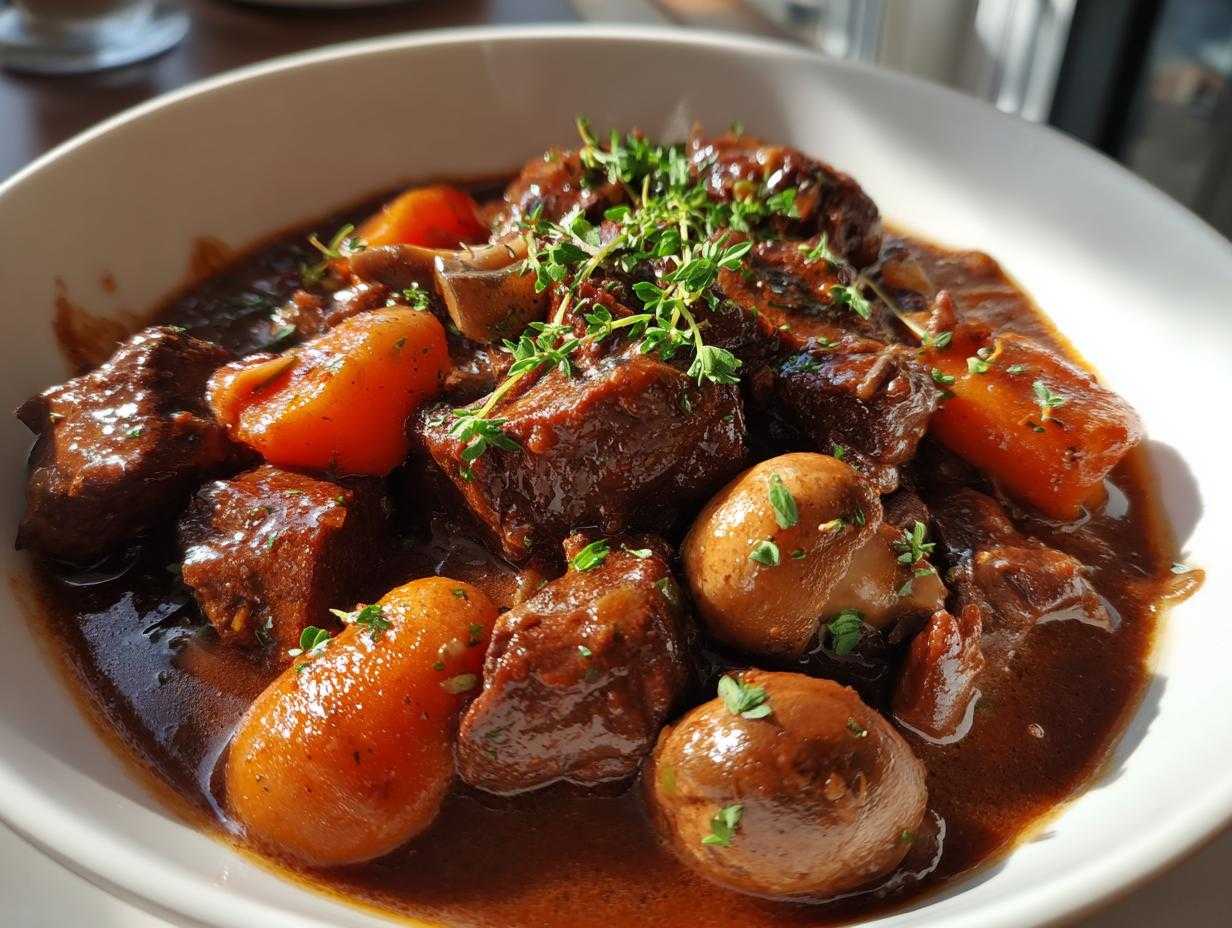
Oh, listen to me, you need to understand something about real cooking: flavor isn’t microwaved; it’s *built* patiently. When we talk about The Authentic Flavor Experience, we aren’t messing around with quick fixes. We’re hunting for that deep, soulful taste that only comes from respecting the process, you know? I remember the first time I tasted a truly traditional French Beef Bourguignon; it was a revelation! That rich, wine-infused sauce, the meat falling apart—it just sang. It took me ages to nail that depth at home, but once you embrace those old-school, traditional cooking methods, suddenly everything you make tastes like it came straight from a culinary master’s kitchen. This recipe is your ticket to that level of taste!
Why This Beef Bourguignon Delivers The Authentic Flavor Experience
When you see this recipe, you might think, ‘It’s just beef stew,’ but trust me, it’s so much more. We achieve the real deal here because we respect the time this dish needs. It’s all about those deep flavor profiles that develop only when you let things cook slowly.
- It relies heavily on slow cooking techniques for flavor; we aren’t rushing this beauty out the door!
- We build layers of taste, starting from the crispy bacon fat right up to the reduced wine sauce.
- Using a good, dry red wine isn’t optional; it’s the backbone of the stew’s character.
Mastering Classic Cuisine Through Braising
Braising is one of those truly time-honored traditional cooking methods, and it’s crucial here. You sear the beef hard to lock in that initial savory crust, and then the long, low heat in the oven does the real magic. It melts down the tough connective tissues in the chuck beef, transforming them into pure, unctuous velvet that you won’t get from high-heat cooking. You can check out more about how incredible braising is over tender, melt-in-your-mouth short ribs if you want to get your braising game on point!
Ingredients for The Authentic Flavor Experience in Beef Bourguignon
To get that truly authentic taste, you have to pay attention to the quality of what you start with. This isn’t the time to skimp on the basics! Everything listed below plays a specific role in delivering those deep flavor profiles we’re chasing. Seriously, the better the ingredients, the less work you have to do later.
- 3 pounds beef chuck, cut into 1 1/2 inch cubes
- 1 tablespoon olive oil
- 4 ounces bacon or lardons, diced
- 1 large onion, chopped
- 2 carrots, sliced
- 2 cloves garlic, minced
- 1 bottle (750 ml) dry red Burgundy wine
- 2 cups beef broth
- 1 tablespoon tomato paste
- 1 teaspoon dried thyme
- 1 bay leaf
- 8 ounces small white mushrooms, whole
- 1 pound small boiling potatoes, peeled
- Salt and black pepper to taste
Sourcing Authentic Ingredients: Wine Selection
If you’re aiming for The Authentic Flavor Experience, skipping the main flavor contributor is a big no-no. You absolutely must use a good quality, dry red wine—traditionally, it’s Burgundy, which is made from Pinot Noir grapes. Please don’t grab that sweet cooking wine off the shelf! If you can’t find a true Burgundy, go for a dry Pinot Noir or maybe a Merlot. The point is, it has to be something you’d actually sip on. The wine reduces down so much, so *only* use something you are happy to drink, darling. That’s how you build real, layering flavor cooking depth!
How to Prepare: Step-by-Step Guide to The Authentic Flavor Experience
Okay, this is where the rubber meets the road, and if you rush this part, you won’t get that show-stopping taste you’re after. When following the instructions, remember we are taking our sweet time to achieve The Authentic Flavor Experience; no shortcuts allowed here!
- First things first: season those beef cubes like you mean it. Then, grab your biggest, heaviest Dutch oven, and we are searing the beef in batches; I mean *small* batches! If you overcrowd the pot, the meat steams instead of browns, and steaming meat tastes weak, not savory. Set aside the beautifully browned beef bits when they are done.
- Next up, those veggies—onions and carrots—get tossed into the rendered bacon fat to soften up. Don’t burn them! After a few minutes, toss in the garlic just until you can smell it; seriously, 60 seconds is plenty before it turns bitter.
- Now for the fun part! Put the beef and bacon back in the pot. Pour in that gorgeous red wine and immediately get scraping. You want every single brown speck—that’s called the *fond*—off the bottom. That fond is pure gold for **from scratch flavor building**!
Building the Foundation: Searing and Deglazing
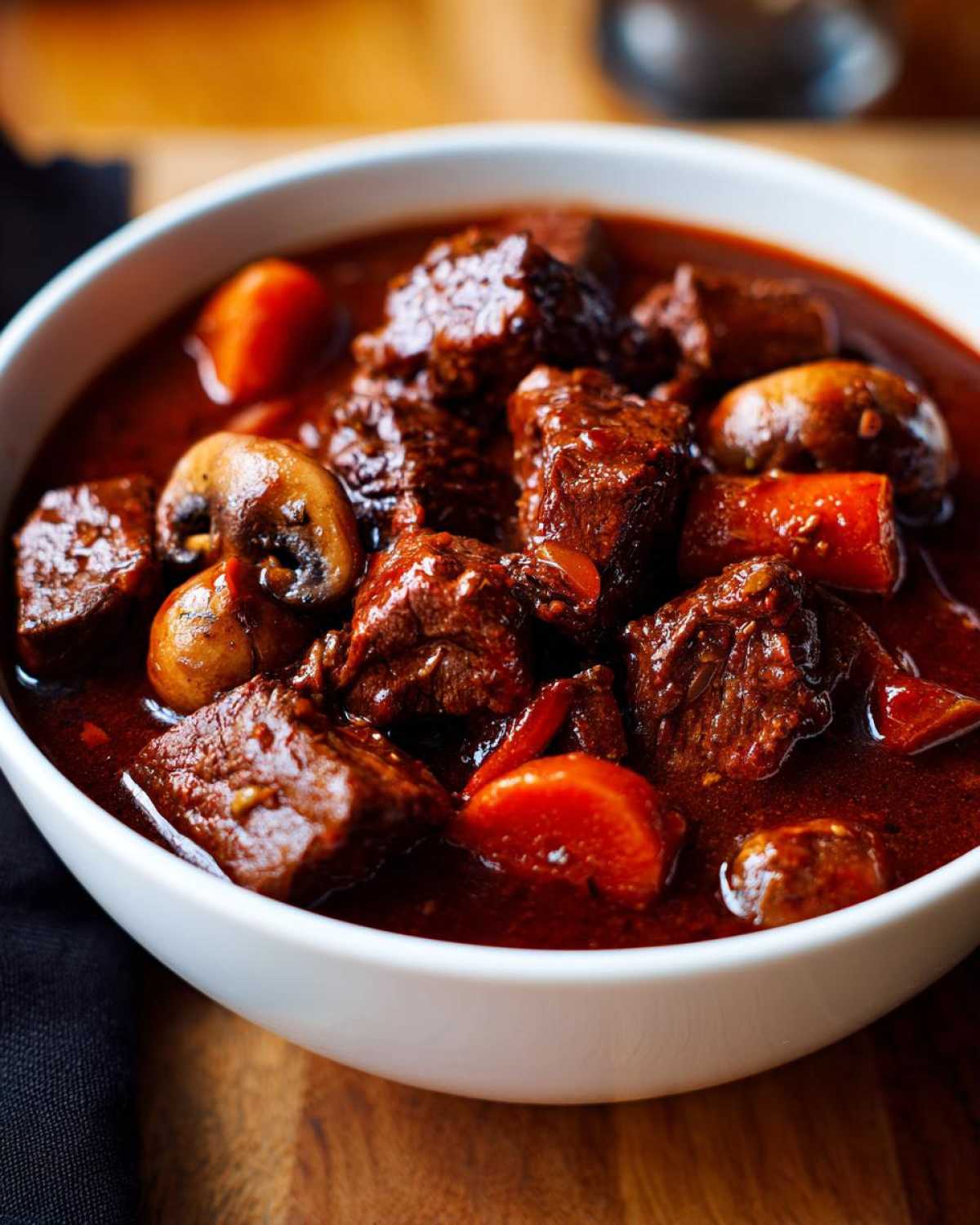
I can’t stress this enough: browning in batches is non-negotiable for great texture! If you try to cram all the beef in at once, you end up with boiled meat, and we are aiming for a deep, dark crust that adds massive flavor. When you deglaze with the wine, you literally lift all that concentrated beefy, savory goodness right off the bottom of the pot. That is the literal definition of starting from scratch to build a bold base. If you are ever tempted to ditch the oven for speed, remember that you’ll miss out on this crucial flavor layer. For comparison, check out my slow cooker beef stew adaptation, but know the oven method wins for true authenticity!
The Slow Cook: Achieving Deep Flavor Profiles
Once all the liquids and spices are in (broth, paste, thyme, bay leaf—the whole team!), bring it to a gentle simmer on the stove. Then, cover it tight and slide it into that low oven—325°F is perfect. This gorgeous bath needs between 2.5 to 3 hours. That long, slow time is what breaks down everything perfectly and lets you achieve those sublime deep flavor profiles. You’ll know it’s done when a fork slips through the meat without any effort at all. And don’t forget to add those mushrooms and potatoes in the last 30 minutes so they absorb all that heavenly liquid!
Expert Tips for The Authentic Flavor Experience (Culinary Authenticity Guide)
Now that you’ve done the hard work of gathering ingredients and managing the cooking time, listen up, because these final tricks are what separate a good stew from a legendary one. These little secrets really boost that layering flavor cooking we’re aiming for. They are simple, but they are absolutely what makes the difference when chasing that true taste recipe!
- Don’t skip the tomato paste! Even though it’s just a tablespoon, cooking it out with the onions before you add the wine gives the whole stew a subtle, deep foundation that white cooks often miss. It’s a trick for umami rich dishes that you’ll want to use everywhere.
- Always use fresh herbs if you can, but if you use dried thyme, rub it between your palms before dropping it in. That friction releases the essential oils, making a huge difference in the final aroma!
- Taste constantly, but only after the wine has reduced down a bit. The final seasoning—especially salt—makes the biggest impact right at the end of the cooking time.
The Overnight Rest: Intensifying Aroma Recipes
This is my absolute biggest rule for maximizing flavor in any slow-cooked meal, and especially for Beef Bourguignon. You *must* let it cool down, stick it in the fridge overnight, and reheat it the next day. I know, I know, waiting is torture when you cook something this delicious! But overnight, something magical happens in that pot.
The fats solidify, which helps the flavors meld together perfectly instead of just sitting next to each other. When you gently bring it back up to temperature the next day, the sauce thickens beautifully, and the entire pot smells absolutely divine. It truly elevates this into one of those intense aroma recipes—the smell when it’s reheating is just heavenly! If you’re looking for another easy way to build bold flavor quickly, you might check out my thoughts on quick beef stir-fry techniques, but for depth, nothing beats the overnight rest for this stew.
Equipment Needed for The Authentic Flavor Experience
You don’t need a million fancy gadgets to achieve The Authentic Flavor Experience with this traditional recipe, but there is one piece of kit you absolutely cannot skip: a heavy-bottomed Dutch oven. Trust me on this one!
- Heavy Dutch Oven (6-quart minimum): This is mandatory! It holds heat steadily, which is vital for both that initial hard sear on the beef and for the gentle, even temperature required during the 3-hour oven braise. The thick base prevents scorching. Keep it on the stove when you’re browning the meat and then straight into the oven it goes.
- Sharp Knife and Cutting Board: Since we’re dicing bacon, cubing beef, and chopping fresh veggies, you need knives that are up to the job. Dull knives make quick work turn into dangerous work!
- Tongs: Essential for turning and removing the beef chunks during searing so you can get that perfect brown crust on all sides, which is key for from scratch flavor building.
That’s really it! Don’t overthink it. A good pot and sharp tools will get you the whole way there for this masterpiece of mastering classic cuisine.
Serving Suggestions for The Authentic Flavor Experience
So, you’ve spent four hours coaxing incredible flavor out of that beef! Now for the payoff—how do you serve this ultimate bowl of comfort? Because we are aiming for Mastering classic cuisine here, we need accompaniments that soak up every last drop of that divine sauce. Anything less would be a crying shame, wouldn’t it?
The classic French approach usually involves something starchy to cradle all that glorious braising liquid. My absolute favorite way to serve it is over creamy, buttery mashed potatoes. Make sure those potatoes are silky smooth so they disappear right into the sauce! If you don’t want to fuss with mashing, crusty bread is a close second. You need something sturdy to drag along the bottom of the bowl.
If you’re feeling extra ambitious, you can whip up a batch of homemade bread—I use my foolproof 90-minute French bread recipe when I want the whole house to smell incredible! Failing that, wide egg noodles or even simple boiled small potatoes (if you didn’t put them in the stew) work wonderfully. The point is, you need a vehicle for that sauce, which is truly the heart of this dish.
I usually just garnish it with a sprinkle of fresh parsley right before serving. It adds just a tiny pop of color and freshness that cuts through all that richness. Enjoy every single bite!
Storage and Reheating for Maximum Flavor
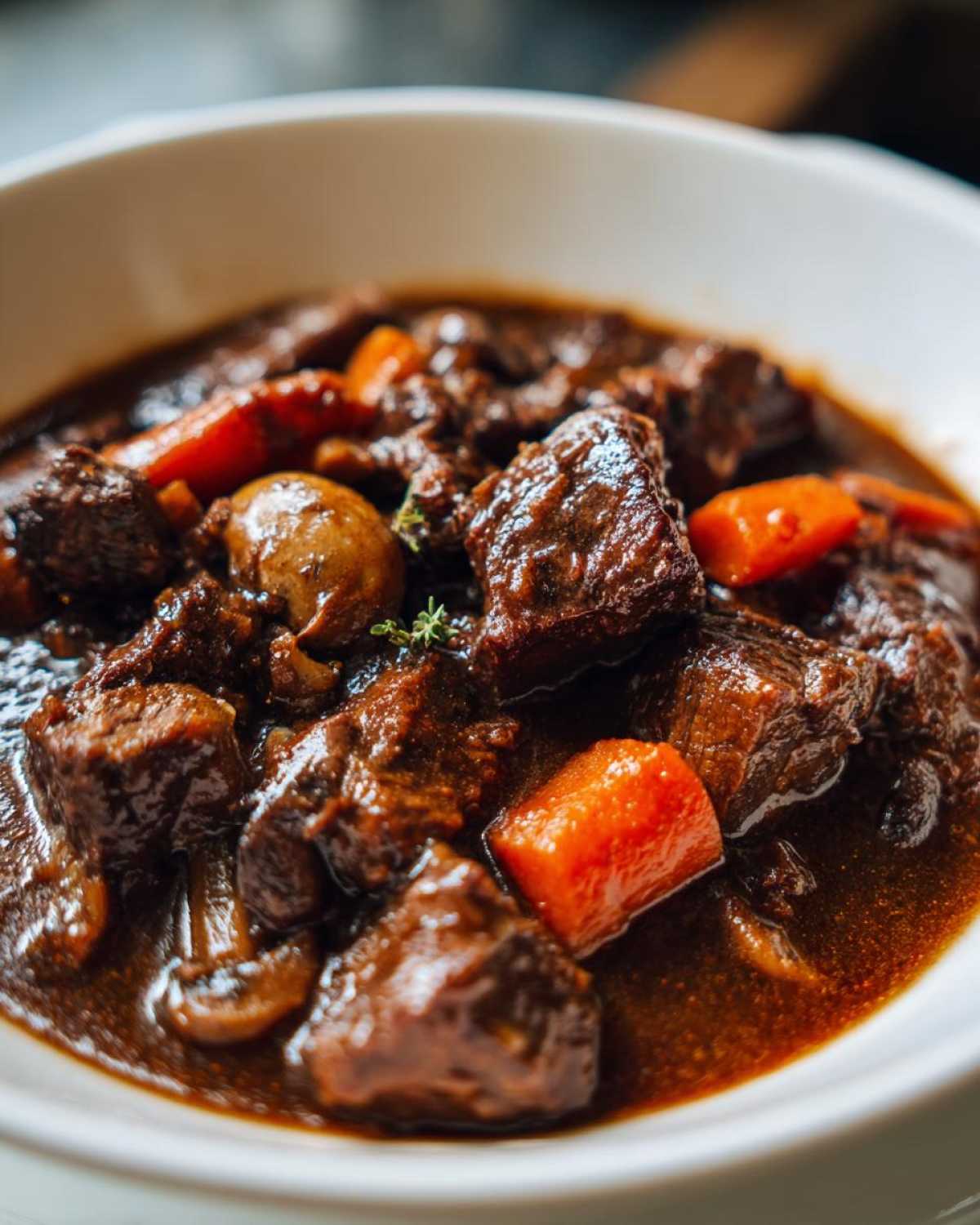
The best secret to having this Beef Bourguignon again and again is knowing how to store and reheat it, because honestly? It tastes even better the second day! This is the secret to having **true taste recipes** on hand for weeknights without losing that deep, homemade quality.
Once the stew has completely cooled down, you need to get it into airtight containers. Don’t leave it on the counter too long; food safety first, even when you’re excited about leftovers! You can definitely freeze this stew. Pop it into freezer-safe containers—just make sure you leave a little space at the top because liquids expand when they turn to ice. It lasts beautifully in the freezer for about three months, which is perfect for those dreary winter days when you need deep comfort fast.
Bringing Back That Authentic Flavor Post-Storage
When you’re ready to eat those leftovers, low and slow reheating is the only way to go to preserve that **authentic flavor experience** we worked so hard for. If you’re thawing from frozen, give it a full day in the fridge first. Then, transfer the stew to a clean Dutch oven—or whatever heavy pot you have—and heat it gently over medium-low heat.
Resist the urge to blast it on high heat! If the liquid starts boiling too aggressively, you risk tightening up the beef again and evaporating away those wonderful wine aromas. Just let it simmer gently, stirring every once in a while, until it’s heated all the way through. If it seems a little too thick after reheating, just splash in half a cup of beef broth or water until it flows the way you like it. But seriously, that second reheat? That’s when all the layers truly marry together!
Frequently Asked Questions About The Authentic Flavor Experience
Phew! I know this can sound a little intimidating because it’s such a classic, but honestly, once you understand the core principles, you’ll be unstoppable. People always ask me about tweaking the process to get that deep, true taste, so here are a few things I hear most often. Don’t sweat the small stuff; just focus on the slow cooking!
Can I make this Umami Rich Dishes recipe in a slow cooker instead of the oven?
Oh, you totally can! If you need to keep the kitchen cool or just want to set it and forget it, the slow cooker works well for achieving those rich, umami rich dishes. Here’s the catch: you *must* still sear the beef and sauté the vegetables on the stovetop first. Skipping that step means you skip the browning, and brown equals flavor!
Once everything is in the slow cooker, instead of the 3-hour oven braise, you’ll cook it on LOW for 7 to 9 hours, or on HIGH for 4 to 5 hours. The oven method browns the top a little more evenly, but the slow cooker definitely keeps the flavors concentrated beautifully. Just check for tenderness right around the 7-hour mark!
What if I cannot find dry Burgundy wine for Layered Flavor Cooking?
Don’t panic if your wine shop doesn’t have a beautiful, dry Burgundy! That’s where we adapt while maintaining the spirit of layered flavor cooking. The key is dry, acidic, and medium-bodied. If Pinot Noir or Burgundy isn’t there, grab a dry Cabernet Sauvignon, a good Merlot, or even dry Côtes du Rhône. Avoid anything sweet or labeled ‘fruit forward.’ If you’re struggling to find any dry red, you can try substituting about half the wine amount with extra rich beef broth mixed with a splash of red wine vinegar to give it that necessary acidic kick. We want tang, not sweetness!
For a different but equally intense take on deep flavor, you might want to look at how I approach my Guinness Beef Stew—that substitution totally changes the profile but still leans into that deep, savory background!
Estimated Nutritional Data
I always feel a little awkward putting numbers next to something this soulful, because when you’re chasing The Authentic Flavor Experience, you aren’t really worrying about the macros, right? You’re worrying about the depth of the wine reduction!
But, because we are being thorough—and because I know some of you lovely cooks track these things—here is the estimated nutritional breakdown for one serving of this magnificent Beef Bourguignon. Please remember, this is based on standard measurements of chuck and dry wine, so your actual numbers might drift a tiny bit. Cooking is a science, but it’s also an art, so don’t stress if your fat content changes depending on how much you trim off that bacon!
- Serving Size: 1 serving
- Calories: 450
- Fat: 18g (mostly from the beef and bacon)
- Protein: 45g (Hello, beef!)
- Carbohydrates: 25g
- Sugar: 8g
There you have it! A powerhouse meal that delivers immense satisfaction for those calories. You’re getting a ton of protein from the slow-cooked beef, which really explains why a single bowl of this feels like such a satisfying meal. It’s rustic, it’s French, and it proves that traditional cooking methods always win when it comes to taste!
Print
Traditional Beef Bourguignon
- Total Time: 4 hr 0 min
- Yield: 6 servings
- Diet: Low Fat
Description
A recipe for classic French Beef Bourguignon, focusing on slow cooking to develop deep, layered flavor.
Ingredients
- 3 pounds beef chuck, cut into 1 1/2 inch cubes
- 1 tablespoon olive oil
- 4 ounces bacon or lardons, diced
- 1 large onion, chopped
- 2 carrots, sliced
- 2 cloves garlic, minced
- 1 bottle (750 ml) dry red Burgundy wine
- 2 cups beef broth
- 1 tablespoon tomato paste
- 1 teaspoon dried thyme
- 1 bay leaf
- 8 ounces small white mushrooms, whole
- 1 pound small boiling potatoes, peeled
- Salt and black pepper to taste
Instructions
- Season the beef cubes generously with salt and pepper.
- In a large Dutch oven, heat the olive oil over medium-high heat. Brown the bacon until crisp, then remove the bacon bits with a slotted spoon and set aside, leaving the fat in the pot.
- Working in batches, sear the beef on all sides until well browned. Remove the beef and set it aside with the bacon.
- Add the onion and carrots to the pot and cook until softened, about 5 minutes. Add the garlic and cook for 1 minute more.
- Return the beef and bacon to the pot. Pour in the red wine, scraping up any browned bits from the bottom of the pot.
- Add the beef broth, tomato paste, thyme, and bay leaf. Bring the mixture to a simmer.
- Cover the Dutch oven and transfer it to an oven preheated to 325°F (160°C). Cook for 2 1/2 to 3 hours, or until the beef is very tender.
- About 30 minutes before the stew is done, sauté the mushrooms in a separate pan until lightly browned. Add the potatoes to the stew during the last 30 minutes of cooking.
- Remove the bay leaf before serving. Adjust seasoning with salt and pepper as needed.
Notes
- For the deepest flavor, use a good quality, dry red wine that you would enjoy drinking.
- Browning the meat in small batches prevents steaming and ensures a proper sear, which builds flavor.
- Allow the stew to cool completely and refrigerate overnight. Reheating the next day deepens the flavor profile significantly.
- Prep Time: 30 min
- Cook Time: 3 hr 30 min
- Category: Dinner
- Method: Braising
- Cuisine: French
Nutrition
- Serving Size: 1 serving
- Calories: 450
- Sugar: 8
- Sodium: 450
- Fat: 18
- Saturated Fat: 6
- Unsaturated Fat: 12
- Trans Fat: 0
- Carbohydrates: 25
- Fiber: 4
- Protein: 45
- Cholesterol: 110


Comments are closed.