
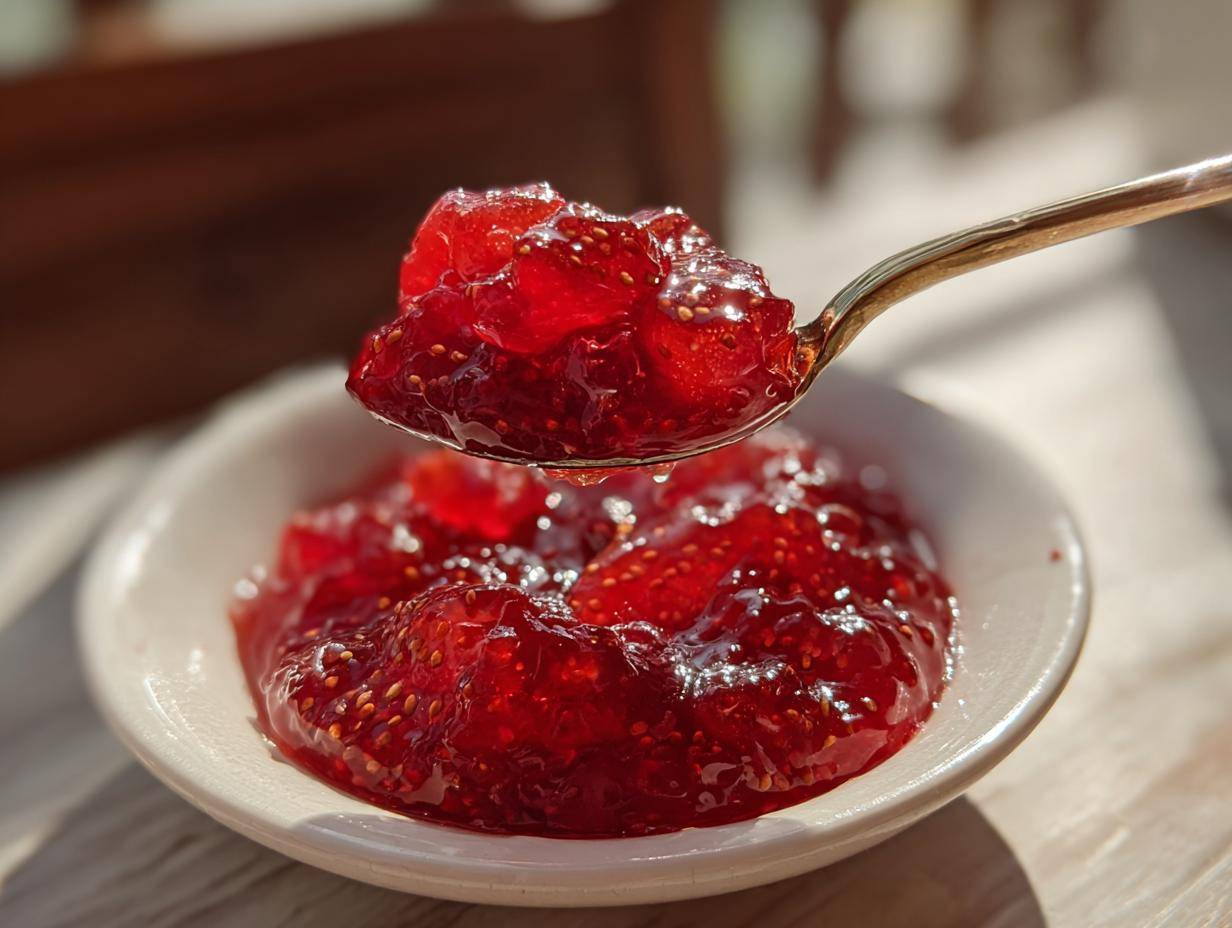
Oh, you know that moment in early summer when your kitchen is absolutely bursting with the brightest berries and the tartest greens? That’s when I know it’s time to put up a few jars of something special! This time around, I couldn’t resist blending my favorite seasonal stars: sweet strawberries, that perfect rhubarb tang, and the tropical, bright kick of fresh pineapple.
Honestly, most jams are lovely, but this homemade fruit preserve blend hits a completely different level of flavor balance. The pineapple mellows the rhubarb just enough so you get the tartness without it overpowering the strawberry sweetness. Trust me, it’s magic in a jar. I’ve spent ages perfecting the ratios so you get that beautiful, thick set every single time, whether you decide to can it or just stash it in the fridge. I’m so excited to share my complete, easy-to-follow recipe for the ultimate Strawberry Rhubarb Pineapple Jam with you!
Why This Strawberry Rhubarb Pineapple Jam Recipe Works So Well
This isn’t just mixing fruit and sugar, my friend; we’re building a symphony here! The real secret behind this amazing Strawberry Rhubarb Pineapple Jam is how these three very different fruits play together. The strawberries step up with that familiar, comforting sweetness we all know and love.
But then you get the rhubarb—always assertive!—which brings the necessary sharp tang. And right when you think it might get too rustic, the pineapple swoops in with this incredible, juicy brightness that just elevates everything. It’s vibrant! If you love hearing about other great fruit combinations, you should check out my thoughts on small batch jam making.
- It gives you that perfect, glossy set, whether you use a little pectin or rely on the fruit power alone.
- The balanced flavor means you never get that overly sweet jam feeling; it’s always bright on your toast.
- It’s fast! It works beautifully for small batches, and you can choose canning for long-term storage or whipping up a quick batch for the fridge.
Flavor Profile: Tart Meets Sweet in Strawberry Rhubarb Pineapple Jam
People always ask me if the pineapple fights the rhubarb, but no way! The pineapple acts like a fantastic mediator. It’s high in acid, which helps the flavor pop, but it also has sweetness to diffuse the harshness of the rhubarb stalks. It’s the tropical element that makes our Strawberry Rhubarb Pineapple Jam Recipe unique amongst all the usual summer fruit options. It’s just so flavorful!
Gathering Ingredients for Your Strawberry Rhubarb Pineapple Jam
Alright, let’s get down to business! Getting the ratios just right is key for a jam that sets beautifully, so please measure accurately here. For this batch of Strawberry Rhubarb Pineapple Jam, we need equal parts strawberry and rhubarb for that major fruit volume.
You’ll need 2 cups of strawberries, hulled and chopped, and 2 cups of rhubarb, trimmed and chopped—make sure your rhubarb pieces are small. Then we add 1 cup of finely diced fresh pineapple for that tropical punch. For sweetness and preservation, we’re using 4 cups of plain old granulated sugar. Don’t forget that essential tablespoon of lemon juice to help everything turn bright!
The optional player here is pectin. I list one box (1.75 oz) of powdered pectin. If you’re feeling experimental and want to try making it the long way, you can skip it, but know it’s going to take longer to thicken up!
Ingredient Notes and Substitutions for Homemade Fruit Preserve
When selecting your fruit, please—and I mean *please*—use fruit that feels firm and smells incredible. Soft, mushy berries won’t give you the clean set you’re after, and that’s sad for everyone! That’s why I always go for the firmest strawberries I can find for my fresh strawberry preserves guide.
If you decide to skip the pectin, the most important thing to remember is the cooking time after the sugar goes in dramatically increases—we’re talking maybe 30 to 45 minutes of hard boiling versus 10 to 15 with it! Pectin is just a shortcut to a quick set, nothing more. It’s a trade-off between time and convenience.
Essential Equipment for Small Batch Jam Making
Before we even think about turning on the stove, let’s make sure your countertop is ready for action! Making jam, especially when you’re dealing with the acidity of rhubarb and pineapple, requires the right gear so nothing scorches or sticks. You don’t want to ruin a perfect batch of fruit!
First up, you absolutely need a big, heavy-bottomed pot. Not one of those thin saucepans—those will scorch that sugar right onto the bottom before you can blink! A wide pot is better because it allows the moisture to evaporate quickly, which is how we get that good, thick jam.
You’ll also need your canning setup ready if you’re planning on sealing them up long-term. That means your jars, lids, and rings need to be washed and kept hot in simmering water. Don’t forget a ladle for filling those jars and a fine-mesh skimmer for fishing off any foam that pops up before we seal everything up.
If you watch the pros, they always use a candy or digital thermometer to nail that 220°F mark. It takes all the guesswork out of wondering if the jam is ready. If you don’t have one, don’t panic—I’ll show you the plate test later, but a thermometer really speeds up the process for this easy jam canning tutorial.
Step-by-Step Instructions for Strawberry Rhubarb Pineapple Jam Recipe
Okay, apron on, let’s cook! This is where we bring our beautiful fruit blend to life. First things first, if you plan on sealing these jars, you have to get your water bath canner simmering now and make sure your jars are sterilized and piping hot. We need everything ready to go before the jam is done because hot jam goes into hot jars, that’s the rule!
In your big, heavy pot, toss in your 2 cups of chopped strawberries, 2 cups of chopped rhubarb, and 1 cup of finely diced pineapple. Pour in that tablespoon of lemon juice—it wakes everything up! Let this gorgeous mix sit quietly for about 15 minutes. This little break gives the fruit time to sweat out some of its own lovely juices, which is super helpful for the cooking process.
Now, turn the heat up to medium-high. We’re stirring often until that fruit mixture is hitting a full, rolling boil. This is the moment of truth if you’re using pectin! If you have it, whisk in that powdered pectin now, stirring like crazy until it’s totally dissolved. You have to bring it back up to a hard, rolling boil that absolutely won’t stop when you stir it.
Once you hit that unstoppable boil, dump in all 4 cups of sugar at once. Keep stirring constantly until every last grain disappears, giving it a good minute or two after adding the sugar. Then, we boil hard! For the best Strawberry Rhubarb Pineapple Jam, you’re boiling hard and stirring constantly so it doesn’t scorch on the bottom. Keep an eye on the thermometer until you hit 220°F (104°C).
When it’s ready, pull it off the heat immediately. Give it a quick stir and use a spoon to skim off any foamy layer that might have formed on top. We want crystal clear jam for this easy jam canning tutorial!
Achieving the Perfect Set: Testing Your Strawberry Rhubarb Pineapple Jam
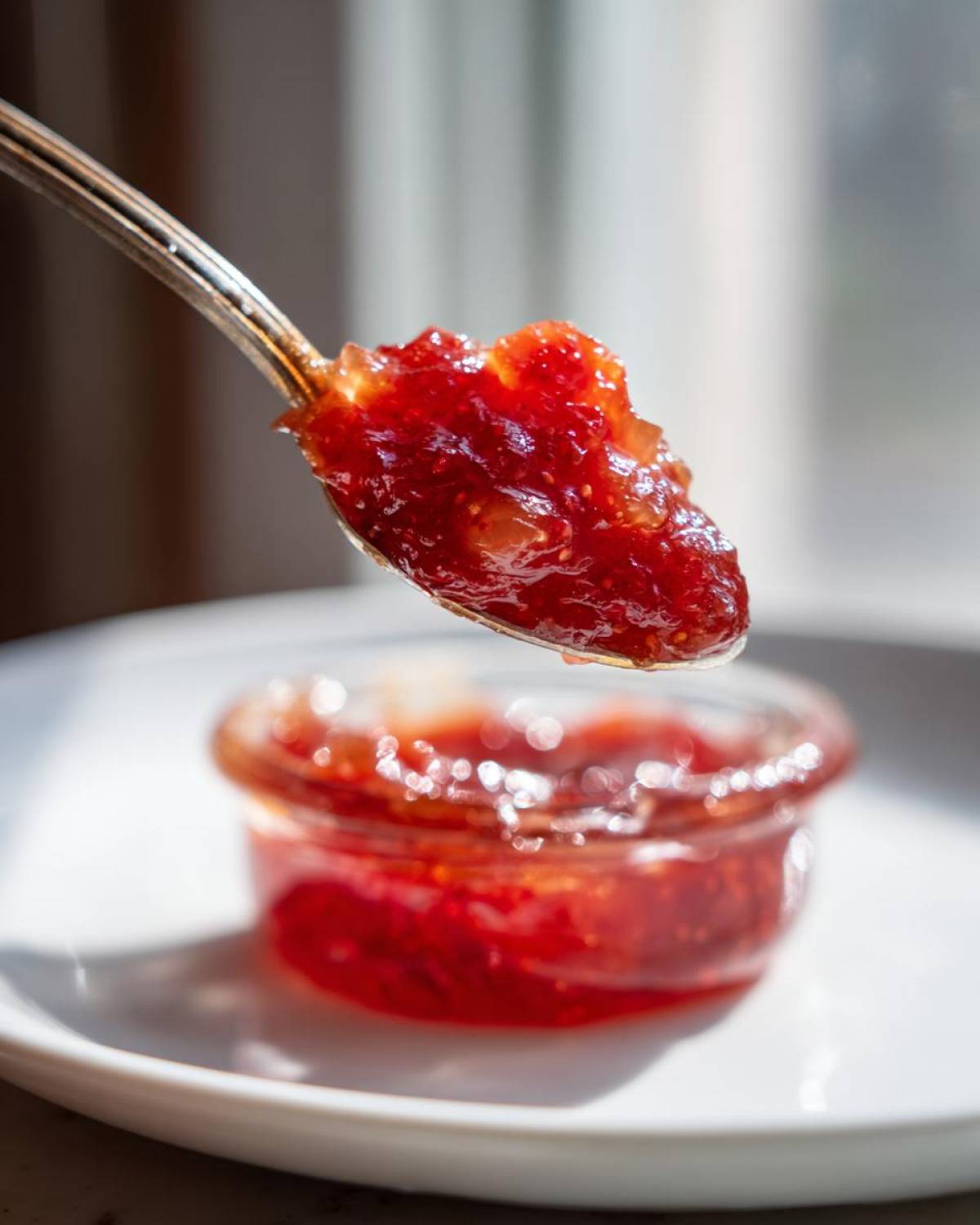
If you don’t trust the thermometer, or just want that extra layer of certainty, you need the cold plate test! Before you started cooking, pop a small saucer into the freezer. When you think the jam is close, quickly drop a teaspoon of hot jam onto that frozen plate and stick it back in the freezer for just 60 seconds.
Pull it out and gently push the cooked jam with your finger. If the surface wrinkles up nicely, you’ve hit the perfect set for your Strawberry Rhubarb Pineapple Jam! If it still runs and stays smooth, it needs another five minutes of boiling and then test again. Don’t ever serve runny jam—it’s just sad!

Preserving Your Strawberry Rhubarb Pineapple Jam: Canning vs. Refrigerator Storage
Your gorgeous, flavor-packed Strawberry Rhubarb Pineapple Jam is ready, but now you have to decide how you’re going to keep it! If you want this to last all winter long, you need to get serious about water bath canning. This is the only way to ensure a shelf-stable product. Remember those hot, sterilized jars we talked about?
Ladle that hot jam right into those jars, making sure you leave exactly 1/4 inch of space at the top—that’s called headspace, and it’s non-negotiable for a proper seal. Wipe the rims until they are spotless, put on your lids and bands finger-tight, and then process them in that boiling water bath for 10 minutes. Remember to check your altitude because you might need to bump that time up!
Now, if you’re just making a small batch for immediate enjoyment (which I totally get, this stuff is addictive!), you can use the refrigerator method. Just pour the hot jam into clean jars, leaving about 1/2 inch of headspace this time, let them cool, and pop them in the fridge. It’ll keep great for about three weeks, or you can freeze it for up to six months. This is perfect for trying out new flavor combos before committing to a full jarring fruit spreads at home session!
Tips for Canning Fruit Spreads at Home Safely
Safety first, friends! Sterilizing your jars isn’t just something people do to look busy; it genuinely prevents spoilage and makes sure your beautiful Strawberry Rhubarb Pineapple Jam doesn’t go sideways later. Make sure your jars actually boil for at least 10 minutes before you fill them.
The next biggest deal is that headspace. If you leave too much air between the jam and the lid, the vacuum seal won’t form correctly. If you leave too little, the jam might bubble out when it cools, messing up your seal. Once they seal, you should hear that satisfying *pop* later on. If a jar doesn’t seal, just put a label on it and keep it in the fridge—it’s still delicious!
Tips for Success Making Thick Jam Without Pectin
So, you looked at that box of powdered pectin and thought, “Nah, I’m going au naturel!” I love that spirit! Relying on the natural setting power of fruit—especially with rhubarb and strawberries that have decent natural pectin—is a beautiful thing, but you have to respect the process.
If you decide to skip that store-bought boost, the main thing you’re signing up for is **time**. When pectin is involved, we’re racing to 220°F before the delicate fruit flavors cook out too much. Without it, you have to keep that jam boiling hard after the sugar is dissolved until the natural pectin concentrates enough to set.
That means pushing past the 15-minute mark we talked about for the pectin batch. You’re looking at cooking it for closer to 30, maybe even 45 minutes of constant, hard boiling once that sugar is in. You need that high, sustained heat to encourage the fruit solids to bond and thicken up properly. Don’t walk away! Keep stirring!
You also need to be absolutely meticulous about testing the set using that frozen plate trick we discussed. Since you don’t have pectin guiding you, the plate test becomes your only real friend. If you don’t test it, you risk pulling a pan full of beautiful, flavorful (but runny!) fruit syrup off the heat.
Also, since you’re cooking it longer, watch your heat level. You might need to drop it down from high to medium-high after the first 15 minutes if you see it threatening to scorch. It’s a delicate dance between evaporating water and burning sugar. For a deeper dive into managing the science on a low-pectin fruit like this, check out my tips on how to make thick jam without pectin. Good luck, I know you can nail that set!
Serving Suggestions for Your Flavorful Fruit Preserves for Toast
Now that you have sealed up those beautiful jars of Strawberry Rhubarb Pineapple Jam, what on earth do you do with it besides slathering it thickly on toast? (Though, frankly, that’s worth the trouble alone!)
This blend is so dynamic, it’s perfect on top of yogurt or swirled through pound cake batter before baking. My absolute favorite trick is warming up a small amount and using it as a glaze for grilled pork tenderloin—the sweet and tart flavors are incredible with savory meat!
It also makes a fantastic filling for thumbprint cookies or as a topping for ice cream. If you’re looking for more ways to use your amazing preserves in baking, I have a few ideas over on my post about delicious fruit toppings for baking. You’ll never look at plain strawberry jam the same way again!
Frequently Asked Questions About Strawberry Rhubarb Pineapple Jam
I know when you’re making something this specific, you always have a few lingering questions. It’s totally normal! I’ve gathered up the ones I get asked the most about this particular batch of Strawberry Rhubarb Pineapple Jam. Hopefully, these little pointers help smooth out your canning day!
If you’re new to this whole process, don’t sweat it. I have a whole guide dedicated to beginner jam making tips that walks you through everything without making you feel silly for asking.
How long does this Homemade Fruit Preserve last once opened?
That’s a great question about storage! If you went the refrigerator route and didn’t process the jars in the water bath, you need to keep it sealed tight and refrigerated. Once you pop that lid, I find this Homemade Fruit Preserve stays fantastically fresh for about three weeks. Like I mentioned before, if you freeze it right away, it’s good for up to six months, but always test the texture after thawing!
Can I reduce the sugar in this Strawberry Rhubarb Pineapple Jam Recipe?
This is tricky, and I have to warn you: sugar is doing double duty here. It’s not just for sweetness; it’s a crucial part of the preservation process, especially if you’re canning and skipping the pectin. It helps the jam reach that setting temperature, too! If you drastically cut back on the sugar in this Strawberry Rhubarb Pineapple Jam Recipe, you risk the jam not setting properly and potentially shortening its shelf life if you plan on canning it. I generally advise sticking close to the 4 cups for safety and quality!
Estimated Nutritional Information for This Artisan Homemade Spread
I always keep an eye on the numbers, even though honestly, when I’m eating jam this good, I try not to think too hard about it! Since this is a homemade creation using fresh fruit, the exact values can shift a tiny bit depending on the sweetness of your strawberries or exactly how much sugar you managed to dissolve. But, for the sake of being thorough, here are the general estimates for this delicious Artisan Homemade Spread based on the recipe amounts.
This information is based on a standard serving size of two tablespoons. Please keep in mind these numbers are always estimates, as I’m not measuring every single drop of juice released by the rhubarb!
- Serving Size: 2 tablespoons
- Calories: Around 85
- Sugar: About 21 grams (Yes, jam has sugar, but remember it helps keep things safe and lovely!)
- Fat: 0 grams
- Sodium: Very low, around 1 mg
- Carbohydrates: Roughly 22 grams
- Protein: Close to 0 grams
There’s no fat or cholesterol here, which is great! Just pure fruit flavor preserved with a healthy dose of sugar to keep it perfectly set and delicious until you spread it on your morning scone. Enjoy responsibly!
Print
Strawberry Rhubarb Pineapple Jam
- Total Time: 55 min
- Yield: About 5 half-pint jars
- Diet: Vegetarian
Description
A straightforward recipe for making a balanced, flavorful jam using strawberries, rhubarb, and pineapple, with instructions for both canning and refrigerator storage.
Ingredients
- 2 cups fresh strawberries, hulled and chopped
- 2 cups fresh rhubarb, trimmed and chopped
- 1 cup fresh pineapple, finely diced
- 4 cups granulated sugar
- 1 tablespoon lemon juice
- 1 package (1.75 oz) powdered pectin (optional, for a quicker set)
Instructions
- Prepare your canning equipment if you plan to water bath process. Sterilize jars and keep them hot.
- Combine the chopped strawberries, rhubarb, and pineapple in a large, heavy-bottomed pot.
- Stir in the lemon juice. Let the fruit mixture sit for 15 minutes to release juices.
- Place the pot over medium-high heat. Bring the mixture to a rolling boil, stirring often.
- If using pectin, add it now, stirring constantly until fully dissolved. Return the mixture to a full rolling boil that cannot be stirred down.
- Add the sugar all at once, stirring until it dissolves completely.
- Return the jam to a full rolling boil. Boil hard, stirring constantly to prevent scorching, until the temperature reaches 220 degrees Fahrenheit (104 degrees Celsius) or the jam thickens enough to sheet off a cold spoon. This usually takes 10 to 20 minutes after adding sugar.
- Remove the pot from the heat. Skim off any foam that forms on the surface.
- For canning: Ladle the hot jam into hot, sterilized jars, leaving 1/4 inch headspace. Wipe rims clean, apply lids and bands, and process in a boiling water bath for 10 minutes (adjust time for altitude).
- For refrigerator storage: Pour the hot jam into clean jars, leaving 1/2 inch headspace. Seal and let cool to room temperature before refrigerating. This jam keeps for about 3 weeks in the refrigerator or up to 6 months in the freezer.
Notes
- To test for set without a thermometer, place a small plate in the freezer before starting. Drop a teaspoon of hot jam onto the cold plate. Return it to the freezer for one minute. Push the jam; if it wrinkles, it is set.
- If you skip the pectin, cook the fruit mixture longer after adding sugar until it reaches the desired thickness, which may take 30 to 45 minutes.
- The combination of tart rhubarb and pineapple balances the sweetness of the strawberries well.
- Use firm, ripe fruit for the best texture in your finished jam.
- Prep Time: 20 min
- Cook Time: 35 min
- Category: Preserves
- Method: Stovetop Cooking/Canning
- Cuisine: American
Nutrition
- Serving Size: 2 tablespoons
- Calories: 85
- Sugar: 21
- Sodium: 1
- Fat: 0
- Saturated Fat: 0
- Unsaturated Fat: 0
- Trans Fat: 0
- Carbohydrates: 22
- Fiber: 0
- Protein: 0
- Cholesterol: 0


Comments are closed.