
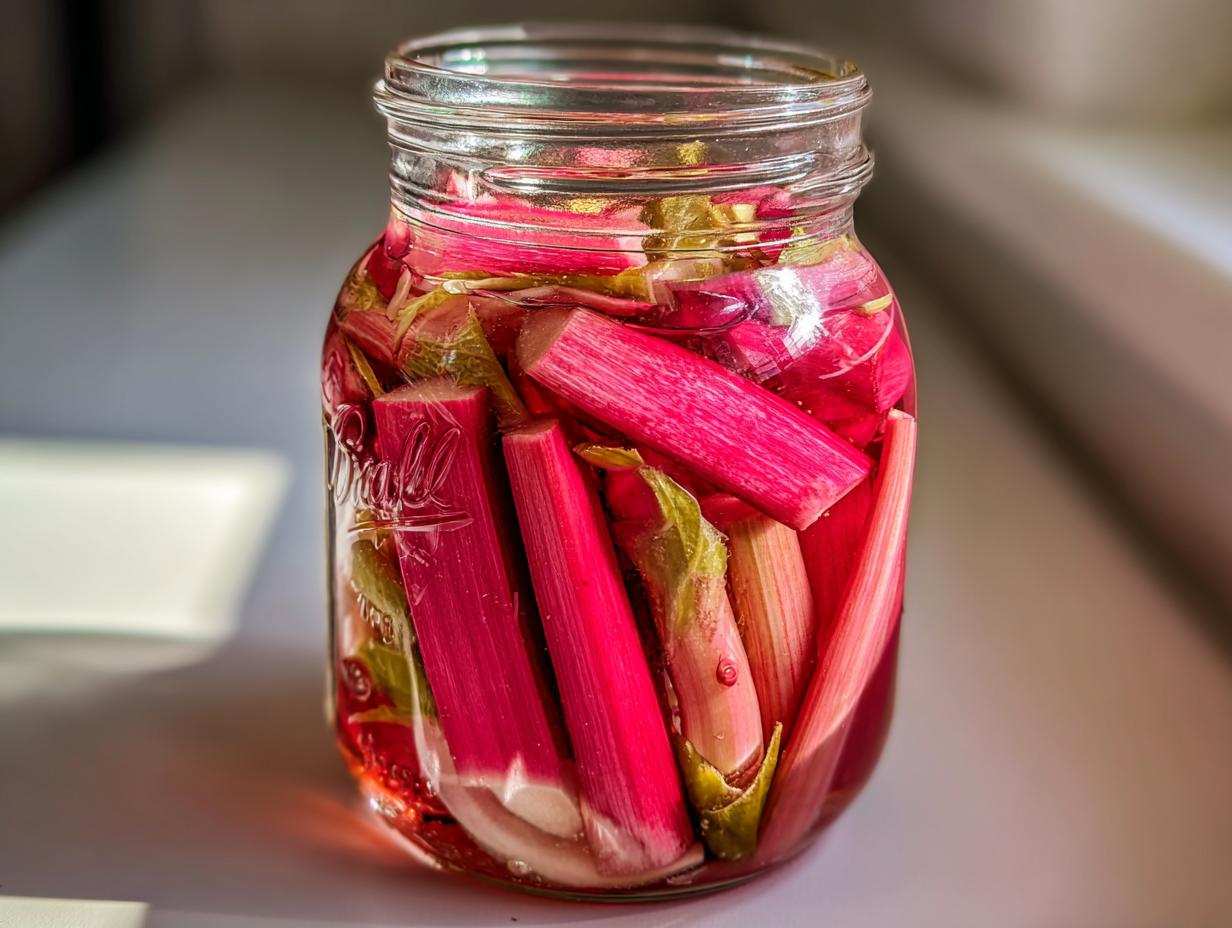
Oh, you guys, I *love* when spring swings around because that means rhubarb is popping up everywhere! Most people jump straight to making those super-sweet crumbles and pies, but I’ve got a little secret that turns this tart veggie into something totally unexpected. Forget the canner for one second; we’re talking about real, wild fermentation here.
I give you my recipe for Lacto-Fermented Rhubarb Pickles with Ginger. Trust me, the sharp, almost vinegary zing of fermented rhubarb followed by that warm kick from the fresh ginger slices? It’s absolutely addictive—the perfect probiotic rhubarb recipe for a snack! I’ve been messing around with different ways to preserve seasonal vegetables for years now, and this flavor combination is definitely one of my biggest wins. It’s bright, it’s crunchy, and it brings a huge burst of flavor to anything you serve it with.
Why You Will Love These Lacto-Fermented Rhubarb Pickles with Ginger
If you’re looking for a way to capture the freshest flavors of spring and keep them healthy, this recipe is it. Honestly, it blows canned pickles out of the water! Here’s the quick rundown on why you need to try this:
- That Unique Flavor Punch: The tartness of the rhubarb is perfectly balanced by the spicy heat of the fresh ginger. It’s a rhubarb and ginger flavor combination that just sings!
- Amazing Texture: We are making crunchy fermented pickles here, not mushy science experiments! A few easy tricks keep these rhubarb stalks wonderfully crisp.
- Probiotic Goodness: Since this is a pure lacto fermentation vegetable process, you are making delicious, vibrant, vegetarian probiotic foods right on your counter. Hello, gut health!
- Seasonal Preserving at Its Best: This is such a fun way to use up huge quantities of rhubarb before the summer heat hits. It makes such a unique fermented condiment.
Essential Ingredients for Lacto-Fermented Rhubarb Pickles with Ginger
Okay, for this fermented rhubarb recipe, the ingredients list is short, but everything matters! We need about a pound of fresh rhubarb stalks. Make sure those stalks are bright and firm; the harder they are, the better they’ll hold up to the fermentation process. You also need a good inch of fresh ginger, thinly sliced—don’t skimp on the ginger, that’s where the magic comes from! For the brine, you must use 4 cups of filtered, non-chlorinated water. Seriously, chlorine kills the good bacteria we need. And we use 2 tablespoons of non-iodized pickling salt—iodine interferes with the process!
Equipment Needed for Lacto-Fermented Rhubarb Pickles with Ginger
You don’t need a fancy setup for this, but you do need the right gear to make sure your homemade rhubarb pickles stay safe and happy. Grab a clean, wide-mouth quart-sized glass jar—that’s the easiest way to go. You definitely want a fermentation weight, like a glass disc, to keep everything under that brine. I also highly recommend getting an airlock lid, which lets those fermentation gases escape without letting any nasty air in. It makes life so much easier for safe vegetable fermentation!
Step-by-Step Guide to Making Lacto-Fermented Rhubarb Pickles with Ginger
Now for the fun part—turning simple ingredients into amazing, tangy probiotic rhubarb! This process is straightforward, but paying attention to detail is how we ensure we end up with crunchy fermented pickles and not just soggy math homework. If you want the full deep dive on the science behind all this, check out my guide on wild fermentation guide.
Preparing the Rhubarb and Ginger
First things first: get your rhubarb ready. Wash those stalks really well, trim the ends, and cut them into uniform 1-inch chunks. Uniformity helps everything ferment evenly! Next, take your piece of fresh ginger and slice it thinly. Don’t worry if it looks a little messy; we just want those flavor packets distributed throughout the jar. Now, here’s my secret tip for extra-crunchy fermented rhubarb pickles: soak those cut rhubarb pieces in a bowl of ice water for about two hours before you pack them. It really firms them up!
Mixing the Best Brine for Fermented Rhubarb
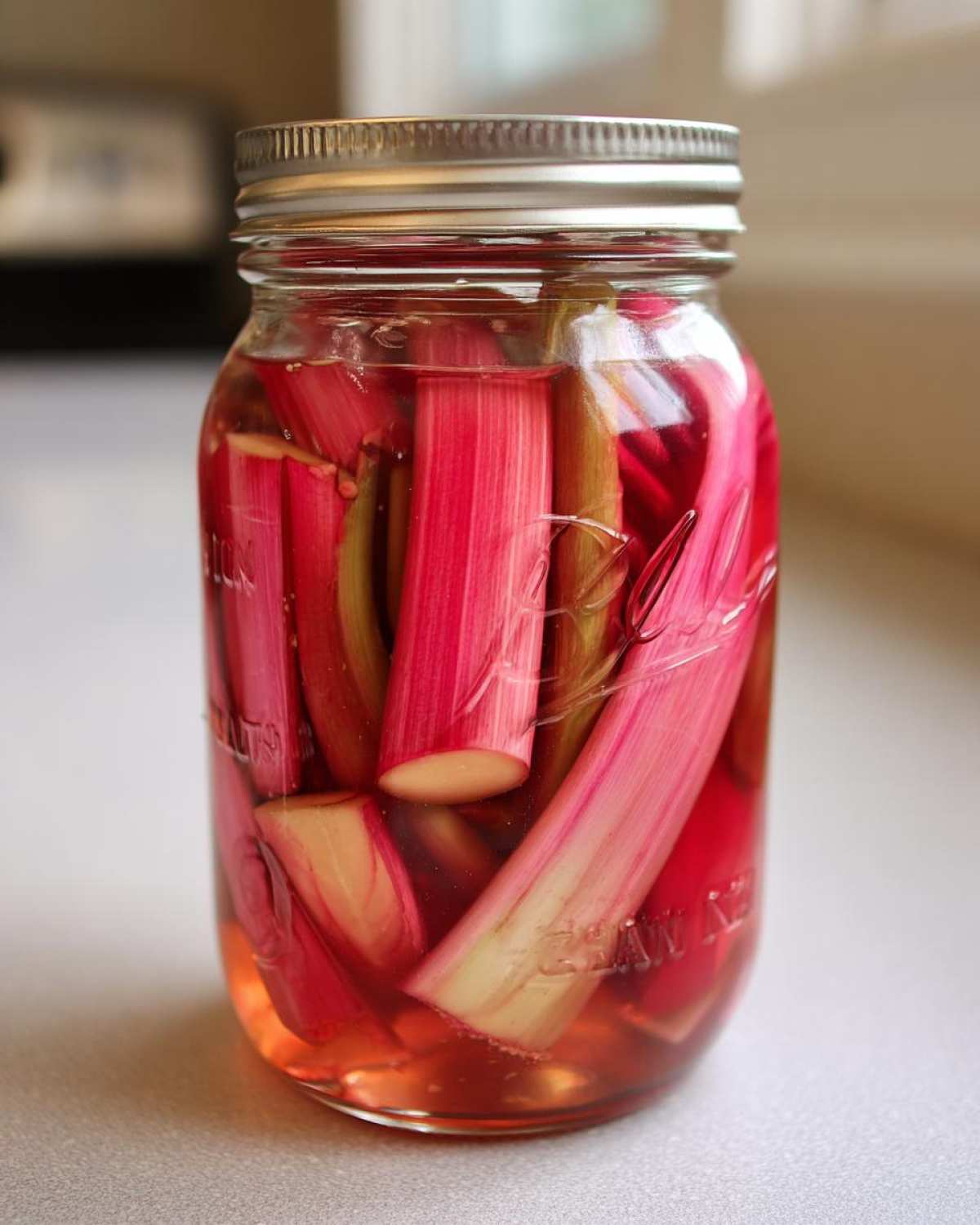
This is where salt percentage matters. For this batch, we’re aiming for a roughly 3% salt brine by weight, which is about 2 tablespoons of non-iodized pickling salt for 4 cups of filtered water. Warm the water slightly if you have to, but dissolve that salt completely until the water is totally clear. Remember, no iodine, please! This simple brine is what feeds the good bacteria needed for successful lacto fermentation vegetables.
Packing the Jar and Starting the Lacto-Fermented Rhubarb Pickles with Ginger
Take your chilled rhubarb, the ginger slices, and maybe that smashed garlic clove if you’re using it, and pack them TIGHTLY into your clean quart jar. You want to pack them down firmly! Then, pour that brine right over the top, making sure every single piece of rhubarb is completely submerged below the surface. You must leave about an inch of space at the very top for headspace—the bubbles need somewhere to go! Place your weight on top. If you don’t have an airlock, just screw the standard lid on loosely so gases can escape. We are ready to ferment!
Fermentation Timeline and Troubleshooting for Lacto-Fermented Rhubarb Pickles with Ginger
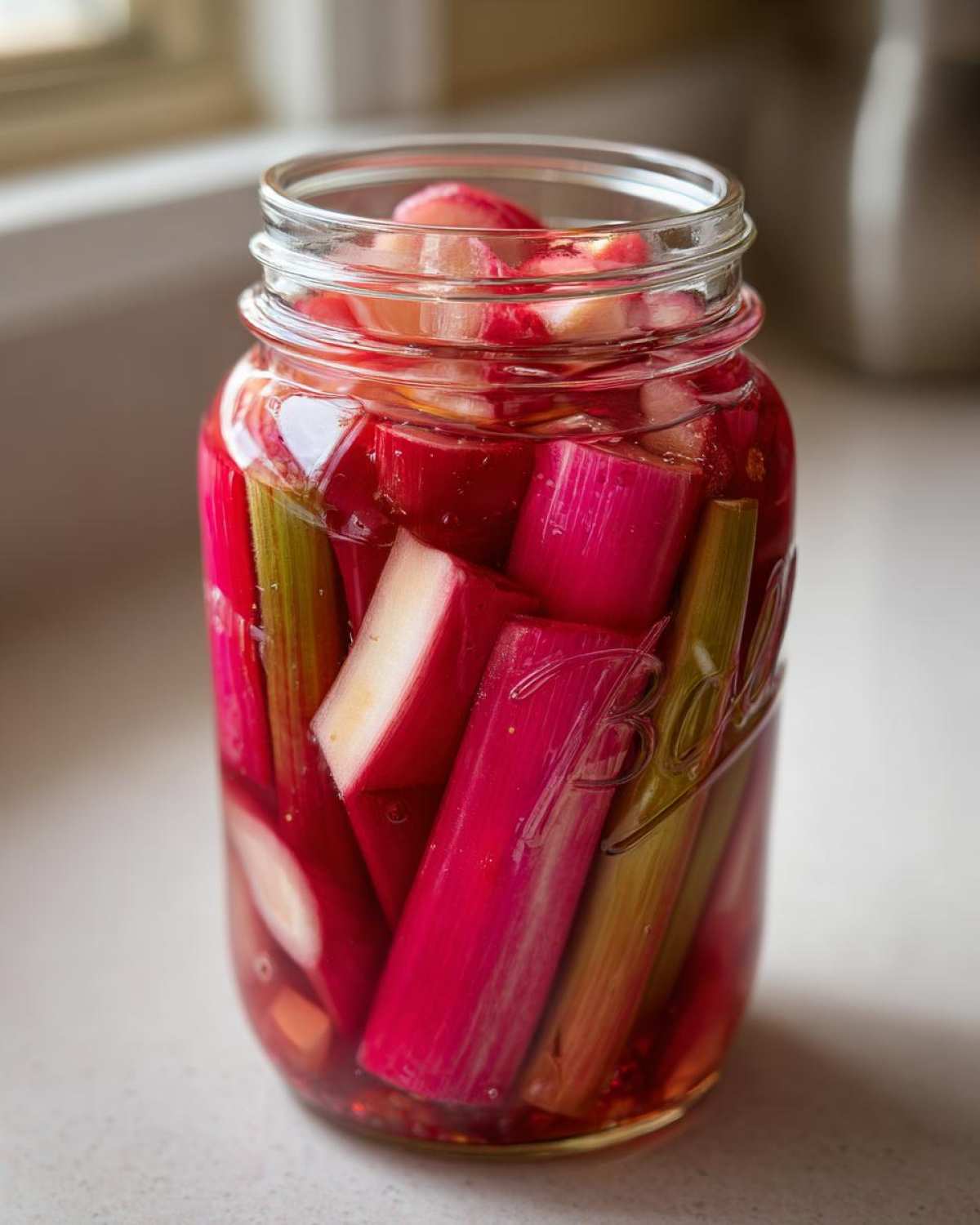
Once your jar is packed and sealed (loosely, remember!), tuck it away somewhere dark where the temperature is stable, ideally between 65 and 72 degrees Fahrenheit. The whole timeline for these probiotic rhubarb recipes depends on how warm your kitchen is! If it’s warm, two or three days might be enough; if it’s cooler, you might need closer to ten. You’ll know fermentation is active because you’ll start seeing tiny bubbles crawling up the side of the jar—that’s carbon dioxide being released. That’s a super happy sign!
Now, for troubleshooting, which is always key in safe vegetable fermentation. After day three or four, you might see a white film developing on the surface. If it looks wispy, thin, and white, that’s probably kahm yeast. It’s harmless! Just skim it off with a clean spoon and press the solids back down. If you see any black, blue, or fuzzy growth, do not taste it! That’s mold, and you’ll need to toss the whole batch. It’s rare if you keep everything submerged correctly, but better safe than sorry!
Tips for Achieving Perfect Texture in Your Lacto-Fermented Rhubarb Pickles with Ginger
Texture is everything when you’re dealing with rhubarb, right? We want tangy, spicy, but definitely crunchy fermented pickles! The single best thing you can do to keep that bite is that pre-soak I mentioned—if you haven’t already, try chilling those chopped stalks in ice water for a couple of hours before they even meet the brine. It firms them up like crazy.
The second thing is watching the clock. Longer fermentation equals softer pickles, plain and simple. If you wait 10 or 12 days, that beautiful lactic acid gets really strong, but the rhubarb will start to soften up a bit. I personally find 5 to 7 days is my sweet spot for that perfect snap.
Once you hit that ideal sourness level (taste test often!), you need to transfer them immediately into the fridge. The cold temperature basically locks the bacteria in place and halts the fermentation, preserving that wonderful crunch. If you’re looking for other crispy inspirations, you might want to check out my guide on ultimate crispy fried recipes for when you want a crunch that isn’t fermented!
Serving Suggestions for Your Lacto-Fermented Rhubarb Pickles with Ginger
Now that you’ve got this amazing jar of bright, spicy, tart goodness, what do you do with it? These aren’t your standard dill pickles; they’re a stellar addition to almost anything that needs a wake-up call! Because the flavor is so bold—that tart rhubarb mixing with the heat of the ginger—they work best when they are a strong accent.
I love chopping them up really fine and mixing them right into a creamy dip or yogurt-based sauce. They add the perfect acidic pop! They are amazing chopped and sprinkled over rich foods, like pulled pork sandwiches or even on top of really savory roasted chicken. If you’re looking for more creative ways to use preserved ginger, I have a whole collection of ginger preserved recipes you might enjoy!
Honestly, my favorite way is pairing them with fatty cheese. Put a few slices on a charcuterie board next to some sharp cheddar or creamy brie. They cut through the richness so nicely. They’re a fantastic addition to any meal where you need a little brightness!
Storage and Reheating Instructions for Lacto-Fermented Rhubarb Pickles with Ginger
Once your lacto-fermented rhubarb pickles have reached peak deliciousness, it’s time to press the pause button! Pop the sealed jar straight into the refrigerator. That cold temperature is essential because it slows down the bacteria activity dramatically, effectively stopping the fermentation process dead in its tracks. If you leave them on the counter, they keep getting more sour!
Stored properly in the fridge, these homemade rhubarb pickles will stay fantastic for several weeks, easily making it into the months range. Always trust your eyes and nose before eating leftovers—if the liquid gets cloudy unexpectedly or you see any fuzzy growth, don’t risk it! But generally, they are good to go whenever you want a little tangy, ginger-spiced zing!
Frequently Asked Questions About Lacto-Fermented Rhubarb Pickles with Ginger
I know sometimes diving into wild fermentation can feel a little intimidating, so let’s tackle those burning questions you might still have about making these fermented rhubarb pickles! We want every batch to be safe and delicious, every single time.
Can I use tap water for making Lacto-Fermented Rhubarb Pickles with Ginger?
Oh, please don’t! That’s probably the quickest way to sabotage your batch. Tap water usually contains chlorine, and chlorine is designed to kill bacteria—which is the exact opposite of what we need in lacto fermentation! Chlorine inhibits the growth of those beneficial lactic acid bacteria. You absolutely must use filtered water or, if you only have tap water, leave it out in an open container on the counter for 24 hours so the chlorine can evaporate off.
How long do I need to ferment these homemade rhubarb pickles?
This is the beauty of natural fermentation—it’s flexible! I gave you the 5 to 10-day range because it really changes based on the temperature in your kitchen. If your room is warm, say 72 degrees, they might be sour and ready in just 5 days. If it’s cooler, you might need the full 10 days. My biggest piece of advice is to taste them starting around day five. Once they taste tart enough for you, seal them up and stick them in the fridge to stop the process! That’s how you know when these probiotic rhubarb recipes are done.
Is it safe if my lacto fermentation vegetables float?
Yes, it’s totally normal for things to float a little bit, especially in the first couple of days as they release gas! But here’s the safety part: anything submerged in the brine is safe; anything sticking out above the liquid is exposed to mold and bad bacteria. That’s why we stress using a fermentation weight so heavily. If you don’t have a dedicated weight, I’ve used a small, clean glass ramekin tucked inside the jar to keep everything pressed under the brine. Keeping everything submerged is the number one rule for safe vegetable fermentation.
Print
Lacto-Fermented Rhubarb Pickles with Ginger
- Total Time: 20 min (plus 5-10 days fermentation)
- Yield: Approximately 1 quart
- Diet: Vegan
Description
Make tangy, crunchy lacto-fermented rhubarb pickles using fresh ginger for added spice. This recipe uses a standard vegetable fermentation brine ratio.
Ingredients
- 1 lb fresh rhubarb stalks, trimmed and cut into 1-inch pieces
- 1 inch fresh ginger, thinly sliced
- 4 cups filtered, non-chlorinated water
- 2 tablespoons non-iodized pickling salt (about 3% brine by weight)
- Optional: 1 clove garlic, smashed
Instructions
- Prepare the rhubarb by washing the stalks thoroughly and cutting them into uniform 1-inch pieces.
- Prepare the brine: Dissolve the pickling salt completely into the filtered water. Stir until the water is clear. This creates a roughly 3% salt brine.
- Pack the rhubarb pieces, sliced ginger, and optional garlic tightly into a clean, wide-mouth quart-sized glass jar. Pack them down firmly to minimize headspace.
- Pour the prepared brine over the rhubarb and ginger mixture, ensuring all solids are submerged beneath the brine level. Leave at least 1 inch of headspace at the top of the jar.
- Place a fermentation weight on top of the solids to keep them submerged under the brine.
- Seal the jar with an airlock lid or a standard lid loosely fitted to allow gases to escape.
- Place the jar in a cool, dark place (65-72°F or 18-22°C) for fermentation.
- Check daily for the first few days. You should see small bubbles forming, indicating active fermentation. If the solids float above the brine, press them down gently.
- Ferment for 5 to 10 days, tasting after day 5. Fermentation time depends on room temperature; warmer temperatures speed up the process.
- When the pickles reach your desired level of sourness and crunch, remove the solids and ginger, seal the jar tightly, and transfer the pickles to the refrigerator to halt fermentation.
Notes
- For extra crunch, you can soak the cut rhubarb in ice water for 2 hours before brining.
- Use only non-iodized salt; iodine can inhibit beneficial bacteria growth.
- If you see white, harmless yeast (kahm yeast) on the surface, skim it off. If you see black or fuzzy mold, discard the batch.
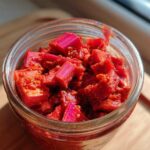
- The finished pickles will have a bright, tart flavor complemented by the warmth of the ginger.
- Prep Time: 20 min
- Cook Time: 0 min
- Category: Condiment
- Method: Lacto-Fermentation
- Cuisine: General
Nutrition
- Serving Size: 4 pieces
- Calories: 5
- Sugar: 0.2
- Sodium: 180
- Fat: 0.1
- Saturated Fat: 0
- Unsaturated Fat: 0
- Trans Fat: 0
- Carbohydrates: 1.1
- Fiber: 0.5
- Protein: 0.2
- Cholesterol: 0


Comments are closed.