
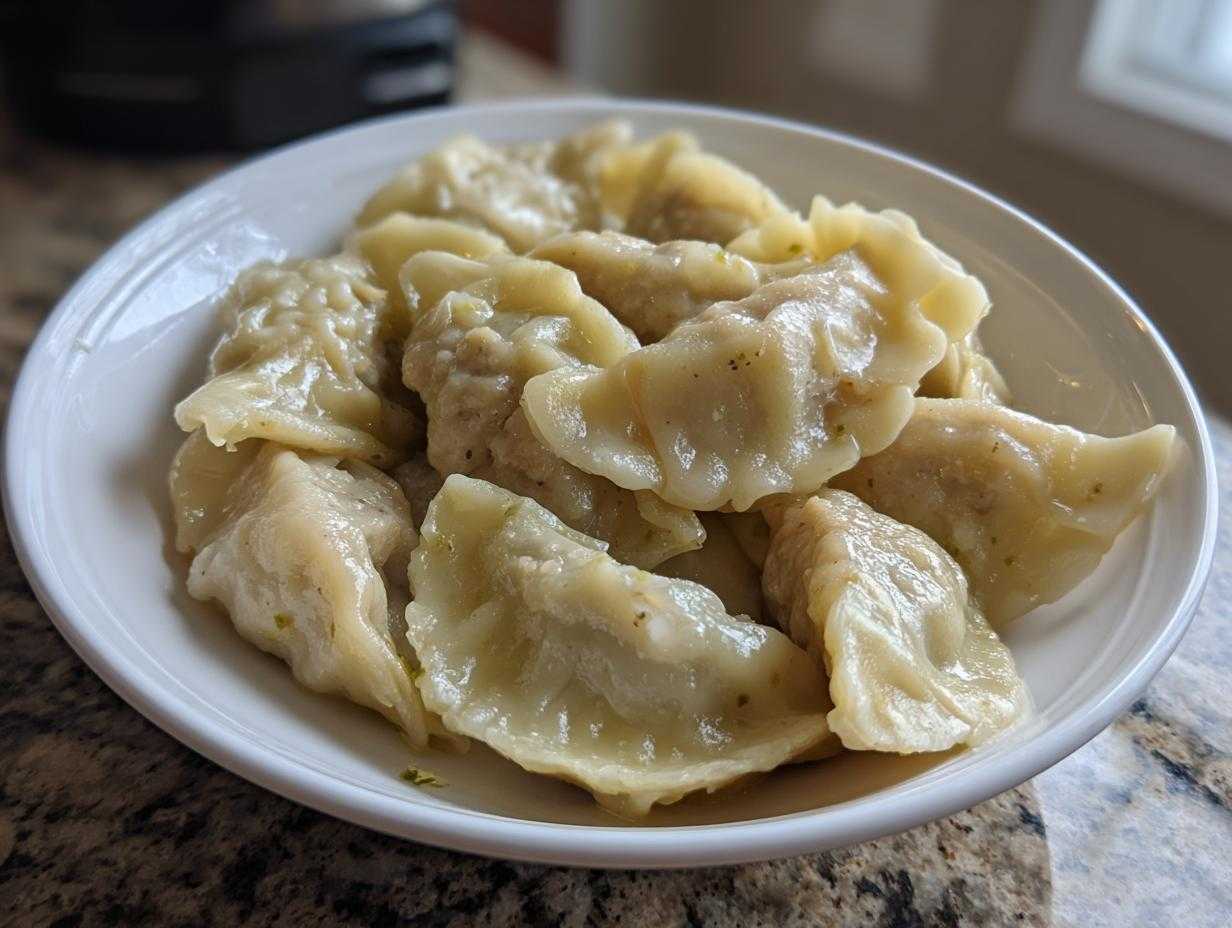
You know that feeling when you bite into something that just tastes like tradition? Forget the sad, pre-made versions from the freezer aisle! Making real, honest-to-goodness Traditional Chinese Dumplings right in your own kitchen is seriously my favorite kitchen therapy. This recipe nails that perfect savory pork and cabbage filling, and honestly, mastering the wrapper from scratch is easier than you think. I remember the first time I served these for Lunar New Year; my auntie watched me trying to pleat them—I kept messing up and they looked like little doughy footballs! But even those lopsided ones tasted incredible. Trust me, once you try these perfect, chewy homemade dumpling wrappers, you’ll never go back. We’re making authentic jiaozi today! You can find more fantastic Lunar New Year recipes over here: Chinese Dumplings for Lunar New Year.
Why You Will Love Making Traditional Chinese Dumplings
Seriously, making these is so rewarding. You get that incredible restaurant taste without leaving the house! Here’s what I love most about this specific Chinese dumplings recipe:
- The filling is packed with savory pork and crisp Napa cabbage—it’s perfectly balanced!
- Making the dough is surprisingly simple. Hot water makes the difference, giving you the best texture for your homemade dumpling wrappers.
- They are total meal prep heroes! You boil them up fresh, or you can stock your freezer for busy nights.
- This boils down to the most authentic jiaozi experience you can have outside of a specialized spot.
Essential Ingredients for Authentic Traditional Chinese Dumplings
Okay, don’t be intimidated by the list! We aren’t using anything too exotic here, but the quality really matters for that deep, savory flavor we are after in our pork cabbage dumplings. The filling elements are simple: one pound of super flavorful ground pork and one pound of Napa cabbage that you must finely chop. Don’t cheat on the aromatics—we need a good tablespoon of fresh ginger, grated, to brighten everything up.
For the seasoning, we lean on things you probably already have: soy sauce, sesame oil for that unmistakable nutty aroma, salt, and white pepper. Remember, the wrappers need just two things: all-purpose flour and seriously hot water. That hot water is the secret handshake for that chewy texture! If you’re looking for some other quick savory meals, check out my recipe for Quick and Easy Skillet Chinese Pepper Steak.
- 1 lb ground pork
- 1 lb Napa cabbage, finely chopped
- 1/4 cup soy sauce
- 2 tablespoons sesame oil
- 1 tablespoon grated fresh ginger
- 1 teaspoon salt
- 1/2 teaspoon white pepper
- 2 cups all-purpose flour (for wrappers)
- 3/4 cup hot water (for wrappers)
Step-by-Step Guide to Perfect Traditional Chinese Dumplings
This is where the magic happens, and honestly, it feels like a little performance every time I do it! We’re going through the whole process: filling, dough, wrapping, and cooking. Take your time, especially with the dough, and you’ll have the best traditional Chinese dumplings recipe!
- Prepare the filling: In a large bowl, combine the ground pork, chopped cabbage, soy sauce, sesame oil, ginger, salt, and white pepper. Mix well until the mixture is uniform.
Preparing the Flavorful Pork Cabbage Dumplings Filling
When mixing the filling, use one hand and stir everything consistently in the same direction—I like to go clockwise! This might sound fussy, but it actually helps the protein bind together nicely, giving you a juicier interior when you cook your pork cabbage dumplings. Once everything is just uniform and slightly sticky, stop mixing! Overworking that pork is how you end up with a tough, rubbery texture. We want tender bites!

- Make the dough: Place the flour in a bowl. Gradually add the hot water while mixing with chopsticks until shaggy pieces form. Knead the dough on a lightly floured surface for 8-10 minutes until smooth. Cover the dough and let it rest for 30 minutes.
Crafting Homemade Dumpling Wrappers for Your Traditional Chinese Dumplings
This is the hot water dough method, and it’s non-negotiable! Using hot water makes the flour relax, which is key for those delicate yet chewy homemade dumpling wrappers. Mix it with chopsticks until you can’t anymore, then turn it out and knead it hard for about ten minutes. It’s tough at first, but keep going! You know it’s ready when it feels like a super smooth baby’s bottom. That 30-minute rest is vital—it lets the gluten relax so you can roll those wrappers thin without them snapping back at you.
- Roll the wrappers: Divide the dough into small pieces. Roll each piece into a thin circle, about 3 inches in diameter.
Assembling and Pleating Your Authentic Jiaozi
This takes practice, so don’t stress if your first ten look wonky! Once you have your thin circle, put about a teaspoon of filling right in the center. Dip your finger in a tiny bit of water and lightly brush around half the edge of the wrapper. Fold it over into that classic half-moon shape. Then, just pinch the edges together firmly. If you want those pretty folds for your authentic jiaozi, just create little pleats along the sealed edge before you pinch the very center shut. Make sure there are no gaps!
- Cook the dumplings: Bring a large pot of water to a rolling boil. Gently drop the dumplings into the water, ensuring they do not stick together. Cook for 5-7 minutes, or until the dumplings float and the filling is cooked through.
- Remove the dumplings with a slotted spoon and serve immediately.
Cooking the Traditional Chinese Dumplings by Boiling
Make sure that water is at a *rolling* boil before you drop them in, and drop them in gently so you don’t break them! Give them a quick stir right away so they don’t cling to the bottom of the pot. Honestly, you just watch them—when they float to the top and start looking a little plump and glossy, they are done. That floating signal is your best sign for perfectly boiled Chinese dumplings!
Want to see my technique for crispy wrappers? You might want to check out these Crispy Rice Paper Dumplings next!
Tips for Success When Making Traditional Chinese Dumplings
Making traditional Chinese dumplings from scratch is super fun, but there are a few little secrets I learned the hard way so you don’t have to! These simple tweaks will save you frustration and guarantee those beautiful little parcels come out perfectly sealed and cooked.
First up: Don’t make your filling too wet! If your chopped cabbage seems overly saturated, you need to gently squeeze out some of that extra water with your hands or squeeze it into a clean tea towel before mixing it with the pork. Wet filling equals busted wrappers every single time. Trust me!
Secondly, keep your unused dough covered with plastic wrap or a damp cloth while you are rolling out the wrappers. This dough dries out incredibly fast, and dry edges won’t seal. If you notice the edges getting stiff, just dip your finger in water and run it along the edge before folding. That moisture is your best friend during assembly!
My third piece of advice, especially when boiling, is to never overcrowd the pot. If you crowd them, the temperature drops too fast, and they just end up sticking together in one giant, messy dumpling raft. Cook these in smaller batches so they have room to dance around happily in that rolling water. If you love quick, flavorful dinners, you should take a look at my recipe for Egg Roll in a Bowl!
Finally, when you’re rolling your wrappers, the center should be slightly thicker than the edges. This gives you a sturdy base to hold the filling, but the thin edges ensure a delicate chew when you boil them.
Variations on the Pork Cabbage Traditional Chinese Dumplings Filling
While I think this basic pork and cabbage ratio is absolutely the gold standard for traditional Chinese dumplings—it’s what my family has made forever—I totally get that sometimes you want to switch things up or you need to swap an ingredient out! The good news is that these wrappers are so versatile; they just happily hold whatever flavorful mix you throw at them.
For a little earthy depth, which I adore when it’s getting cold outside, try tossing in about a half cup of finely chopped shiitake mushrooms. Make sure you squeeze out any extra moisture from those mushrooms after you chop them, just like we did with the cabbage! The shiitakes soak up the soy sauce and ginger beautifully.
If you’re trying to cut back on the fat but still want that hearty feel, you can totally swap out the ground pork for ground turkey. I’ve done this and it works great, but you might need to boost the sesame oil just a tiny bit since turkey is leaner, or add a splash more soy sauce to make sure the flavor punches through. It’s the perfect base for my low-carb Egg Roll in a Bowl when I don’t have time to wrap!
And for color and a little bonus sweetness, I sometimes shred half a small carrot right into the mix along with the cabbage. It melts into the background but adds moisture and a lovely visual pop when you steam them later! Just remember that whatever veggie you add, it needs to be chopped small and squeezed dry so it doesn’t sabotage your perfectly tight wrappers!
Serving Suggestions for Your Homemade Dumplings Recipe
These boiled beauties are begging for a fantastic dipping sauce! You really can’t go wrong with the classic mix. I always combine light soy sauce with a splash of Chinese black vinegar—that tang is just non-negotiable next to the rich pork. Then, for the kick, a heavy drizzle of chili oil. Make sure you scrape up some of those chili flakes from the bottom of the jar; that’s where all the flavor hides!
Sometimes, if I’m feeling fancy, I’ll mix a little toasted sesame oil and finely minced garlic right into the sauce base. It just elevates everything instantly. Serve them immediately while they are piping hot and chewy!
Freezer Friendly Traditional Chinese Dumplings Storage Instructions
Not every batch of Traditional Chinese Dumplings is destined for immediate consumption, and that’s totally okay! In fact, I usually aim to make *double* the batch just so I can freeze half for those emergency weeknight dinners when I desperately need something delicious but can’t face making dough.
The trick here isn’t just throwing them in a bag; we have to flash freeze them first! This crucial step is what keeps all our beautiful pleats intact and stops them from fusing into one giant frozen dumpling brick. Lay your uncooked dumplings out on a baking sheet that you’ve lined with parchment paper first. Make sure there is space—at least an inch—between every single dumpling. Seriously, give them room to breathe!
Toss that whole sheet tray into the freezer. You’re looking for them to freeze completely solid. Depending on how cold your freezer is, this usually takes about an hour or two. Once they are rock hard, you can joyfully pop them all off the sheet and transfer them into heavy-duty freezer bags or airtight containers. This keeps your beautiful freezer friendly dumplings safe from freezer burn for months!
Now, the best part: cooking them later! You don’t thaw them, no way. You just drop those frozen beauties straight into your pot of rolling boiling water. Because they are going in cold, you just need to add a couple more minutes to the cooking time compared to fresh ones. Keep an eye on them; they are done when they float and feel nice and plump, just like the fresh ones. It’s so satisfying to pull out homemade, perfectly shaped dumplings when you haven’t done any work all day!
If you enjoy making large batches of Asian comfort food, you absolutely must try my recipe for Quick and Easy Chicken Fried Rice—it pairs perfectly with leftovers!
Frequently Asked Questions About Traditional Chinese Dumplings
It’s totally normal to have questions when you’re venturing into making authentic jiaozi from scratch! Dough can be finicky, and everyone has a different preference for how they like their boiled Chinese dumplings finished. I’ve gathered some of the most common things folks ask me about this process below.
Can I use store-bought wrappers instead of homemade dumpling wrappers?
Yes, absolutely, you can! If you are short on time or just experimenting, using good quality, thin, round store-bought wrappers will still give you a delicious result. I won’t lie though; there’s a certain chewiness, a *QQ* texture if you will, that you only get when you make your own homemade dumpling wrappers using that hot water method. The wrapper is half the fun of making traditional Chinese dumplings, so I encourage giving homemade a try at least once!
What is the best way to reheat leftover boiled Chinese dumplings?
Oh, reheating leftovers is tricky, unfortunately, because boiled dumplings can get kind of sad and mushy if you use the microwave. If you have a steamer basket, putting the leftovers in there for about 5 to 7 minutes until they are heated through is the absolute best route—it brings back some of that original soft texture. If you don’t have a steamer, try this: put a tiny bit of oil in a non-stick pan, put the dumplings in, and just let them heat up on low until they are warm, adding a teaspoon of water and covering the pan right at the end to create steam. That gives them a little extra life!
How should I adjust the cooking time for larger dumplings?
That’s a great question, especially if you decided to make bigger purses or use a different wrapper size. The 5 to 7 minutes in my instructions is perfect for that standard 3-inch wrapper. If your parcels are significantly larger, they need more time for that savory pork filling to cook all the way through. I’d suggest bumping the cooking time up incrementally—maybe to 9 or 10 minutes total. The visual cue is still the most important thing: they need to be plump and floating confidently on top of the water. If you’re worried, the only way to be 100% sure is to pull one out after 8 minutes and cut it open to check that the pork is fully opaque and cooked, not pink!
If you’ve got leftovers that are totally cold and you want to crisp them up, you might enjoy checking out my recipe for Quick and Easy Chicken Fried Rice later this week!
Estimated Nutritional Data for Traditional Chinese Dumplings
Now, I’m not a nutritionist, so please take these numbers with a big grain of salt! When you’re making something this incredible from scratch, the exact nutrition can swing depending on the fat content in your pork or how much water you wrung out of your cabbage. But purely based on the recipe details listed here, using a serving size of about five boiled Chinese dumplings, here’s what you’re looking at for a general idea.
This is a wonderfully balanced meal choice, especially since we are leaning on lean protein and fresh vegetables!
- Serving Size: 5 dumplings
- Calories: 250
- Fat: 12g (with 4g saturated fat)
- Carbohydrates: 20g
- Protein: 15g
- Sodium: 450mg (this can change based on the soy sauce you use, so watch that!)
This breakdown assumes you are having them plain, straight out of the water, without loading up on extra oils or sugary dipping sauces. If you dive deep into the chili oil, you might want to add a little extra fat to your estimate, just saying!
Share Your Traditional Chinese Dumplings Experience
Whew! We made it through the wrapping marathon together! Now that you have a lovely pile of perfect, steaming traditional Chinese dumplings ready to eat or freeze, I would absolutely love to hear how it went for you. Seriously, I want to know everything. Did you manage to get those beautiful pleats on your first try, or did you end up doing the simple half-moon seal? Every single dumpling holds a story when you make them from scratch!
Jump down into the comments below and tell me if this recipe became your new favorite way to make jiaozi. Did you use the freezing instructions? Did you experiment with any of those filling variations we talked about?
If you took a picture of your beautiful boiled treasures—maybe glistening with chili oil—please share it on social media and tag me! Seeing your homemade creations is truly the best reward for sharing this recipe. If you have any specific questions that I missed, or if you just want to share your favorite dipping sauce trick, the contact page is always open for my fellow dumpling obsessives!
Print
Traditional Chinese Pork and Cabbage Dumplings (Jiaozi)
- Total Time: 55 min
- Yield: About 40 dumplings
- Diet: Low Fat
Description
Make authentic Chinese dumplings with a savory pork and cabbage filling and homemade wrappers. This recipe includes instructions for boiling and freezing.
Ingredients
- 1 lb ground pork
- 1 lb Napa cabbage, finely chopped
- 1/4 cup soy sauce
- 2 tablespoons sesame oil
- 1 tablespoon grated fresh ginger
- 1 teaspoon salt
- 1/2 teaspoon white pepper
- 2 cups all-purpose flour (for wrappers)
- 3/4 cup hot water (for wrappers)
Instructions
- Prepare the filling: In a large bowl, combine the ground pork, chopped cabbage, soy sauce, sesame oil, ginger, salt, and white pepper. Mix well until the mixture is uniform.
- Make the dough: Place the flour in a bowl. Gradually add the hot water while mixing with chopsticks until shaggy pieces form. Knead the dough on a lightly floured surface for 8-10 minutes until smooth. Cover the dough and let it rest for 30 minutes.
- Roll the wrappers: Divide the dough into small pieces. Roll each piece into a thin circle, about 3 inches in diameter.
- Assemble the dumplings: Place about 1 teaspoon of filling in the center of each wrapper. Moisten the edges with water. Fold the wrapper in half to form a half-moon shape and crimp the edges to seal, creating pleats if desired.
- Cook the dumplings: Bring a large pot of water to a rolling boil. Gently drop the dumplings into the water, ensuring they do not stick together. Cook for 5-7 minutes, or until the dumplings float and the filling is cooked through.
- Remove the dumplings with a slotted spoon and serve immediately.
Notes
- For freezing: Place uncooked dumplings on a baking sheet lined with parchment paper, ensuring they do not touch. Freeze until solid, then transfer to a freezer bag for long-term storage.
- To boil frozen dumplings, add them directly to boiling water without thawing; increase the cooking time by 2-3 minutes.
- Prep Time: 45 min
- Cook Time: 10 min
- Category: Main Course
- Method: Boiling
- Cuisine: Chinese
Nutrition
- Serving Size: 5 dumplings
- Calories: 250
- Sugar: 2
- Sodium: 450
- Fat: 12
- Saturated Fat: 4
- Unsaturated Fat: 8
- Trans Fat: 0
- Carbohydrates: 20
- Fiber: 1
- Protein: 15
- Cholesterol: 50


Comments are closed.