
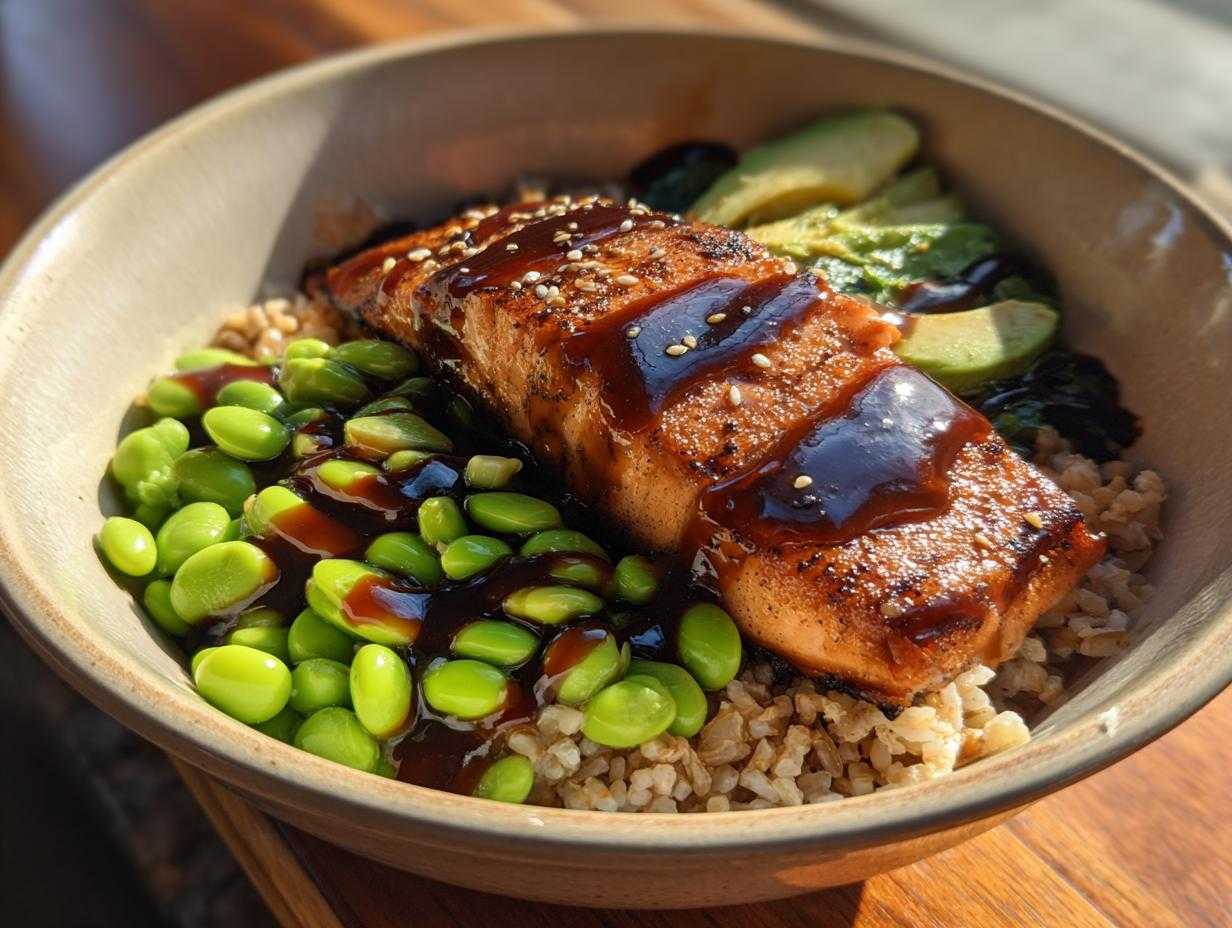
Oh my gosh, you know those nights when you look at the clock and realize it’s 6:30 PM, and you haven’t even thought about dinner? Happens to me constantly! That’s why I lean so hard on recipes that are fast, fresh, and feel fancy without needing hours of effort. This recipe for the ultimate Teriyaki Salmon Bowls with Avocado & Edamame is my absolute savior. Seriously, we’re talking about perfectly caramelized salmon, bright green edamame, and creamy avocado layered over rice—all ready in legitimately under 30 minutes. I always keep the ingredients stocked because when dinner has to be quick and healthy, this combination is what I pull out. Trust me, once you taste that homemade sweet-and-savory glaze, you won’t look back!
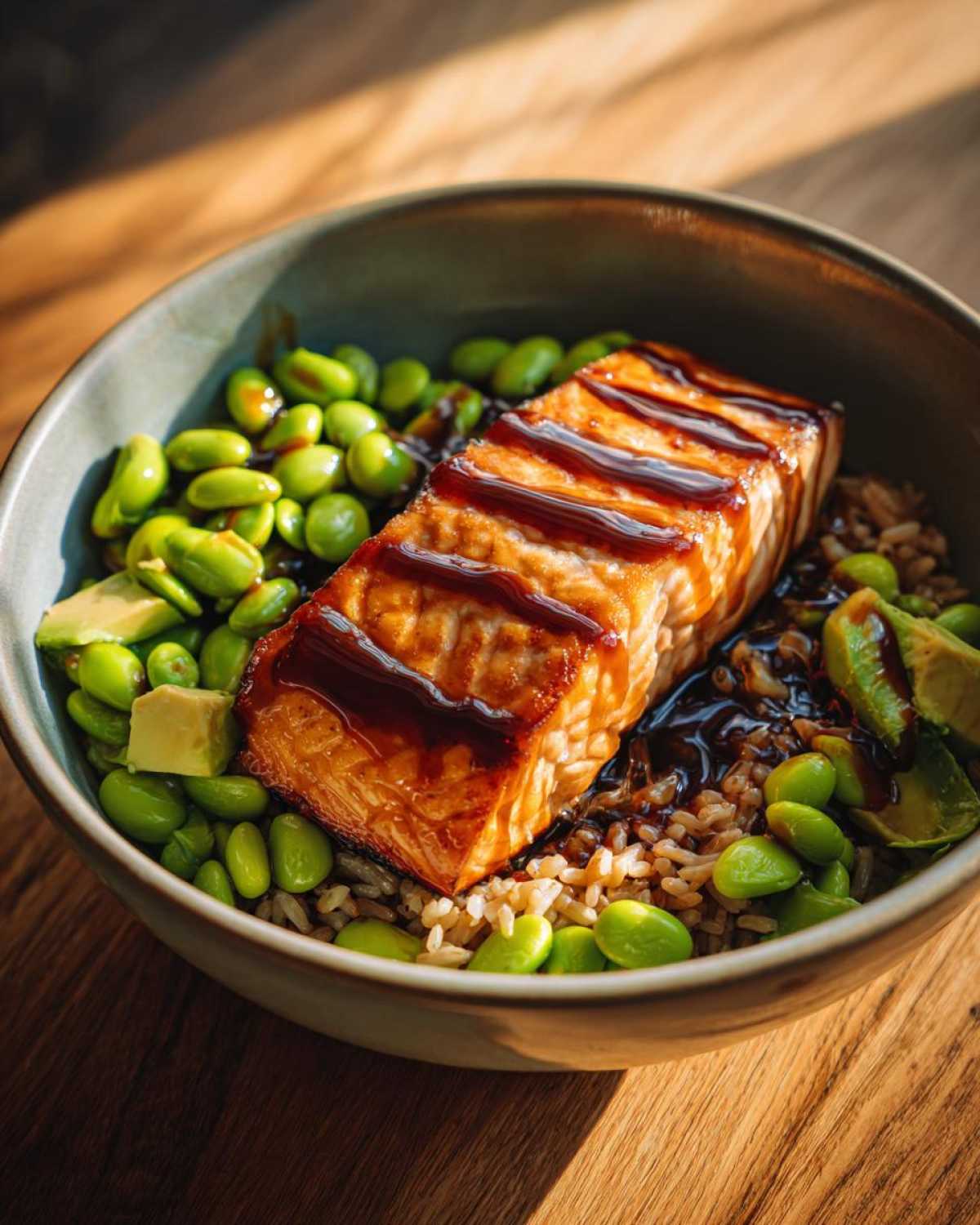
Why This Teriyaki Salmon Bowls with Avocado & Edamame Recipe Works (Quick Weeknight Salmon Bowls)
Okay, so why do I champion this specific meal over, say, ordering takeout? Well, for starters, it perfectly hits that sweet spot for busy evenings. Who has time for complicated steps when you’re starving? My family relies on this recipe because it’s the definition of Quick Weeknight Salmon Bowls.
It scores major points because:
- Speed! We’re looking at maybe 10 minutes prep and 15 minutes cook time—under half an hour total. You can’t beat that for real food.
- Flavor Bomb: That homemade teriyaki sets off the rich salmon beautifully. It’s that perfect sweet-and-savory hit that makes plain rice exciting again.
- Balanced Plate: You’ve got lean protein from the salmon, healthy fats from the avocado (hello, happy brain!), and fiber from the edamame and whatever grain you choose. It just *works*.
- Easy Clean-Up: If you use a good non-stick pan like I do, cleanup is a total breeze. A happy cook is a cook who makes dinner again tomorrow!
Essential Ingredients for Teriyaki Salmon Bowls with Avocado & Edamame
Okay, I know an ingredient list can sometimes look intimidating, but I promise this one is straightforward, especially since we are making our own sauce! This recipe hinges on balancing that rich fish with fresh, bright toppings, which is exactly why avocado and edamame are non-negotiable here. You’ll need two nice, thick salmon fillets—skin removed is my preference here for the cleanest sear, but you do you!
For that incredible homemade glaze, don’t reach for the sugary stuff in the bottle! We’re whisking together low sodium soy sauce because we want flavor, not a salt bath, plus mirin, a bit of brown sugar for depth, rice vinegar, fresh ginger (it makes such a difference!), and minced garlic. Oh, and just a tiny drizzle of sesame oil right at the end for that classic fragrance.
When it comes to assembly, make sure your edamame is shelled and already cooked—I usually grab the frozen kind and just boil them quickly. We’re layering everything over a base of brown rice or quinoa for staying power. And obviously, one whole large, perfectly ripe avocado, sliced right before serving. If you want the full recipe breakdown for that amazing sauce, check out my Homemade Teriyaki Sauce Salmon post on the side!
How to Make the Homemade Teriyaki Sauce Salmon
Alright, this is where the magic really happens, and honestly, making the homemade teriyaki sauce is so much better than anything you buy! We start by grabbing a small saucepan because we only need a little bit of simmering action here. Whisk together the soy sauce, mirin, brown sugar, rice vinegar, that gorgeous fresh ginger, and the garlic. Put it over medium heat and just watch it. You need to bring it to a gentle simmer, stirring so that brown sugar totally dissolves. It only needs about three minutes to cook down slightly until it coats the back of a spoon just a little.
Once it thickens up slightly, pull it right off the heat! This is my big tip: taste it right now! Is it salty enough? Do you want a touch more sweetness? You have control here, so adjust it now before you divide it! I always pull about half of this beautiful, thick sauce out and save it just for drizzling over the finished bowls. That remaining half is what we use to coat the salmon fillets. Make sure you pat your salmon fillets completely dry; seriously, moisture is the enemy of a good sear!
Preparing and Searing the Teriyaki Salmon Fillets
Pat, pat, pat! Use paper towels to get those fillets bone dry. This helps build that lovely crust we want. Now, brush that sauce we just made evenly over both sides of the salmon. Get that non-stick skillet sizzling hot over medium-high heat. If your fillets are super lean, maybe add a teaspoon of neutral oil, but often the sauce is enough to stop sticking if you’ve got a good pan.
Place the salmon in the skillet carefully—listen for that sizzle! We’re searing hard for about four to five minutes on the first side until it gets nicely caramelized and dark. Don’t be tempted to move it too soon! Flip it gently and cook the second side for another four to five minutes. For safety, and the best texture, you want the internal temperature to hit 145°F. If you’re like me and sometimes worry about overcooking, you can always pop the sauced fillets onto a tray and bake them at 400 degrees Fahrenheit for about 12 to 15 minutes instead. It’s a very forgiving Homemade Teriyaki Sauce Salmon dinner!
Assembling Your Perfect Teriyaki Salmon Bowls with Avocado & Edamame
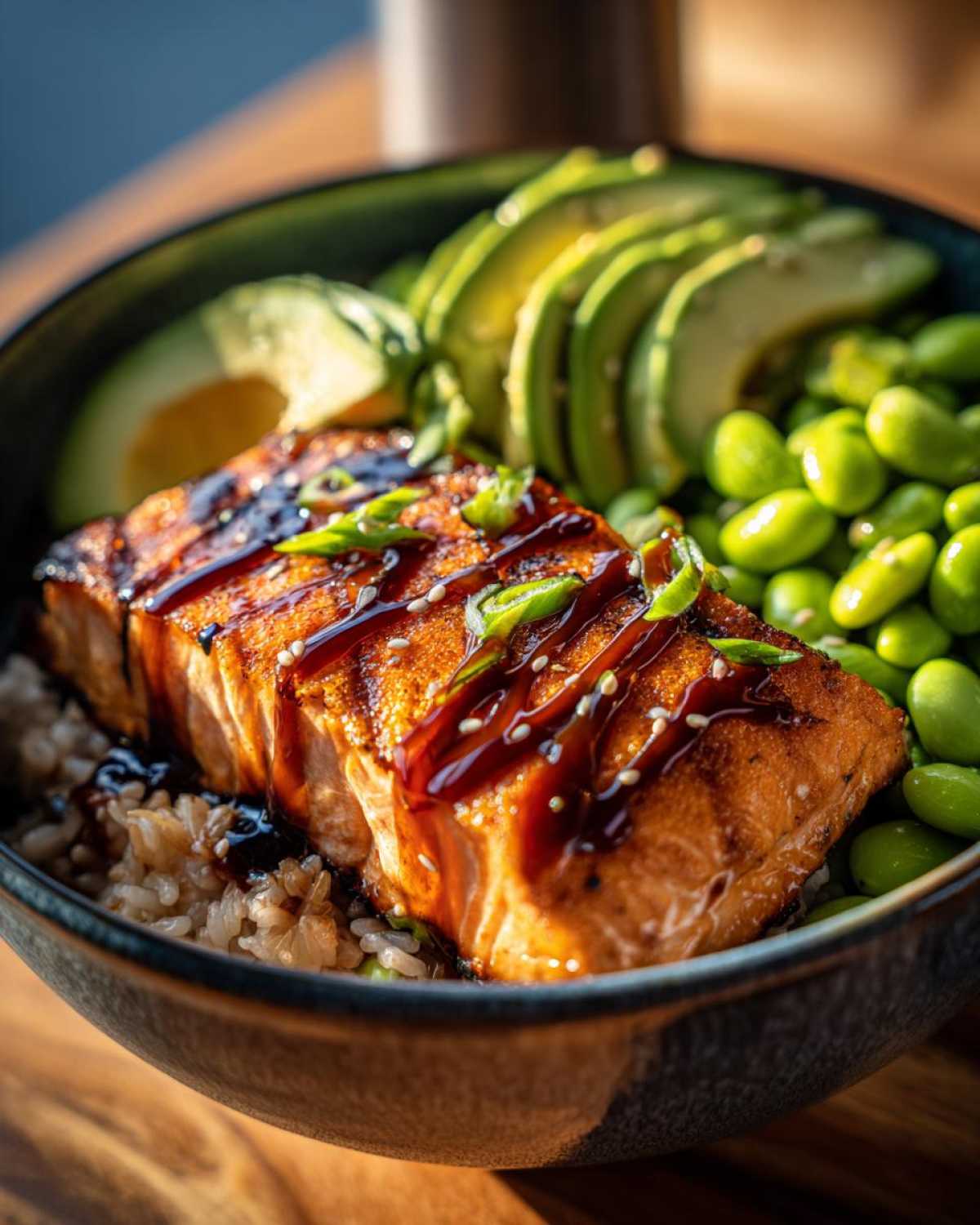
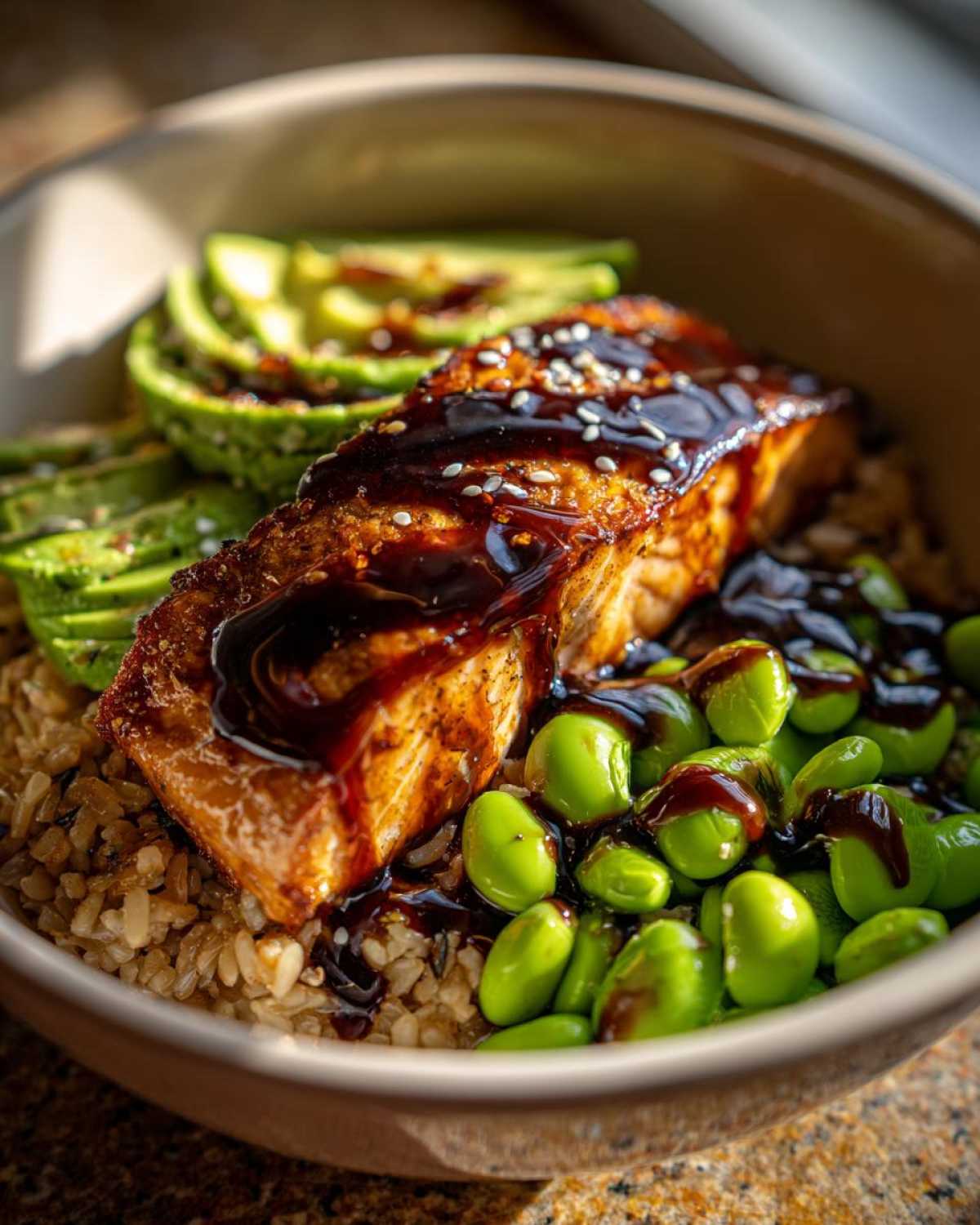
We’ve got the perfectly cooked salmon sitting right there, the rice is warm, and now it’s time for the fun part—building the bowls! This is what separates a plate of food from an Instagram-worthy meal, right? Even though we’re busy, taking an extra minute to arrange things makes eating so much more enjoyable. This is the final step in our Complete Salmon Bowl Assembly.
First things first, scoop out your cooked brown rice or quinoa into your serving bowls. I usually try to make a nice bed for everything else to sit on. Then, we need to place the vibrant toppings strategically. Think neat little piles! Arrange the warm (or room temperature) shelled edamame on one side and lay out those beautiful, creamy slices of avocado on the other side. You want clear separation between colors!
Next, gently place that gorgeous, glazed teriyaki salmon fillet right on top, maybe leaning it slightly over the rice bed. Remember that sauce we saved? Now is the moment! Drizzle that reserved teriyaki glaze sparingly over the salmon—you don’t want to drown the avocado, just sweeten that fish. Finish it off with a sprinkle of sesame seeds and those thin slices of green onion for a little sharp bite and color pop!
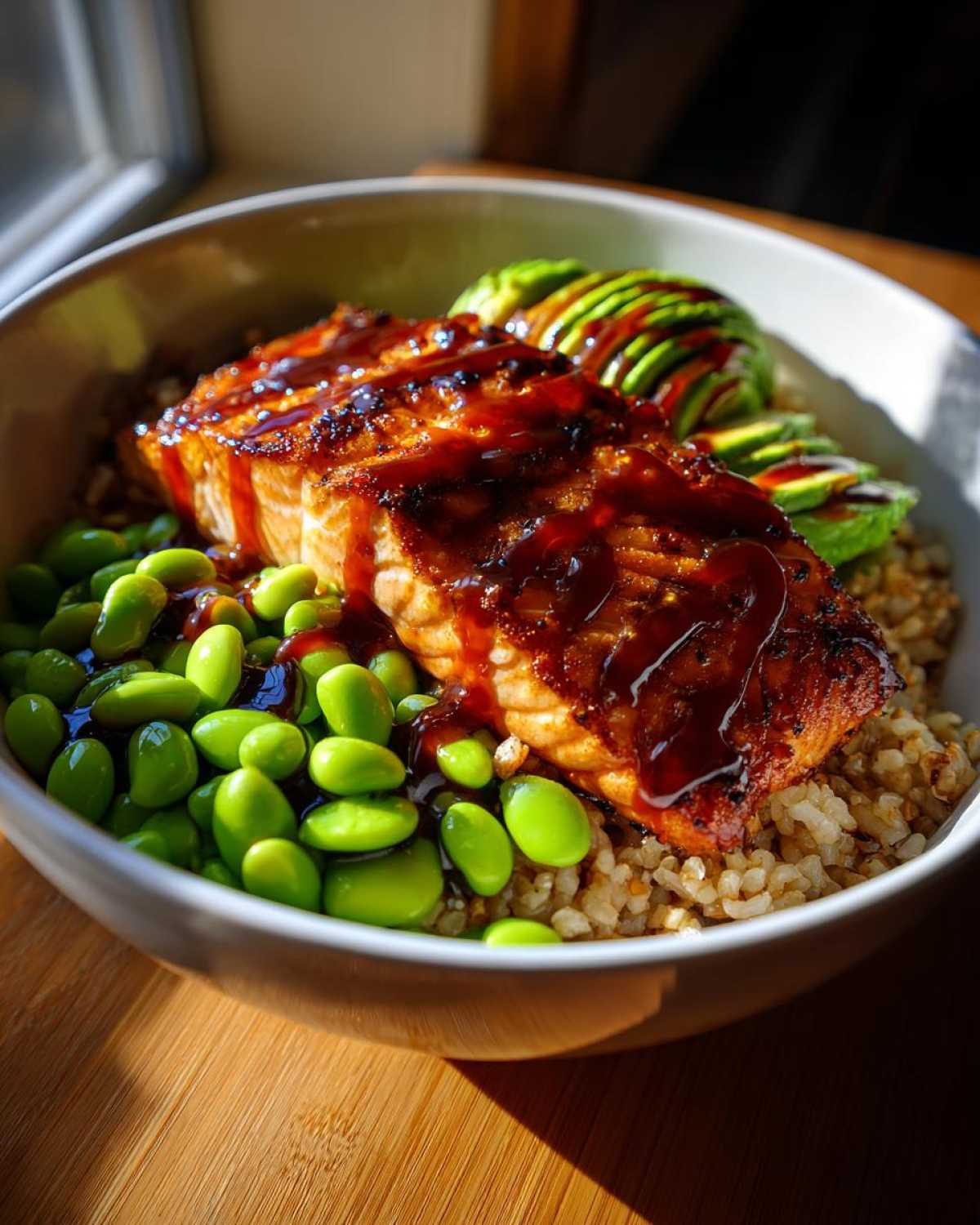
Ingredient Notes and Substitutions for Teriyaki Salmon Bowls with Avocado & Edamame
Picking the right base grain is really important for these bowls because it keeps you full until the next meal. I love brown rice because it has that nutty chewiness that holds up well to the sauce, but quinoa is fantastic too! If you’re watching the clock, pre-cooked brown rice packets are totally fine in a pinch. No judgment here, we’re keeping this Edamame Meal Prep Bowls simple!
Now, about the aromatics: fresh ginger and garlic truly make that teriyaki sauce sing, but if you’re sprinting through dinner, sometimes you just can’t peel and mince! A half teaspoon of jarred minced garlic or ginger paste works okay, just know the flavor won’t be quite as bright.
And please, don’t stress about the edamame! Frozen, shelled edamame is cheaper and easier. Just be sure you cook it thoroughly according to the bag’s directions before tossing it into your bowl assembly!
Tips for Success with Your Teriyaki Salmon Bowls with Avocado & Edamame
Making these Nutritious Salmon Bowls consistently great just takes a few little tricks I’ve picked up over the years. If you follow these small steps, you’ll never have a mushy bowl or stuck salmon again!
First, let’s talk sticking. When you sear that salmon, make sure your pan is hot *before* the fish goes in. A hot pan creates immediate searing, which forms a protective crust. If your pan is lukewarm, the fish just sits there and steams, and then it decides to bond with your cookware forever. That’s a recipe for disaster!
Second tip: Keep your rice fluffy! When you cook rice or quinoa, always let it rest, covered, for at least ten minutes after it finishes cooking before you fluff it with a fork. This lets the steam distribute evenly. If you lift the lid right away, you get sticky, gluey bottoms!
Finally, the avocado curse. If you’re prepping ahead, slice that avocado last, right before you pack the boxes. If you absolutely must prep it early, toss the slices lightly in a splash of rice vinegar or fresh lemon juice. Acid is your friend; it stops that beautiful green color from turning brown before lunchtime!
Make-Ahead and Storage for Avocado Edamame Meal Prep Bowls
I absolutely love making these Avocado Edamame Meal Prep Bowls on Sunday, but you can’t just throw everything into one gigantic container and hope for the best! The key to keeping leftovers tasting fresh is separation. I cook the rice and the teriyaki sauce right away, and those components are good for about four days in the fridge, no problem.
The trickiest part is the salmon and the avocado. Always cook the salmon fresh if you can, but if you must prep it, store the cooked fillets separately from the sauce. And please, whatever you do, don’t slice that avocado until the very last minute!
If you cut it more than 24 hours ahead, it’s going to look sad and brown, even with a little lime juice splash. Keep everything separate, and you’re golden for three or four days of easy lunches!
Frequently Asked Questions About Teriyaki Salmon Bowls
I get so many questions about making these bowls work for different weeknights or when I need to switch things up! Since this is such a versatile recipe, let me knock out a few of the things I hear most often. Hopefully, this helps you plan your next Asian Inspired Salmon Lunch!
Can I use frozen salmon?
Absolutely! Frozen salmon is often the most budget-friendly way to get great quality fish into your Best Salmon Rice Bowls. The trick is thawing it safely. I always take it out of the fridge the night before and let it thaw slowly in the refrigerator. If you’re in a bind, you can use the defrost setting on your microwave, but you have to cook it right away once it’s defrosted so it doesn’t start cooking unevenly.
What grain works best besides the rice or quinoa I used?
That’s a great question for switching up your routine! If you’re looking for something lighter, cauliflower rice is an amazing low-carb substitute that soaks up the teriyaki sauce beautifully. Or, if you want something chewier, farro or even barley works wonderfully in these bowls. It just changes the texture slightly, but the salmon and toppings stay the star of the show.
What is the best way to reheat leftover salmon?
This is crucial for maintaining that moisture! Never reheat salmon in a microwave on high power, or it turns into dry, rubbery flakes, no matter how good the sauce was. If you’re eating leftovers the next day, try reheating the salmon separately in a skillet over very low heat with just a tiny splash of water or extra teriyaki sauce underneath it. This helps steam it gently back to life. If you must use the microwave, put it on 50% power in short 30-second bursts.
Can I substitute the salmon with another protein?
Yes, you totally can! If you’re not a salmon fan, chicken breast or thigh sliced into bite-sized pieces works great. If you go with chicken, you’ll likely need to increase the pan-searing or baking time significantly—maybe double it—until those pieces are cooked through. Tofu (extra firm, pressed really well) is another fantastic vegetarian swap for your Simple Grain Bowl with Salmon!
Do I need fresh ginger for the sauce?
Honestly? Yes, if you can manage it! Freshly grated ginger gives the sauce a vibrant, spicy warmth that you just don’t get from the powdered stuff. It only takes two seconds with a microplane grater. If you skip it, the flavor is still good, but the freshly grated kind elevates the whole Healthy Salmon Bowl Recipe into something next level!
Estimated Nutritional Information for This Salmon Bowl with Fresh Toppings
I always feel a little better eating this gorgeous bowl knowing it’s packed with protein and healthy fats, but I have to be real with you: exact nutrition is tough to nail down when we’re mixing and matching grains and sauces! The numbers below are just my best estimate based on the recipe card for one full bowl, using brown rice.
Please remember, this is just a guideline! If you use extra avocado or a thinner salmon fillet, those numbers—especially sodium—will shift around. Baking versus searing can also change things slightly. But overall, this is a fantastic, Healthy Salmon Bowl Recipe!
- Serving Size: 1 bowl
- Calories: 550
- Protein: 48g
- Fat: 22g (Unsaturated Fat: 18g)
- Carbohydrates: 45g
- Fiber: 8g
- Sugar: 18g (Mostly from the homemade teriyaki!)
- Sodium: 650mg
- Cholesterol: 110mg
Teriyaki Salmon Bowls with Avocado and Edamame
- Total Time: 25 min
- Yield: 2 servings
- Diet: Low Fat
Description
Prepare a quick and complete meal featuring pan-seared teriyaki salmon served over rice with fresh avocado and shelled edamame.
Ingredients
- 2 (6 ounce) salmon fillets, skin removed
- 1/4 cup low sodium soy sauce
- 1/4 cup mirin
- 2 tablespoons brown sugar
- 1 tablespoon rice vinegar
- 1 teaspoon grated fresh ginger
- 1 clove garlic, minced
- 1 teaspoon sesame oil
- 2 cups cooked brown rice or quinoa
- 1 cup shelled edamame, cooked
- 1 large avocado, sliced
- 1 tablespoon sesame seeds, for garnish
- 2 green onions, thinly sliced, for garnish
Instructions
- Prepare the teriyaki sauce: In a small saucepan, combine soy sauce, mirin, brown sugar, rice vinegar, ginger, and garlic. Bring to a simmer over medium heat, stirring until sugar dissolves. Cook for 3 minutes until slightly thickened. Remove from heat and stir in sesame oil. Set aside half of the sauce for serving.
- Pat the salmon fillets dry. Brush the remaining half of the teriyaki sauce evenly over both sides of the salmon.
- Heat a large non-stick skillet over medium-high heat. Add a small amount of cooking oil if needed. Place the salmon fillets in the hot skillet.
- Pan-sear the salmon for 4 to 5 minutes per side, until cooked through and the sauce has caramelized slightly. The internal temperature should reach 145 degrees Fahrenheit.
- Divide the cooked rice or quinoa between two bowls.
- Arrange the cooked edamame and sliced avocado neatly on top of the rice base in each bowl.
- Place one cooked teriyaki salmon fillet on top of the ingredients in each bowl.
- Drizzle the reserved teriyaki sauce over the salmon and other ingredients.
- Garnish with sesame seeds and sliced green onions before serving.
Notes
- For meal prep, cook the rice, edamame, and sauce ahead of time. Store the salmon separately and assemble just before eating.
- If you prefer baking, bake the sauced salmon at 400 degrees Fahrenheit for 12 to 15 minutes.
- Use frozen shelled edamame; boil or microwave according to package directions until tender.
- Prep Time: 10 min
- Cook Time: 15 min
- Category: Dinner
- Method: Pan-Searing
- Cuisine: Japanese Inspired
Nutrition
- Serving Size: 1 bowl
- Calories: 550
- Sugar: 18
- Sodium: 650
- Fat: 22
- Saturated Fat: 4
- Unsaturated Fat: 18
- Trans Fat: 0
- Carbohydrates: 45
- Fiber: 8
- Protein: 48
- Cholesterol: 110


Comments are closed.