
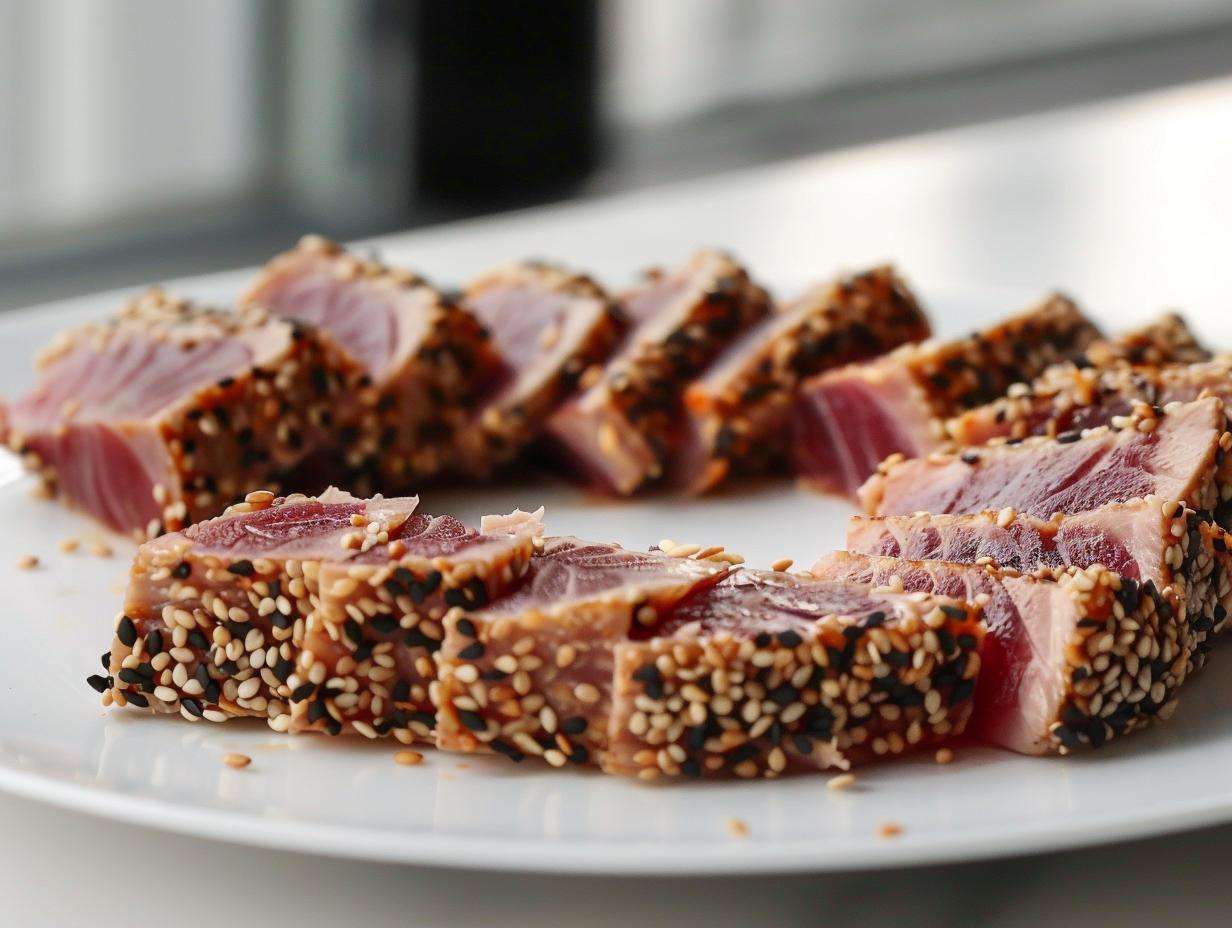
You know those nights? You’re tired, you want something totally amazing, but you don’t have five hours to stand over a stove. That’s where this recipe steps in! We’re talking about true restaurant-quality seafood made in your kitchen in less time than it takes to order takeout. Mastering the Seared Ahi Tuna was a huge deal for me.
I remember messing up my first few attempts—ending up with gray, sad fish instead of that beautifully pink center. But when I finally hit that sweet spot? Oh my goodness. This simple Asian-inspired crust, pressed onto that gorgeous, sushi-grade yellowfin tuna, creates the ultimate contrast. It’s fast, it’s so healthy, and honestly, it tastes like something you should be paying $40 for!
Why This Seared Ahi Tuna Recipe Works So Well
Honestly, this recipe is a weeknight lifesaver because it just *works*. When you use excellent quality tuna, you don’t need complicated steps. You need technique, and we nail that technique right here. I’ve tried a million ways to cook seafood, but nothing beats the instant payoff of perfectly cooked Seared Ahi Tuna.
We aren’t just making a meal; we’re creating texture theater! If you’re looking for a lean protein packed with flavor, this is your go-to. If you enjoyed this approach, you might want to check out my recipe for garlic butter ahi tuna, too!
Quick Prep Time for a Healthy Dinner
Seriously, look at the clock! Prep is about ten minutes, and the cooking? Four minutes, total! It’s one of the fastest ways to get a gourmet meal on the table. Because it’s so lean, this instantly becomes a fantastic, high-protein healthy dinner when you need something light but satisfying.
Achieving the Perfect Crust on Your Seared Ahi Tuna
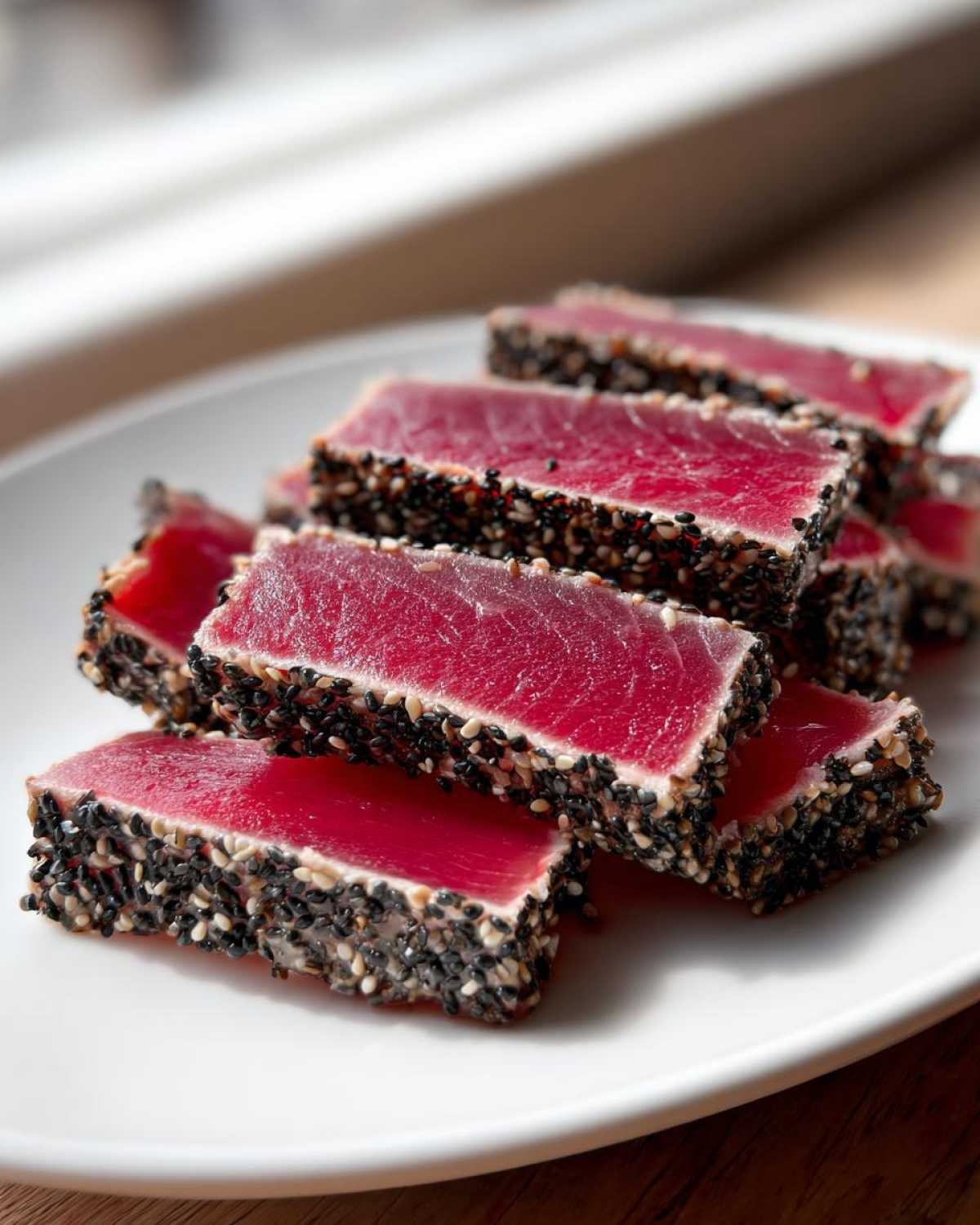
This contrast is everything. You want that satisfying, spicy crunch from the sesame seeds—that’s the sear doing its job! Then, that tiny moment of slicing open the steak to reveal that cool, beautifully rare raw center? That’s the magic moment that defines the best Seared Ahi Tuna. The high heat locks flavor in and keeps the inside soft.
Essential Ingredients for Gourmet Tuna
You can’t fake quality when you are only cooking something for four minutes! This recipe relies heavily on great starting materials. The most important thing? You absolutely must use sushi grade tuna. Don’t even think about grabbing a regular steak from the back of the freezer section. We are talking about yellowfin tuna or bigeye that you trust completely.
For the crust, we are mixing light and dark sesame seeds for visual appeal and a deeper nutty flavor. The marinade is super simple—just sesame oil, a splash of soy sauce for that salty punch, fresh garlic, and ginger. Make sure that ginger is fresh, grated super fine, not the jarred stuff! Trust me, the fresh ingredients make all the difference in this gourmet tuna.
If you love this flavor profile, wait until you try my recipe for a tuna poke bowl. It uses a lot of these same elements!
Step-by-Step Instructions for Perfect Seared Ahi Tuna
Okay, this is the moment of truth. You’ve got your *sushi grade tuna*, and you’ve got your ingredients prepped. Getting the timing right here is what separates a good attempt from a truly show-stopping Seared Ahi Tuna. We need dry fish, a hot pan, and fast hands. Don’t rush the prep, because that sets us up for success in the sear!
If you want something amazing to serve alongside this, I highly recommend making my sesame peanut noodles—they go great with the Asian flavor base.
Preparing the Yellowfin Tuna Steaks
First thing: moisture is the enemy of a good crust! Grab those beautiful steaks and pat them down absolutely bone-dry with paper towels. I mean it, you can’t skip this. Next, mix up your flavor bath. In a tiny bowl, whisk together your sesame oil, soy sauce, that lovely fresh ginger, and minced garlic. Once mixed, brush this mixture evenly all over every single side of the tuna. Don’t let any part miss out on the flavor!
Now for the crunch! Spread your mixed black and white sesame seeds out onto a flat plate—use a good layer so you get great coverage. Take your marinated tuna and gently press each side, top and bottom, right into those seeds. You want a really thick, beautiful coat clinging to the marinade. Season with just a pinch of salt and pepper if you want, but the soy sauce is doing most of the heavy lifting!
Coating and Searing the Seared Ahi Tuna
This next part is non-negotiable: You need your skillet screaming hot. I always use my heavy cast iron for this. Place the dry, crusted tuna steaks directly into the skillet—no extra oil needed because the marinade has enough fat. You want to hear a loud sizzle the second the fish hits the metal! That intense heat is what creates that dark, flavorful crust on your Seared Ahi Tuna.
For perfectly rare tuna, sear for just 1 minute per side. If you like it moving toward medium-rare—the absolute maximum I ever recommend for this cut—go 90 seconds to 2 minutes maximum on each side. Seriously, check the time! As soon as you flip it, start counting down. When they hit that sweet spot, pull them out immediately. The very last step, and this is crucial, is letting them rest on a cutting board for a full five minutes before slicing them super thin against the grain. That resting lets the juices settle in perfectly.
Tips for Success When Making Seared Ahi Tuna
You only get one shot at a perfect sear, so listen up! My biggest piece of advice for flawless Seared Ahi Tuna is temperature control—and I mean the pan’s temperature, not the fish’s. Make sure that heavy skillet is smoking hot before the tuna even gets near it. If you put that beautiful, crusted fish into a lukewarm pan, it’s going to steam, not sear, and you’ll end up with sad, gray fish.
Also, resist the urge to press down on the tuna steaks while they cook! You’re only squishing out those lovely juices that we want to keep locked inside. And please, dear reader, when you take them out, let them rest. Just five minutes is enough time for the heat to redistribute and for you to set out your plates. It makes all the difference! If you are looking for another crunchy crust idea, check out how I make my sesame-crusted tuna steak.
Ingredient Notes and Substitutions for Your Asian Tuna Recipe
Since this Asian tuna recipe relies on quick cooking, the quality of the raw ingredients is everything. Let’s talk specifics so you can buy with confidence. When I say sushi grade tuna, I mean fish that has been handled and frozen according to guidelines that make it safe to eat raw. This usually means it was flash-frozen to kill any potential parasites. Ask your reputable fishmonger—the one you trust—exactly how they label their tuna. If they hesitate, walk away. We want confidence here!
Now, what if you’re missing something? If you run out of sesame oil, which adds that gorgeous nuttiness, you can pivot to a very mild avocado oil, but you’ll need to up your toasted sesame seeds slightly to compensate for the lost flavor. As for the soy sauce, if you need to cut back on sodium, I highly recommend using tamari or a specific low-sodium soy sauce. It keeps the Asian backbone of the marinade intact. If you’re feeling ambitious and want to skip the quick marinade altogether, you could try making a batch of my homemade teriyaki sauce and using that as a light glaze instead!
Serving Suggestions for Your Seared Ahi Tuna
You’ve done the hard part—you’ve seared that beautiful gourmet tuna perfectly! Now we have to make sure the rest of the plate lives up to the star of the show. Because the tuna itself is so light and clean-tasting, you want sides that provide a little contrast without overwhelming that delicate, sesame-crusted edge.
My personal favorite way to serve this is with something warm and mild underneath to catch all those incredible juices released during resting. If you need an easy side, make my garlic butter rice—it’s fast and adds just the right amount of richness.
Here are a few ways I like to plate this up:
- The Simple Stack: Thinly slice the tuna and fan the pieces out over a bed of peppery arugula tossed lightly in rice wine vinegar. A few drops of high-quality soy sauce drizzled over the top, and you are done!
- Noodle Swap: This works beautifully over cold soba noodles tossed with a light drizzle of peanut dressing. It turns your quick seafood recipe into a full meal in minutes.
- Green & Zesty: Try serving alongside steamed asparagus or lightly blanched green beans. A squeeze of fresh lime on the vegetables just brightens the whole plate right up. You get that great crunch from the sear, the tenderness of the rare fish, and crisp veggies for balance. It’s a winning combination every time!
Storage and Reheating Instructions for Leftover Seared Ahi Tuna
Look, I’ll be honest—leftover Seared Ahi Tuna is a treasure, but you have to handle it gently. Since this is meant to be served rare, the texture changes fast once it cools down completely. You must store any leftovers in a truly airtight container in the fridge right away. Don’t let it sit on the counter!
The best news is that you don’t really reheat it! Overcooking is a cardinal sin here. If you absolutely must warm it up, slice it first, then give those slices barely 15 seconds total in a very low, non-stick pan just to take the chill off the edges. Honestly though, I prefer chilling it more and using it cold—it’s amazing chopped up in a keto-friendly salad, maybe even in some tuna-stuffed avocados!
Frequently Asked Questions About Seared Ahi Tuna
It’s totally normal to have questions when you’re working with high-quality fish like this! Since we are working with seafood that’s barely cooked, safety and technique are top-of-mind for me, and they should be for you too. I’ve pulled together the ones I get asked most often about technique, sourcing, and turning this into a fantastic tuna salad later if you have leftovers.
Can I use frozen tuna for this Asian tuna recipe?
Oh, this is such an important question for this Asian tuna recipe! You shouldn’t rely on standard frozen tuna for searing. When buying, you must look for ‘sashimi-grade’ or specifically labeled ‘sushi grade tuna.’ This designation means the fish was handled and potentially flash-frozen under very strict guidelines intended to make it safe for raw consumption. If you start with regular frozen fish, you just have no idea how it was treated, and that’s a risk I wouldn’t take when the center is raw!
What is the best way to slice the seared ahi tuna?
This is how you show off your hard work! Once the tuna has rested for those five minutes (don’t skip it!), grab your sharpest knife. You absolutely must slice the tuna thinly—about a quarter-inch thick—and you have to slice against the grain. If you look closely at the steak, you’ll see the muscle fibers running in one direction. Slicing against that direction cuts right through those fibers, ensuring that every single piece is incredibly tender. Slice with the grain, and you’ll end up with chewy little sticks, even if you nailed the sear!
How can I make this a complete healthy dinner?
This is already such a fantastic start to a healthy dinner because the protein is so lean. To make it a complete plate, you need a complex carb and some fiber! My go-to recommendation for this kind of Asian-flavored fish is to serve it over a bowl of perfectly cooked brown rice. The rice soaks up any of the leftover marinade and sesame seed bits. Alternatively, if you want to keep it low-carb, just steam up some high-contrast green vegetables—think bright green asparagus spears, steamed broccoli florets, or crisp snap peas. A little toss of sesame oil and salt on the veggies, and you have a beautiful, balanced plate that lets that gorgeous yellowfin tuna really shine.
Nutritional Estimate for Seared Ahi Tuna
I always list this section with a huge grain of salt because so much of what goes into these numbers depends on the exact cut of fish you buy and how much marinade actually soaks in versus drips off. But, even so, this is such a fantastic option when you’re trying to eat clean and stay energized. It’s one of those recipes where you get huge flavor payoff without derailing your healthy eating goals.
This estimate is based on the recipe yielding two moderate-sized portions, so remember to adjust if you’re serving more people! Check out how much amazing protein you get for barely any carbs. If you need another idea for a guilt-free light lunch later in the week, you have to try my avocado egg salad—it’s so creamy without the usual heavy binders!
Here is the nutritional breakdown per serving, calculated using standard ingredient weights:
- Calories: Around 250 (Wow!)
- Protein: A powerhouse 32 grams!
- Fat: Quite low, only about 12 grams total, and most of that is the healthy unsaturated kind from the sesame oil.
- Carbohydrates: Barely 4 grams, mostly from the teeny bit of soy sauce.
- Sodium: This comes in around 350mg, which is something to watch if you’re on a strict zero-sodium diet, so go easy on adding extra salt at the end!
See? Packed with flavor, high in protein, and honestly one of the best easy dinner options around. Enjoy knowing every bite is good for you!
Print
Simple Seared Ahi Tuna Steaks
- Total Time: 14 min
- Yield: 2 servings
- Diet: Low Fat
Description
A quick recipe for perfectly seared sushi-grade ahi tuna with an Asian-inspired crust.
Ingredients
- 2 (6 ounce) ahi tuna steaks, sushi grade
- 1 tablespoon sesame oil
- 1 tablespoon soy sauce
- 1 teaspoon grated fresh ginger
- 1 clove garlic, minced
- 1/4 cup sesame seeds (mixed black and white)
- Salt and black pepper to taste
Instructions
- Pat the tuna steaks dry with paper towels.
- In a small bowl, whisk together the sesame oil, soy sauce, ginger, and garlic. Brush this mixture evenly over all sides of the tuna steaks.
- Place the sesame seeds on a shallow plate. Press each side of the tuna steaks into the seeds until well coated.
- Heat a heavy skillet (cast iron preferred) over high heat until very hot.
- Place the coated tuna steaks in the hot, dry skillet. Sear for 1 to 2 minutes per side for rare to medium-rare. Adjust time based on your desired doneness.
- Remove the tuna from the skillet immediately. Let rest for 5 minutes before slicing thinly against the grain.
Notes
- For best results, ensure your skillet is smoking hot before adding the tuna.
- Use only sushi-grade or sashimi-grade tuna for this preparation.
- Slice the tuna thinly before serving to show the seared edge and raw center.
- Prep Time: 10 min
- Cook Time: 4 min
- Category: Dinner
- Method: Pan Searing
- Cuisine: Asian-Inspired
Nutrition
- Serving Size: 1 steak
- Calories: 250
- Sugar: 1
- Sodium: 350
- Fat: 12
- Saturated Fat: 2
- Unsaturated Fat: 10
- Trans Fat: 0
- Carbohydrates: 4
- Fiber: 1
- Protein: 32
- Cholesterol: 70


Comments are closed.