
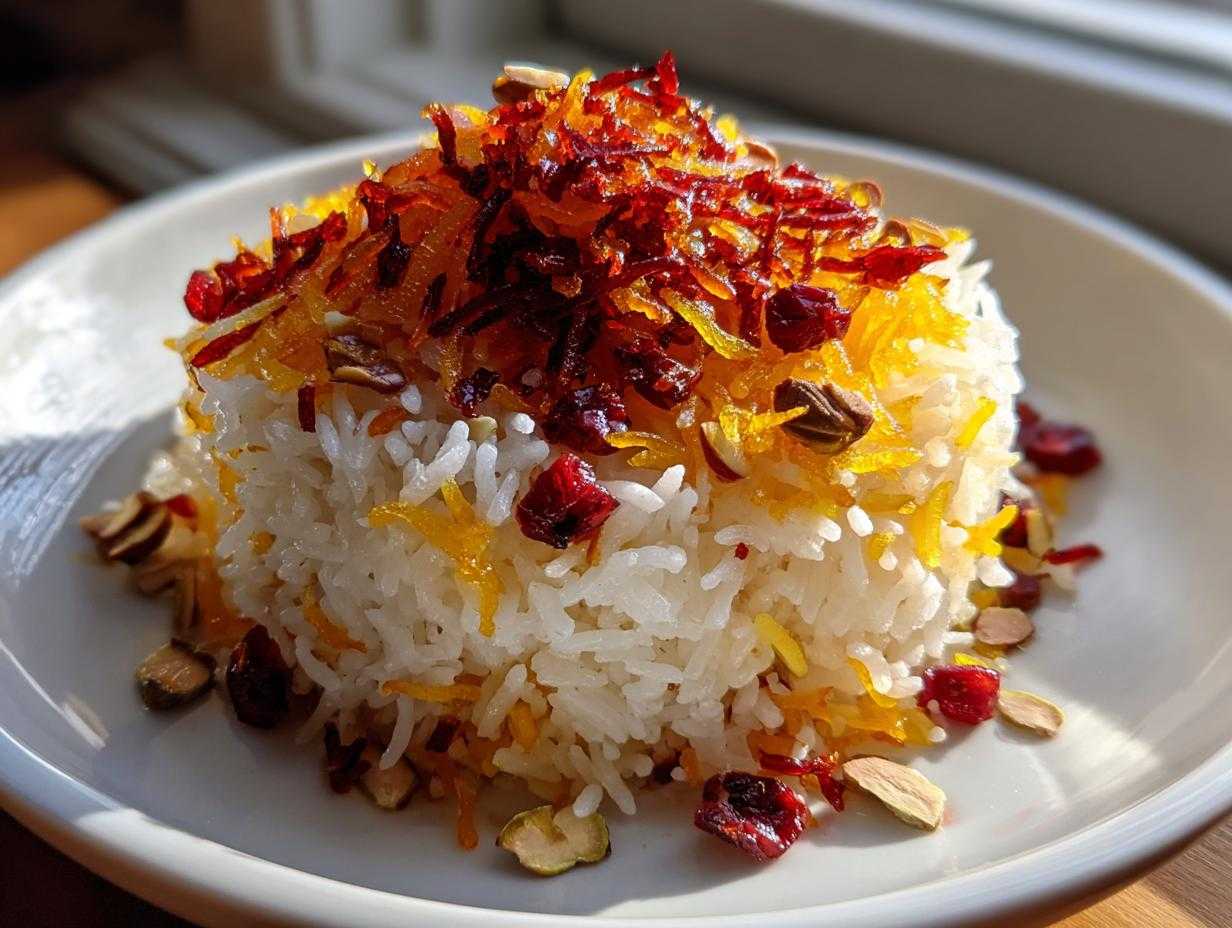
Oh, friends, if you’re looking to wow your guests this year—especially when celebrating a big holiday like Purim—you absolutely *must* try making a proper showstopper. Forget boring white rice! Today, we are diving deep into the treasure chest of Persian cooking to bring you the most magnificent Persian Jeweled Rice Shirin Polo Festive Purim Side Dish you could ever imagine.
This isn’t just rice; it’s edible jewelry! It’s what I bring out when I want to make an impression, and trust me, the sight of those jewel-toned fruits and nuts against the bright saffron is breathtaking.
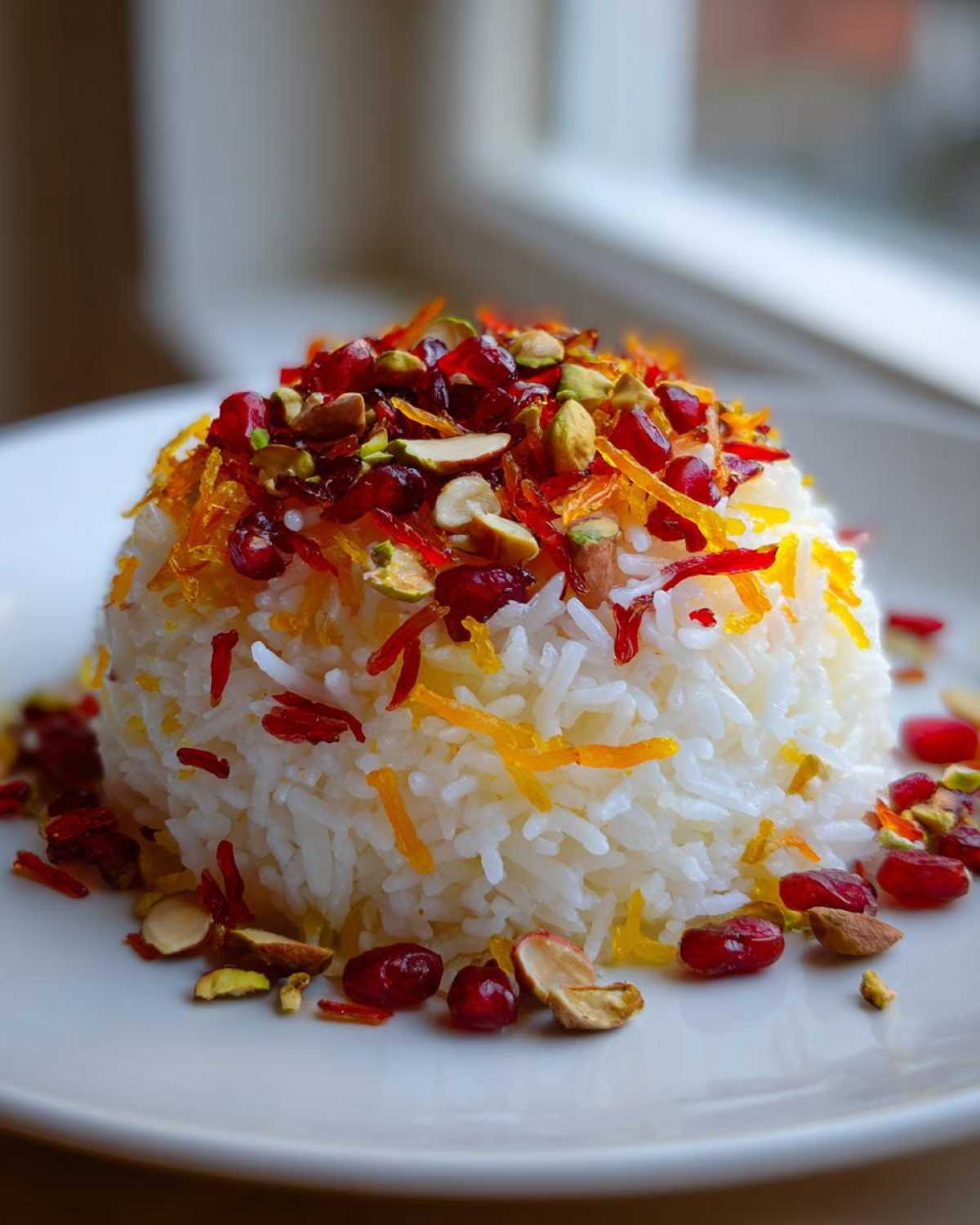
I remember trying my very first batch, terrified of messing up the delicate saffron. But I promise you, sticking to my grandmother’s ancient (but so logical!) approach makes this gourmet Middle Eastern rice surprisingly manageable. It’s the perfect elegant entertaining rice to anchor any festive spread.
Why This Persian Jeweled Rice Shirin Polo Festive Purim Side Dish Stands Out
When you serve this Persian Jeweled Rice Shirin Polo Festive Purim Side Dish, you’re not just serving a side; you’re serving art! This recipe sings because it balances simple, perfect textures with complex, fragrant toppings. It’s the centerpiece you didn’t know your holiday table needed.
- The color achieved by true Spanish saffron is unbeatable—nothing artificial works here!
- It’s packed with ‘jewels’ like bright barberries and sweet orange peel.
- It’s a fantastic, naturally vegetarian main or side dish upgrade for Purim celebrations.
Authentic Flavor Profile
Okay, the secret sauce is the layering of flavors. You’ve got the intoxicating perfume of saffron, which is non-negotiable for me. Then you hit that sweet-tart combo when you taste the barberries mixed with a whisper of cardamom and those bright orange peel strips. It’s vibrant! Keep the sauté time on those barberries super short, or they get mad at you, trust me. We want harmony, not bitterness!
The Importance of Tahdig in Persian Rice Recipe
If you’ve never made proper tahdig, you are missing out on the best part of any Persian Rice Recipe! Tahdig is that glorious, golden, crunchy crust you get at the very bottom of the pot. It’s the reward for perfectly steaming that Basmati rice. In our family, people fight over the first piece! It adds a necessary texture contrast to the fluffy, jeweled top layer. It shows you put in the love and care for a truly gourmet Middle Eastern rice experience.
Gathering Ingredients for Persian Jeweled Rice Shirin Polo Festive Purim Side Dish
For this incredible Persian Jeweled Rice Shirin Polo Festive Purim Side Dish, getting your components ready beforehand is half the battle won. Don’t skimp on the saffron, please—it makes all the difference in achieving that brilliant yellow hue. We need long-grain Basmati rice for the right texture, which we’ll soak, so make sure you plan ahead for that!
Here’s what you need to pull together this amazing plate of jewels.
- 3 cups Basmati rice
- 1 teaspoon saffron threads
- 1/2 cup hot water
- 1/4 cup vegetable oil or butter (we need some fat for the tahdig!)
- 1/2 cup dried orange peel strips
- 1/2 cup dried barberries (zereshk)
- 1/2 cup slivered almonds
- 1/2 cup pistachios, roughly chopped
- 1/4 cup sugar
- 1/4 teaspoon ground cardamom
- Salt to taste
- 4 cups water for boiling rice
- 2 tablespoons yogurt (optional, for tahdig)
I know the barberries sound exotic, and if you can’t find them, you can use dried cranberries in a pinch, but that’s our little secret, okay? If you’re curious about other delicious bread pairings you can have on the side (though rice is king here!), check out my recipe for Easy Homemade Naan Bread while you wait for your rice to soak!
Mastering Basmati Rice Cooking Techniques for Shirin Polo Instructions
Before we even think about jewels, we have to get the rice itself perfect. This is where the chelow steam method comes in, and honestly, it’s the key to making sure your Shirin Polo Instructions result in fluffy, separate grains, not mush! First things first for any good Persian Rice Recipe: you must rinse that Basmati until the water is totally clear. I rinse mine at least six times. Then, it needs a long soak—two hours minimum—in salted water.
When it’s time, bring a big pot of water to a rolling boil. You’re going to cook the rice quickly, just until it’s *al dente*. Think slightly undercooked—firm in the middle. This usually takes about 7 or 8 minutes, but you have to taste it! The second it hits that stiffness, you pull it off the heat and drain it instantly. Don’t let it sit even a minute longer, or you’ll never get that light texture. If you want more tips on cooking rice perfectly, I talk a lot about achieving fluffiness in my Easy Rice Pilaf guide!
Preparing the Saffron Water
This is where the magic perfume comes from. You can’t just dump threads in! You take your precious saffron threads and steep them in just a little bit of hot—but not boiling—water for about fifteen minutes. I like to crush them a little bit between my fingers before adding the water. This forces the color and aroma out. That gorgeous, deep golden liquid is your superstar ingredient, and we’ll be drizzling it right over the top before we steam everything.
Creating the Jeweled Rice with Dried Fruit and Nuts Toppings
Now for the fun part—making the actual ‘jewels’ that give this dish its name! This is where the visual drama happens. We need three separate piles of deliciousness ready to go before we layer the rice pot. First, take your slivered almonds and chopped pistachios. You only want them lightly toasted to bring out their flavor—a quick minute or two in a dry pan or with just a tiny bit of oil is perfect. Don’t let them burn, or they’ll get bitter!
Next, those gorgeous dried orange peel strips. I just melt a tablespoon of butter and gently sauté those strips for maybe two minutes until they soften up slightly and smell amazing. Take them out right away!
Finally, the barberries. These little tart rockets need careful handling. Sauté them super quickly—and I mean *quickly*—in whatever oil is left. Toss in your sugar and that touch of cardamom right at the end, stir once, and get them off the heat. Those three components—nuts, orange peel, and the tart barberry mix—are what make this dish spectacular. It’s the best part of making a Recipe for jeweled pilaf!
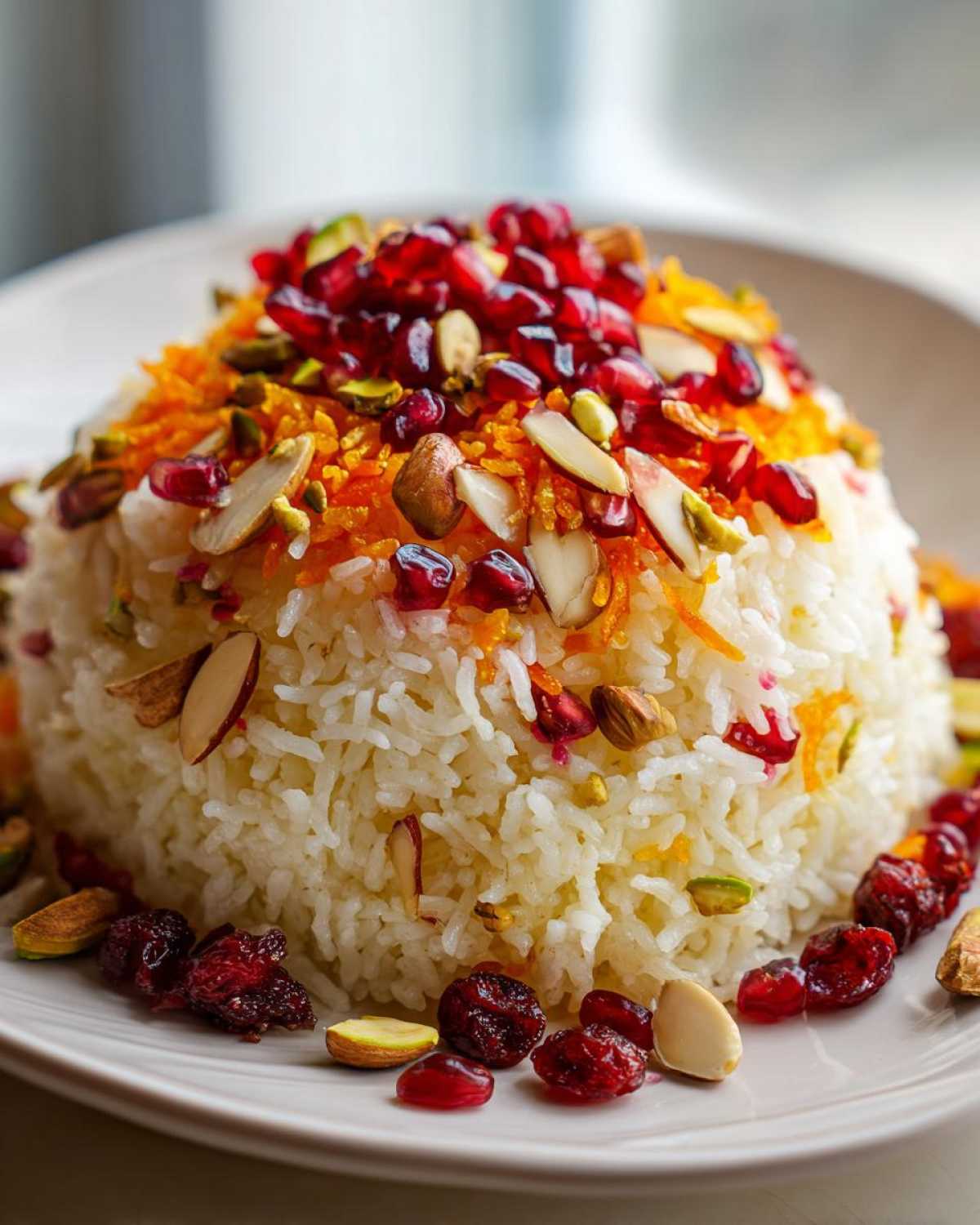
How to Make Tahdig: The Crispy Bottom Layer for Persian Jeweled Rice Shirin Polo Festive Purim Side Dish
Seriously, if you skip this next step, it’s not the same! Making tahdig is the make-or-break moment for this Persian Jeweled Rice Shirin Polo Festive Purim Side Dish. This is what elevates it from a nice side to an actual showstopper. You need a clean, heavy-bottomed non-stick pot—don’t try this in thin aluminum, trust me, you’ll end up with burnt rice instead of perfection.
Once your rice is par-boiled and drained, we prepare the base. In a small bowl, mix together your two tablespoons of yogurt—if you’re using it, that’s my preferred method for extra flavor!—with about two tablespoons of oil or melted butter, and two tablespoons of the cooked, drained white rice. You want this mixture totally combined, looking a bit like thick, pale porridge.
Spread that tahdig mixture evenly across the entire bottom of your clean pot. Don’t rush it; a nice, even layer means an even crust later. Now, gently spoon the rest of your cooked rice right on top of that base layer. Use the handle of a wooden spoon to poke a few (and I mean *a few*) dedicated vertical holes down into the rice. These act as vents for the steam. This layering technique is the secret to achieving a beautiful gourmet Middle Eastern rice crust without burning the whole batch. If you love crispy textures, you might also enjoy my guide on Mashed Potato Cakes!
Steaming the Shirin Polo Instructions for Fluffy Perfection
Okay, the pot is layered, we have our tahdig base secured, and now we need to trap all that aromatic steam! This step is where the Shirin Polo Instructions really cement themselves as true Persian Rice Recipe gold. Take that steeped saffron water—remember that beautiful, intense color?—and gently drizzle about half of it right over the top layer of the white Basmati rice. Don’t stir it in! We want that color descent to look dramatic when we serve it.
Now, the towel trick! This is essential for trapping steam. Take a clean, ideally lint-free kitchen towel, fold it to fit snugly, and place it over the top of the pot opening before you put the lid on. Make sure the lid is sealed tightly. We start by blasting the heat on medium for about five full minutes. This builds up the initial steam environment. After those five minutes, the second phase begins: drop that heat down to the lowest setting it can go and let it steam quietly for a full 45 to 60 minutes. Patience is your biggest virtue here!
Assembling and Serving Your Festive Rice Side Dish
The aroma filling your kitchen right now is just incredible, isn’t it? Before you serve this magnificent Festive Rice Side Dish, we have one last delicate step! Gently lift the lid—watch out for that puff of steam! Don’t panic and stir the whole pot; that ruins the tahdig! Instead, carefully scoop out about two cups of the plain cooked white rice from the top layers into a separate bowl. This is your base saffron layer.
Drizzle the rest of that beautiful saffron water over that reserved white rice in the bowl and gently fluff it together until it’s fully golden. Now, gently fold half of your toasted nuts and the tart barberry mix into that saffron rice. Spoon that jeweled mixture onto your serving platter first. Then, mound the remaining plain white rice right on top. Finally, garnish everything with the remaining nuts and those lovely, bright orange peel strips. Serve it immediately with the crispy tahdig right beside it. For other beautiful ways to present holiday sides, you might want to look at my Roasted Vegetable Quinoa Salad Recipe!
Tips for Success with Traditional Persian Cuisine
You’ve got the recipe, but a little bit of insider knowledge makes all the difference with Traditional Persian Cuisine. My biggest piece of advice is definitely about those barberries—seriously, watch them like a hawk! They go from perfect to bitter in seconds if you get distracted. Also, if you skip the yogurt for the tahdig, use a really good quality heavy-bottomed pot, or you risk uneven crisping.
My personal trick? I always let the pot sit, lid off, for just five minutes after steaming finishes before I even touch it. That lets the top layer firm up just a tiny bit before plating. It keeps everything looking gorgeous when you serve your Persian Rice Recipe!
Frequently Asked Questions About Jeweled Rice with Saffron
I know making something as gorgeous as this Jeweled Rice with Saffron can bring up questions, so here are a few things I hear most often about our Shirin Polo Instructions!
Can I skip the soaking step for the Basmati rice?
Oh, please try not to! Soaking the Basmati is crucial for getting those long, separate grains we want in a good Persian Rice Recipe. If you skip it, the rice tends to break when you boil it, leading to that gluey texture we are trying to avoid in our Festive Rice Side Dish. If you’re short on time, even 30 minutes is better than nothing, but two hours is the goal!
What happens if my Tahdig burns?
If you smell burning during the steaming phase, turn the heat off immediately! If it’s just slightly too dark, great! That’s happy tahdig. If it’s truly burnt, carefully scoop out the fluffy rice on top and serve that. You can then gently scrape out the burnt bits from the bottom of the pot and serve the slightly salvageable, crispier parts on the side. Don’t ruin the whole dish trying to save a stuck layer.
Is there a good substitution for dried barberries?
As I mentioned earlier, dried cranberries totally work in a pinch if you can’t find zereshk (barberries)—it’s a common substitution for a Purim Side Dishes Vegetarian option. Just be careful; cranberries are naturally sweeter, so you might need to cut back slightly on the added sugar in that mixture. I love experimenting with new pairings, similar to how I use white beans in my Easy Tuscan White Bean Soup Recipe!
Can I make the fruit and nut topping ahead of time?
Yes, absolutely! Preparing the nuts, orange peel, and barberry mix up to a day ahead is a lifesaver when hosting. Just store them covered at room temperature. When you are ready to layer, gently warm the fruit mixture slightly—not too hot—so it doesn’t cool down your steamed rice layers!
Print
Persian Jeweled Rice (Shirin Polo)
- Total Time: 3 hours 25 min
- Yield: 6 servings
- Diet: Vegetarian
Description
A recipe for traditional Persian Jeweled Rice, Shirin Polo, featuring saffron, dried fruits, and nuts, suitable as a festive side dish.
Ingredients
- 3 cups Basmati rice
- 1 teaspoon saffron threads
- 1/2 cup hot water
- 1/4 cup vegetable oil or butter
- 1/2 cup dried orange peel strips
- 1/2 cup dried barberries (zereshk)
- 1/2 cup slivered almonds
- 1/2 cup pistachios, roughly chopped
- 1/4 cup sugar
- 1/4 teaspoon ground cardamom
- Salt to taste
- 4 cups water for boiling rice
- 2 tablespoons yogurt (optional, for tahdig)
Instructions
- Rinse the Basmati rice several times under cold water until the water runs clear. Soak the rice in salted water for at least 2 hours.
- Steep the saffron threads in 1/2 cup of hot water for 15 minutes. Set aside.
- Bring 4 cups of water to a boil in a large pot. Drain the soaked rice and add it to the boiling water. Cook for 6 to 8 minutes until the grains are slightly tender but still firm in the center (al dente). Drain the rice immediately into a fine-mesh sieve.
- In a small saucepan, briefly sauté the orange peel strips in 1 tablespoon of butter or oil for 2 minutes. Remove from heat.
- In the same saucepan, quickly sauté the barberries for about 30 seconds. Stir in the sugar and cardamom. Set aside.
- In a separate small pan, lightly toast the slivered almonds and chopped pistachios in 1 tablespoon of oil until fragrant, about 2 minutes. Set aside.
- Prepare the tahdig layer: Mix the 2 tablespoons of yogurt (if using) with 2 tablespoons of the drained rice and 1 tablespoon of oil or melted butter. Spread this mixture evenly over the bottom of a clean, non-stick pot.
- Gently layer the remaining cooked rice over the tahdig mixture. Create a few holes in the rice with the handle of a wooden spoon to allow steam to escape.
- Drizzle half of the steeped saffron water over the top of the rice. Cover the pot with a clean kitchen towel, then place the lid on tightly.
- Cook on medium heat for 5 minutes, then reduce heat to low and steam for 45 to 60 minutes until the rice is fluffy and the tahdig is crisp.
- To serve, gently fluff about 2 cups of the white rice and mix with the remaining saffron water.
- Gently fold half of the toasted nuts and the barberry mixture into the saffron rice.
- Spoon the jeweled rice mixture onto a serving platter, topping it with the plain white rice, the remaining nuts, and the orange peel mixture. Serve immediately with the crispy tahdig on the side or on top.
Notes
- For a more vibrant color, mix a small amount of the saffron water directly into the top layer of the white rice before steaming.
- Do not overcook the barberries; they burn easily and become bitter.
- If you do not have barberries, dried cranberries can be substituted, though the flavor profile will change.
- Prep Time: 2 hours 15 min (includes soaking)
- Cook Time: 1 hour 10 min
- Category: Side Dish
- Method: Steaming
- Cuisine: Persian
Nutrition
- Serving Size: 1 cup cooked
- Calories: 450
- Sugar: 18
- Sodium: 150
- Fat: 12
- Saturated Fat: 4
- Unsaturated Fat: 8
- Trans Fat: 0
- Carbohydrates: 75
- Fiber: 4
- Protein: 9
- Cholesterol: 5



Comments are closed.