
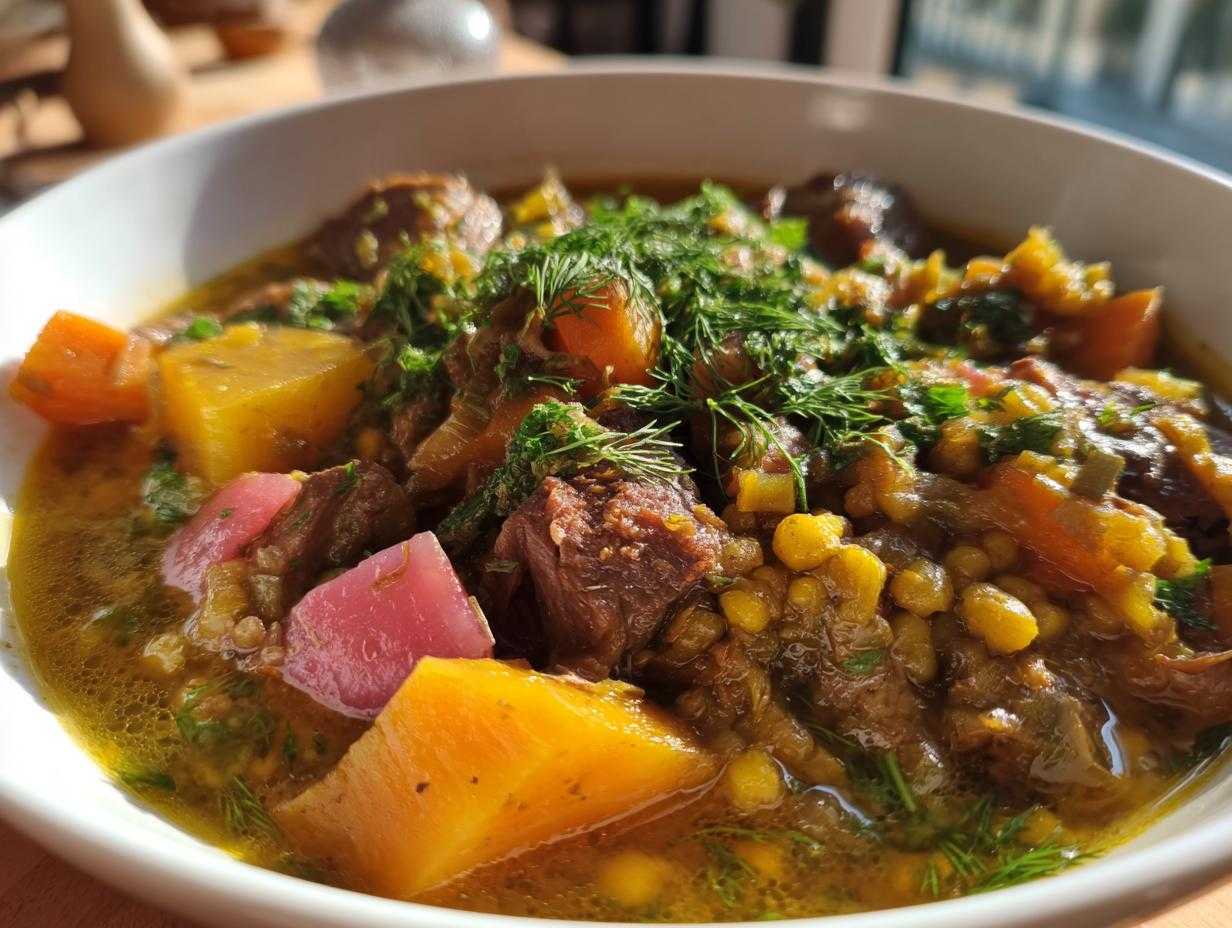
Oh, I just *live* for those seasonal Persian dishes that just scream springtime! Forget those heavy winter pots for just a minute, because when that first batch of rhubarb hits the market, I know exactly what time it is: time to make Khoresh-e Rivas. This isn’t just any stew, folks; this is where savory meat meets the surprising, vibrant zing of that beautiful pink vegetable. It’s one of those Authentic Persian Stew Recipes that seems tricky because of the pucker factor, but trust me, after making this hundreds of times over the years, I’ve nailed the trick to getting that perfect savory-and-sour harmony.
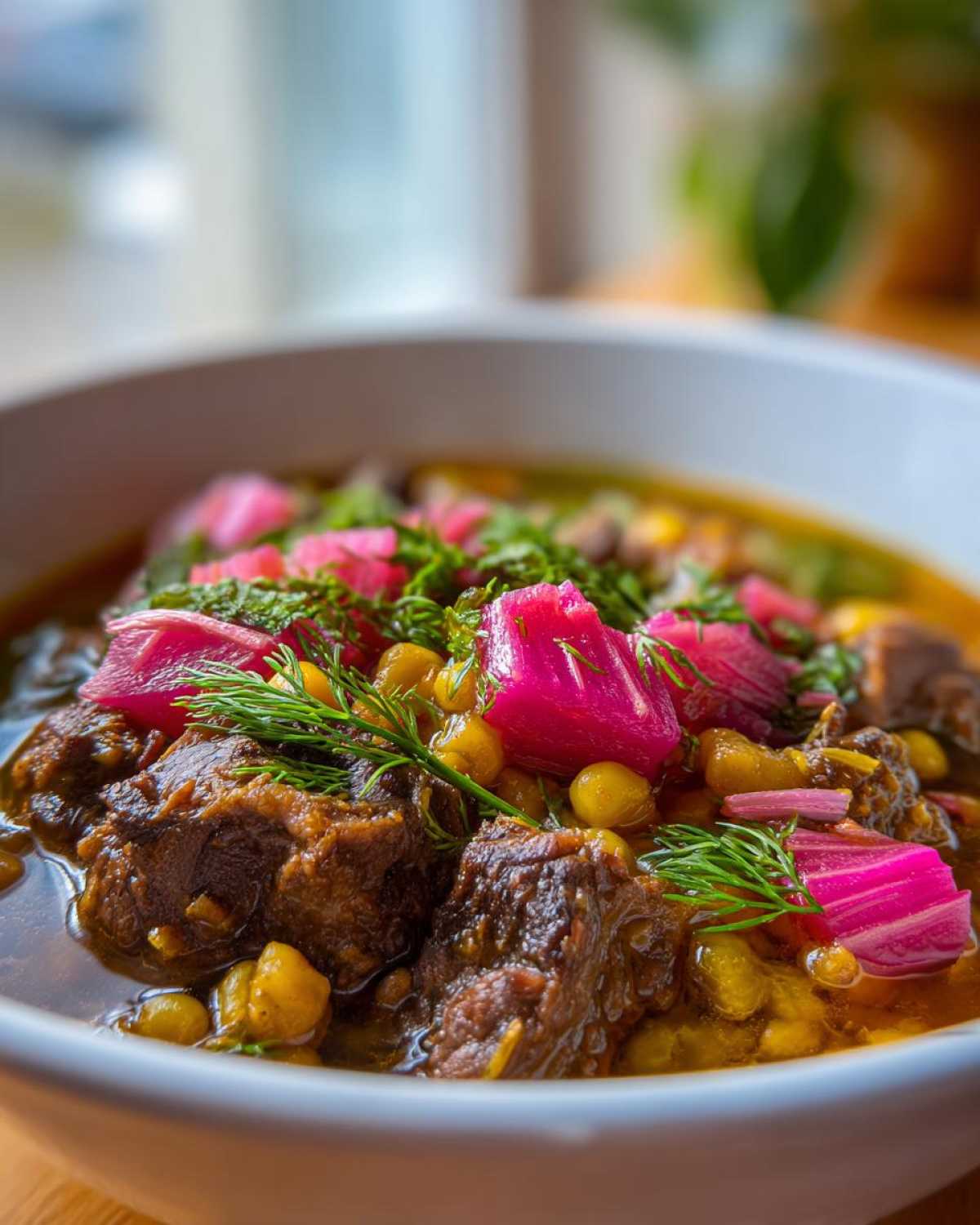
Why This Khoresh-e Rivas (Persian Rhubarb Stew) Recipe Works
I get it, you’ve tried making a Khoresh-e Rivas (Persian Rhubarb Stew) before and it tasted like eating straight lemon wedges. That’s where my method stands out! This recipe cuts through the hesitation and gives you foolproof results, every single time.
- It honors the Traditional Iranian Food process by pairing the rhubarb with hearty lamb (or beef) and split peas for depth.
- The browning and slow simmering time ensures the meat melts in your mouth, which is crucial for any good Khoresh Recipe.
- It’s shockingly easy for a unique dish—you just build layers of flavor!
Achieving the Perfect Sour-Savory Balance
Rhubarb is wild, right? Some stalks are mild, some are mouth-puckeringly tart. That’s why my recipe asks you to only add the optional sugar right at the end when the rhubarb goes in. You simmer the meat first, taste the broth, and *then* you introduce the sugar. It keeps you fully in control. Don’t be afraid to taste as you go; that’s the secret to mastering any Sour Stew Persian dish!
Essential Ingredients for Authentic Khoresh-e Rivas
Okay, let’s talk about the good stuff. Making a truly great Khoresh-e Rivas (Persian Rhubarb Stew) means respecting the ingredients, especially when you’re aiming for something authentic. You want that rich, deep flavor that only comes from taking the time to brown your meat properly and using good quality spices. Everything listed below is non-negotiable for that classic taste!
We need a solid base—that means about a pound of lamb or beef cut nicely into one-inch chunks. Don’t skip browning it with some chopped onion and a full teaspoon of turmeric; that turmeric is where a lot of that golden color and earthy base tone comes from. And don’t forget the split peas, which are essential for thickening this stew and giving it body. They turn beautifully tender during that long simmer!
Sourcing and Preparing Rhubarb for Khoresh-e Rivas
This is the star, so listen up! Nothing beats fresh rhubarb when it’s in season. If you can get it at your farmer’s market, grab it! Cut the stalks into those uniform one-inch pieces so they cook evenly in our Rhubarb Stew Cooking. But hey, I know life is busy, and sometimes we rely on the freezer section. If you’re using frozen rhubarb, you absolutely *must* thaw it first. And here’s the critical step nobody tells you: gently squeeze the thawed rhubarb in a paper towel or clean cloth to get rid of all that extra water. If you skip that, your stew will get way too thin!
How to Cook Khoresh-e Rivas: Step-by-Step Instructions
Alright, pull out that big Dutch oven that you love—the heavy one! Making Khoresh-e Rivas (Persian Rhubarb Stew) is all about taking your time, letting those flavors marry, and building the right foundation before anything else gets added. This dish might take a while, clocking in around two hours total, but honestly, most of that is hands-off simmering while you relax with a cup of tea.
Browning Meat and Building the Base Flavor
First things first, we need heat! Get your oil sizzling over medium heat in that heavy pot. Toss in your chopped onion and cook them down until they look soft and maybe just starting to turn golden—about five minutes. Now comes the seasoning. Add your cubed lamb or beef, toss in the turmeric, pepper, and salt. You need to brown that meat on all sides so you lock in all those juices. Once it’s beautifully colored, stir in the tomato paste and let it cook for just one minute until it gets fragrant. That paste adds a little depth that you just can’t skip!
Next, add your rinsed split peas and cover them all with the water or broth. Bring that whole beautiful mess up to a good boil, and then immediately turn the heat way, way down. We’re covering it up and letting it go for a full hour. Seriously, don’t peek too much! This hour gets the meat softened up before the rhubarb goes in. For more insights on building flavor bases in Traditional Iranian Food, check out this guide I love.
Simmering and Adding the Rhubarb to Khoresh-e Rivas
After that first hour, it’s rhubarb time! Stir in those one-inch chunks of rhubarb. If your rhubarb looks particularly vibrant and you’re worried about it being too tart, this is when you toss in that optional teaspoon of sugar. Give it a gentle stir. Put the lid back on and let it simmer for another 30 to 45 minutes. You are waiting for two things: the meat to be so tender you could cut it with a spoon, and the rhubarb to have softened up but still hold its shape a little bit. At the very end, taste it one last time. If it needs more salt or sweetness to balance that tartness in the Khoresh-e Rivas (Persian Rhubarb Stew), adjust it now. That final taste test is what makes it perfect for *you*!
Tips for Success When Making Khoresh-e Rivas
Okay, so you’ve followed the slow simmer, but let me give you a few insider things I learned over my many attempts at perfecting Khoresh-e Rivas (Persian Rhubarb Stew). Texture is everything here. You don’t want it to be a watery soup, but you also don’t want it thick like a paste! If, after the final simmer, your stew looks a little runny for your liking, take the lid off for the last 15 minutes of cooking. Letting it evaporate gently concentrates the flavors beautifully. For more on mastering these flavor depths in Traditional Persian Cooking Techniques, check out this guide I love.
Also, remember those herbs? Don’t just sprinkle them on top when you serve it! Mix about half of your chopped mint and dill *into* the stew right before you turn the heat off. This lets those fresh seasonal flavors bloom into the broth instead of just sitting on top. It’s one of those subtle secrets that makes all the difference in truly making this dish sing!
Serving Suggestions for This Persian Stew Recipe
You’ve spent two hours coaxing beautiful flavor out of that rhubarb and lamb—you absolutely can’t serve this incredible stew on its own! The broth, often called *aab-goosht*, is too flavorful to waste. The traditional and frankly, magnificent way to enjoy this stew is over a bed of perfectly fluffy Persian rice. I’m talking classic Chelow, where you get those crispy bottom layers, or maybe simple Kateh if I’m making it on a weeknight and need something fast.
The rice soaks up all that tart-savory goodness. Honestly, that combination of the rich meat juices cutting through the fluffy rice grains is what makes Persian cooking so unbelievably satisfying. If you’re new to making that fluffy rice, this guide on Persian Chelow Pairing will get you there without any fuss.
Garnishing Your Khoresh
This is the final flourish, don’t skip it! A proper Persian stew needs brightness, and our finishing herbs do that job perfectly. You should be very generous here. You need fresh, bright green mint and dill. Chop them up nice and fine—we aren’t talking about a tiny garnish, we mean a proper scattering over the top of each bowl.
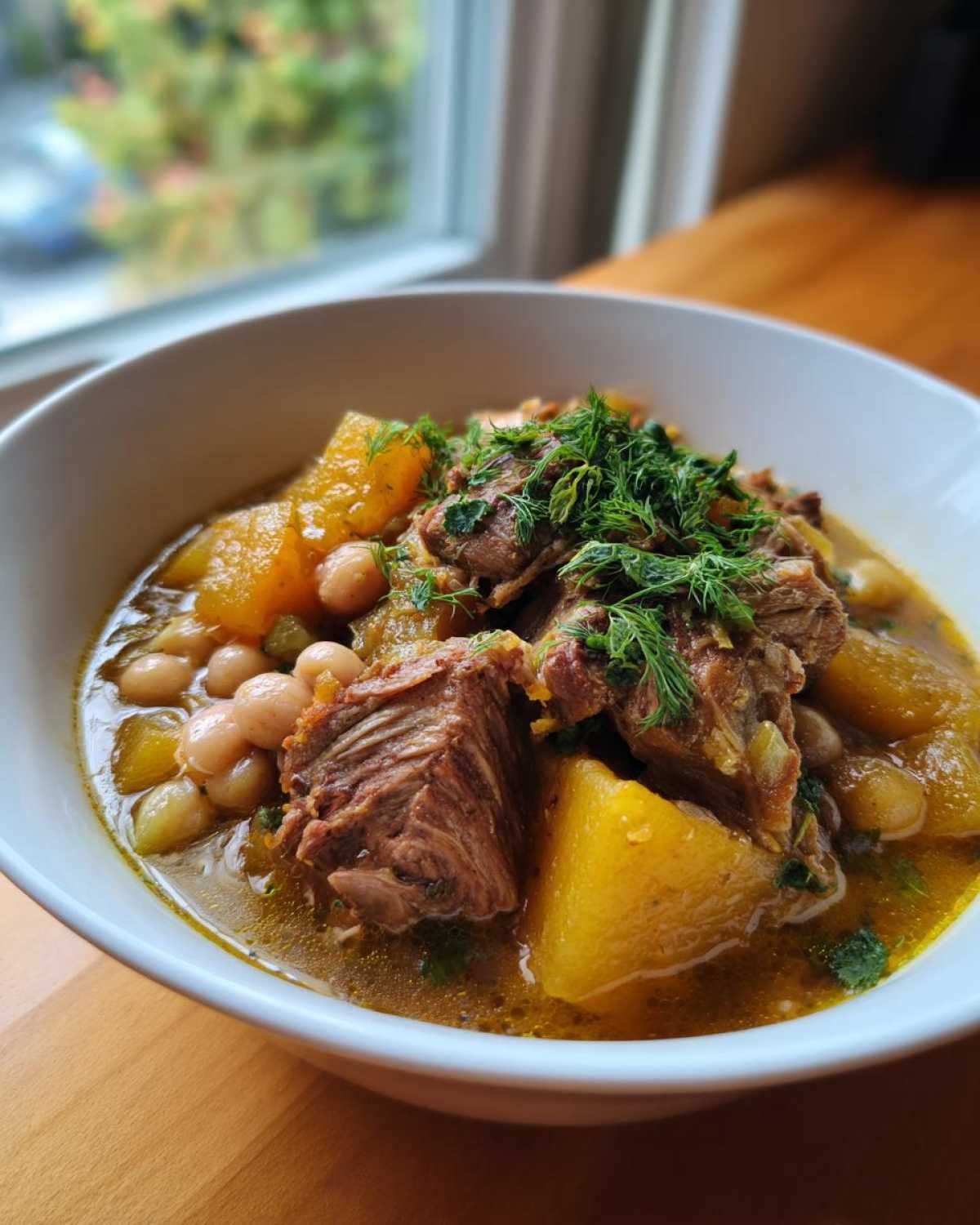
When you serve the stew piping hot over the rice, the heat hits those fresh herbs and releases this incredible aroma right before you take the first bite. It’s refreshing, it cuts through the richness of the meat, and it completes the whole experience. Trust me, the more fresh herbs, the better!
Storage and Reheating Instructions for Khoresh-e Rivas
The best part about any good stew is that it tastes even better the next day, and Khoresh-e Rivas (Persian Rhubarb Stew) is absolutely no exception! If you have any leftovers—which I highly doubt you will—store it in an airtight container in the fridge for up to four days. Honestly, the flavors truly deepen overnight!
When you’re ready to eat it again, gently reheat it on the stovetop over medium-low heat. If it seems a little thick, just splash in a tablespoon or two of hot water while it warms up. If you need to freeze it, that works too! Let it cool completely first, then portion it into freezer-safe containers. It keeps beautifully for about three months.
Frequently Asked Questions About This Sour Stew Persian Dish
I know when you dive into a new Khoresh Recipe, you always have questions swirling around! I’ve pulled together the ones I hear most often about making this slightly unusual Sour Stew Persian masterpiece. Don’t worry if you have to tinker around the edges; that’s part of learning any Classic Persian Cuisine.
Can I use chicken instead of lamb or beef in Khoresh-e Rivas?
Absolutely! While traditional recipes often call for richer meats, chicken thighs work wonderfully. Just make sure you brown them well first, but reduce the initial simmering time by about 20 minutes because chicken cooks faster. It will result in a lighter-tasting stew overall.
What should I do if my rhubarb is incredibly tart?
This is the big one for any Khoresh-e Rivas (Persian Rhubarb Stew)! Since rhubarb varies so much, you must taste the broth before adding the rhubarb in step 4. If it’s already quite tart, don’t add the sugar at all! Wait until the very end—step 7—and then add the sugar (or even a tiny pinch of honey) incrementally until you hit that perfect savory-sour note you’re looking for. You want zing, not pain!
Is this stew meant to be made with fresh herbs cooked in or added at the end?
The aromatic profile of this Rhubarb and Lamb Stew really comes from that final addition of fresh herbs. You add a little bit of the mint and dill cooked *into* the stew right before serving as we discussed, but the main volume of herbs should always be stirred in right at the very end, or sprinkled generously on top of each bowl. Cooking them down too long makes them lose that essential bright flavor that cuts through the richness of the meat. For more common Khoresh Recipe variations, check out this great overview at this great overview.
Nutritional Estimate for This Seasonal Persian Dinner
I always try to give you guys a heads-up on what’s in the incredible food we make, but remember this is just an estimate! I am a cook, not a nutritionist, okay? Measuring out every single pinch of salt and every drop of oil is just not how I operate in the kitchen, and I’m guessing you don’t either! These numbers are calculated based on using lamb shoulder, which is a bit richer, so keep that in mind.
What I can tell you right now is that because we use lean meat (or you can use chicken!) and the richness comes mainly from that slow simmer, it stays pretty balanced. The split peas add fantastic fiber, which is always a win. If you are counting carbs or watching your fat intake, this stew is surprisingly friendly, especially when balanced against a lighter serving of Persian rice, rather than drowning it in butter!
Here is a rough breakdown for one serving size (based on 4 servings total):
- Calories: Around 450
- Protein: A whopping 35 grams—great muscle fuel!
- Total Fat: About 20 grams
- Carbohydrates: Roughly 35 grams
- Sugar: A manageable 8 grams (most of that is natural from the rhubarb and tomato paste)
- Sodium: Near 350 mg (adjust that initial salt if you’re watching sodium closely).
It’s a hearty, satisfying meal that proves Traditional Iranian Food is built on great, wholesome ingredients. Enjoy knowing you’re eating something packed with flavor and slow-cooked goodness!
Share Your Khoresh-e Rivas Experience
Phew! That’s it! You’ve made a beautiful, authentic, and wonderfully tart Persian stew. Now the best part: eating it, and then hearing all about how it turned out for you! I really want to know how you managed that balance—did you use a little more sugar or embrace the sour?
Please, please, please jump down into the comments below and give this recipe a star rating. I put so much heart into figuring out the timing for that meat to get tender, and that feedback really helps me know I’m steering you cooks in the right direction!
If you ended up making this dish for a special occasion or just a cozy Tuesday night dinner, I would absolutely love to see your bowl of stew next to that fluffy Chelow! Tag me on social media if you share a picture. It warms my heart to see my family’s favorite flavor combinations showing up in someone else’s kitchen. Happy cooking, my friend!
Print
Khoresh-e Rivas (Persian Rhubarb Stew)
- Total Time: 2 hours 0 min
- Yield: 4 servings
- Diet: Low Fat
Description
Make an authentic Persian rhubarb stew featuring tender meat balanced with the tartness of fresh rhubarb.
Ingredients
- 1 lb lamb or beef stew meat, cut into 1-inch pieces
- 2 tablespoons vegetable oil
- 1 large onion, chopped
- 1 teaspoon turmeric powder
- 1/2 teaspoon black pepper
- 1/4 teaspoon salt (or to taste)
- 2 cups fresh rhubarb, cut into 1-inch pieces (frozen works if thawed)
- 1/2 cup dried yellow split peas (lappeh), rinsed
- 4 cups water or beef broth
- 1 tablespoon tomato paste
- 1 teaspoon sugar (optional, adjust to taste)
- 1/4 cup fresh mint, chopped (for garnish)
- 1/4 cup fresh dill, chopped (for garnish)
Instructions
- Heat the oil in a large pot or Dutch oven over medium heat. Add the chopped onion and cook until soft, about 5 minutes.
- Add the meat, turmeric, pepper, and salt to the pot. Brown the meat on all sides.
- Stir in the tomato paste and cook for 1 minute.
- Add the rinsed split peas and water or broth to the pot. Bring the mixture to a boil, then reduce the heat to low, cover, and simmer for 1 hour, or until the meat is nearly tender.
- Add the cut rhubarb pieces to the stew. If the stew seems too sour, stir in the optional sugar now.
- Cover and continue to simmer for another 30 to 45 minutes, or until the meat is very tender and the rhubarb has softened but still holds some shape.
- Taste the stew and adjust salt or sugar as needed to achieve your desired sour-savory balance.
- Serve hot, garnished generously with fresh chopped mint and dill.
Notes
- For best results, use fresh rhubarb when available. If using frozen, thaw it first and gently squeeze out excess moisture before adding.
- Serve this stew traditionally over Persian steamed rice (Chelow) to absorb the flavorful broth.
- The sourness of the stew depends heavily on the rhubarb. Taste before serving and add sugar incrementally if the tartness is too strong for your preference.
- Prep Time: 15 min
- Cook Time: 1 hour 45 min
- Category: Dinner
- Method: Stovetop Simmering
- Cuisine: Persian
Nutrition
- Serving Size: 1 serving
- Calories: 450
- Sugar: 8
- Sodium: 350
- Fat: 20
- Saturated Fat: 7
- Unsaturated Fat: 13
- Trans Fat: 0
- Carbohydrates: 35
- Fiber: 7
- Protein: 35
- Cholesterol: 90


Comments are closed.