
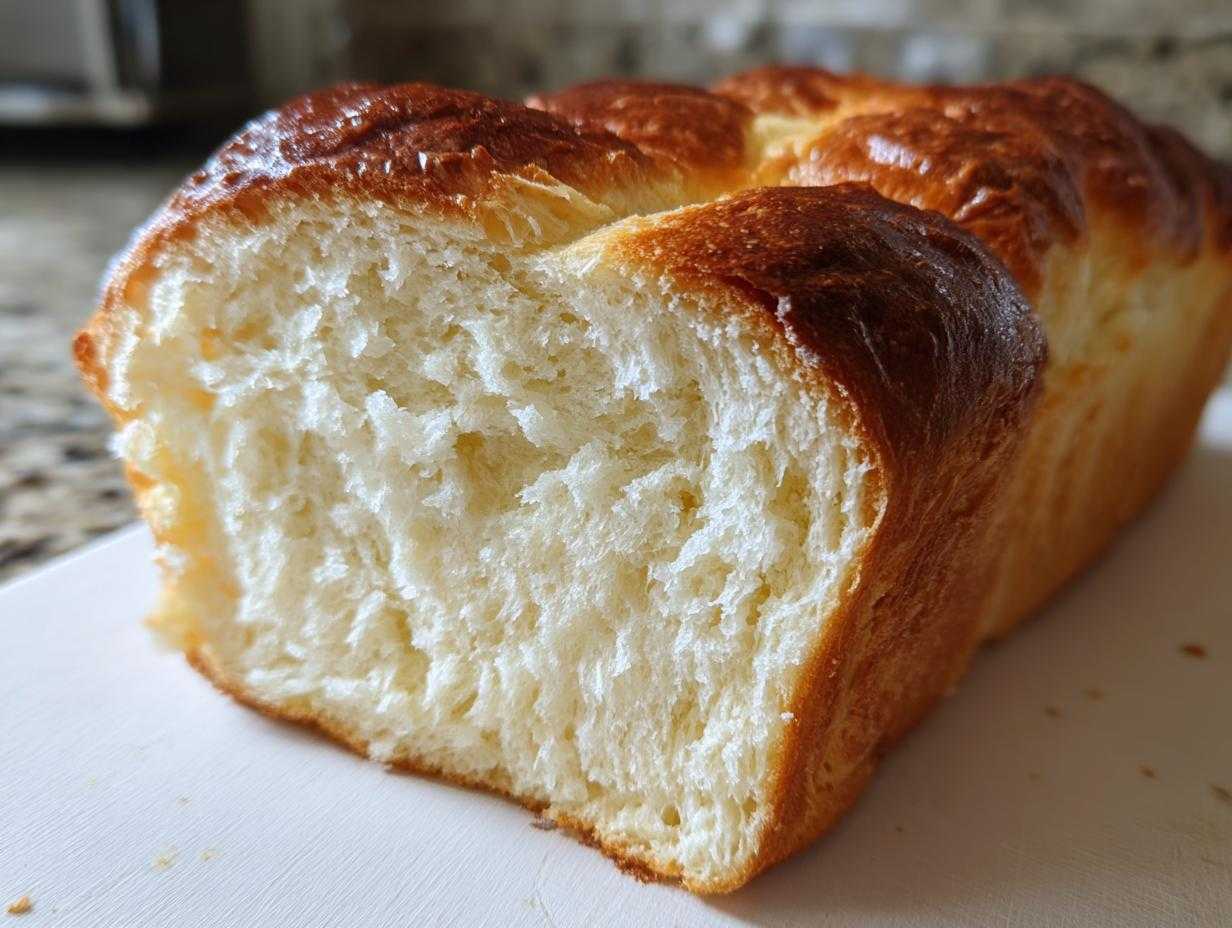
Forget everything you thought you knew about store-bought white bread. If you’ve ever dreamed of bread so soft it practically melts when you press it—that heavenly, pillowy cloud you only find in specialty bakeries—then you’re in the right place! I’m finally sharing my definitive, no-fail guide for making the best, most incredibly soft **milk bread** right in your own kitchen. We’re talking about true Japanese Shokupan here, and the secret weapon that makes it possible is the amazing **Tangzhong** method. I remember the first time I pulled that perfect loaf out of the oven; it was so light and springy, I nearly cried! Trust me, after you try this technique, you’ll never look back.
Why This Japanese Milk Bread Recipe Delivers Ultimate Fluffiness
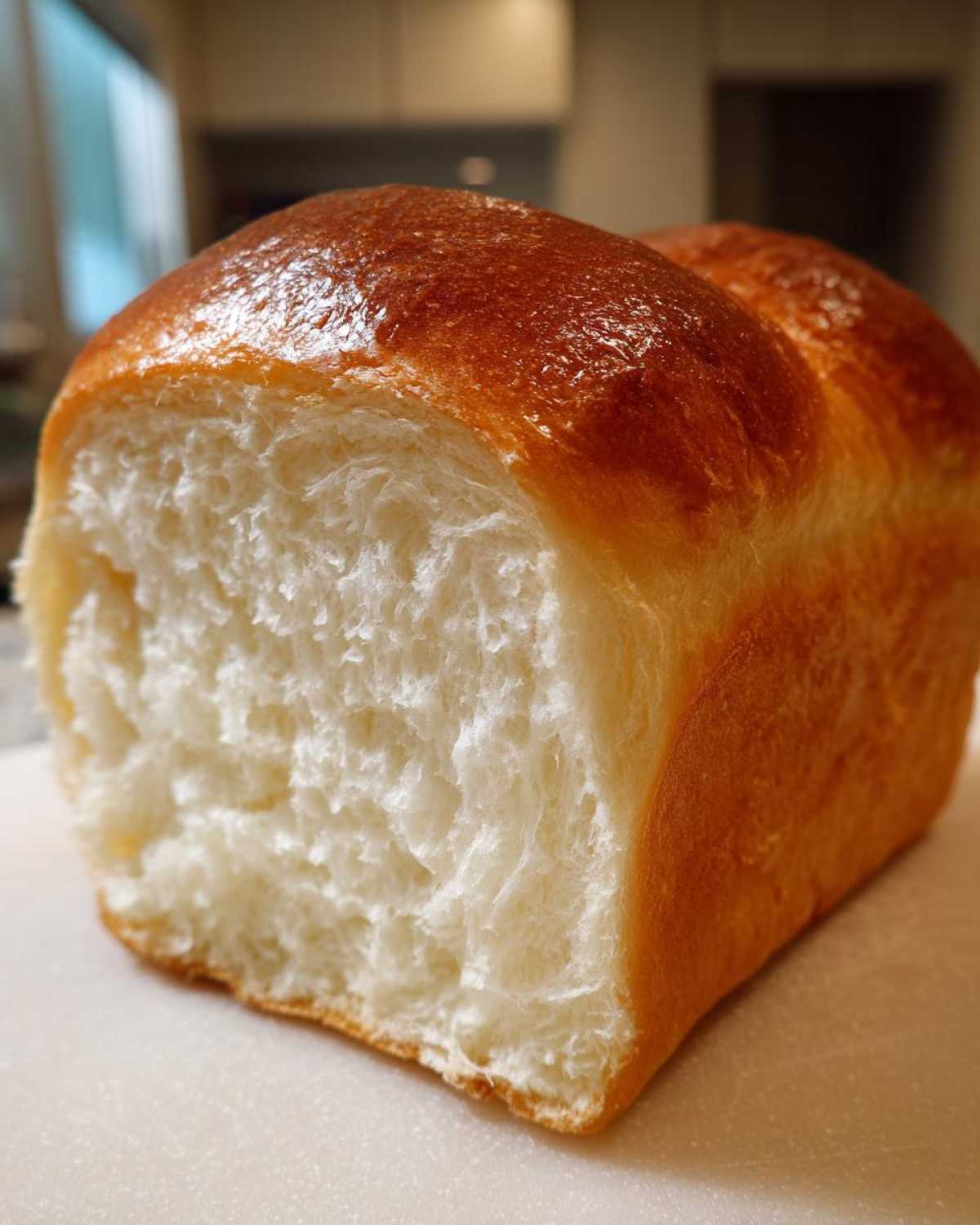
What makes this **milk bread** loaf so much softer than your everyday sandwich bread? Honestly, it’s all about controlling moisture before the dough even starts to come together. That’s why we rely on a highly technical but surprisingly simple step that guarantees a **tender crumb bread** that stays fresh for days. This isn’t just any enriched dough; it’s designed for maximum springiness and that signature light texture. When you achieve that perfect **pillowy soft bread**, you’ll realize the slight extra effort is 100% worth it.
The Magic of the Tangzhong Bread Method
So, what is this **Tangzhong bread method** everyone talks about? It’s actually super straightforward! You take a tiny bit of your flour, milk, and sugar, and you actually cook it on the stovetop first until it turns into a thick, gelatinous paste—almost like a very thin roux. This process basically pre-cooks the starches. When you add that cooled paste back into the main dough, those cooked starches can absorb way more water than raw flour can. That extra trapped water is what keeps your **milk bread** unbelievably moist and fluffy long after it leaves the oven.
Tips for a Fluffy Bread Recipe Every Time
Listen, even with the Tangzhong, you still need good technique. For the fluffiest results, make sure your butter is truly softened—not melted! If it’s greasy, it won’t incorporate correctly during the long kneading phase. Also, pay attention to that final proof. You want the dough in the pan to be gently puffy, reaching about an inch over the rim. If your kitchen is cold, don’t rush it; a slow, consistent rise is key to a beautiful, even crumb. If you want more ideas on different soft bakes, check out my tips on making soft fluffy naan bread!
Gathering Ingredients for Your Milk Bread Loaf
Okay, time to grab your bowls! Because this **milk bread** recipe relies heavily on the Tangzhong, the ingredient list is slightly longer than a regular white loaf, but don’t let that scare you off. We aren’t using complicated things here, just precise measurements. You need the ingredients for the Tangzhong starter first, which is mostly just a little bit of our main flour and milk.
Once that’s done and cooled, you’ll mix the rest of your main dough. Make absolutely sure that butter is soft—I mean, you can easily dent it with your finger, but it shouldn’t be oily or melted! Also, when it calls for whole milk in the main dough, use cold milk; it helps control the temperature during that long mixing process. We are aiming for the **best milk bread loaf**, and the quality of these ingredients ensures it!
- For the Tangzhong Starter: 60g Milk, 15g Bread Flour, 1g Granulated Sugar, 1g Instant Yeast
- For the Main Dough: 250g Bread Flour, 30g Granulated Sugar, 4g Salt, 6g Instant Yeast
- 120ml Whole Milk (must be cold)
- 40g Unsalted Butter (softened)
- 1 Large Egg
Step-by-Step How to Make Milk Bread Using Tangzhong
Alright, this is where the magic happens, but take a deep breath—it’s just following directions! We break this down into manageable chunks so you don’t get overwhelmed. The secret to getting that gorgeous, airy texture relies on getting the Tangzhong right, and then giving the dough enough time to develop its strength. My kitchen always smells heavenly by step five!
Preparing the Tangzhong Starter
First things first: the starter! Grab a small saucepan—I mean small, remember we’re only using 60g of milk here. Whisk together that milk, the portioned flour, sugar, and yeast. Turn the heat to low; I mean *low*. You need patience here. Stir it constantly until it thickens up into a real paste. Think really thick pudding. If you have a thermometer, pull it off right at 150°F (65°C). If you don’t, just watch for those thick ribbons it makes when you lift the whisk. Crucially, you must let this cool completely before moving on. If it’s even warm, it can mess with your yeast later on. Seriously, pop it in the fridge for 15 minutes!
Mixing and Kneading the Sweet Enriched Dough
Once that paste is cool, it’s time for the main event. In your mixer bowl, whisk those remaining dry ingredients together—the big flour portion, the rest of the sugar, salt, and yeast. Now, add the cooled Tangzhong, the cold milk, and the whole egg. Mix it low until it looks like a messy, shaggy clump. Then, you gotta add the butter. Once the butter is in, bump up the speed just a touch and let your mixer work for a solid 10 to 15 minutes. You are kneading until the dough feels smooth and passes the famous ‘windowpane test.’ You should be able to stretch a small piece thin enough to see light through it without it tearing. That elasticity is what gives us that incredible rise later!
Proofing and Shaping the Best Milk Bread Loaf
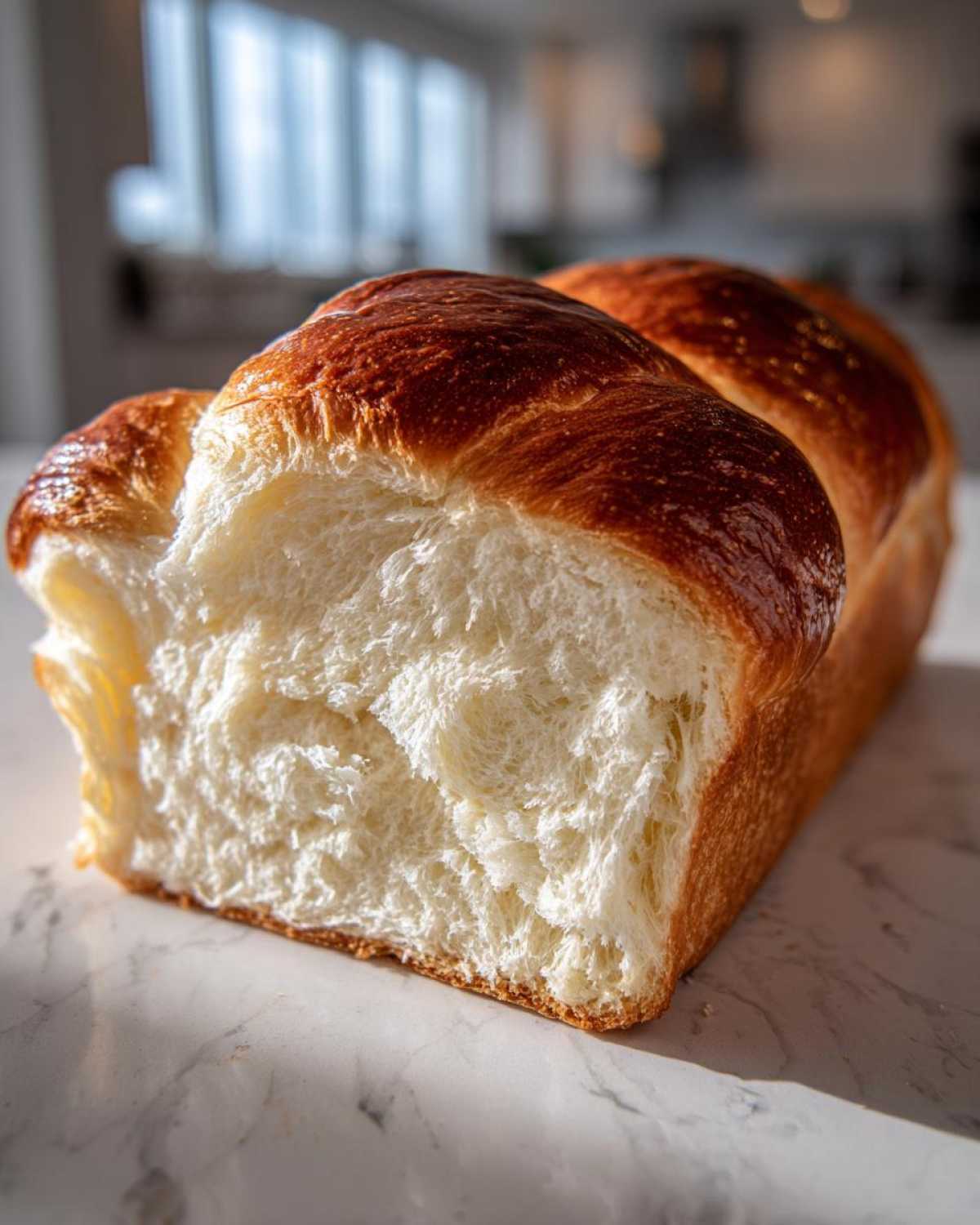
Once kneaded, lightly oil your bowl, tuck the dough in, and let it double. This usually takes about an hour and a half, but it depends on your kitchen temperature. When it’s doubled, punch it down gently—don’t destroy all that gas we worked so hard to build! Divide the dough into three equal pieces. Roll each piece into a smooth little ball and let them rest, covered, for just 15 minutes. This relaxes the gluten. Then, roll each ball into an oval and roll *that* up tightly into a log, sealing the seam. Place those three logs side-by-side, seam-down, into your greased loaf pan. Cover it up again for the final rise until it crests about an inch above the pan rim.
If you’re looking for a little bonus tip on avoiding sticky dough while you work with it, I shared my tried-and-true method for making quick homemade naan bread that gets super manageable!
Baking and Cooling Your Milk Bread
We’re so close to slicing into that beautiful, **pillowy soft bread**! This final stretch is crucial, so don’t wander off too far. First, you need to make sure your oven is ready. Preheat it to 175°C (350°F). We want a gentle heat to bake through without scorching that delicate top crust we worked so hard to achieve.
Once the oven is hot, slide that beauty in. It usually takes about 30 to 35 minutes. How do I know it’s perfectly done? I rarely just trust the color! While golden brown on top is a great sign, the real proof is in the internal temperature. Stick a proper thermometer right into the center—you are aiming for 93°C (200°F). Anything less and you risk a sunken middle; anything much more and you might lose some of that legendary tenderness.
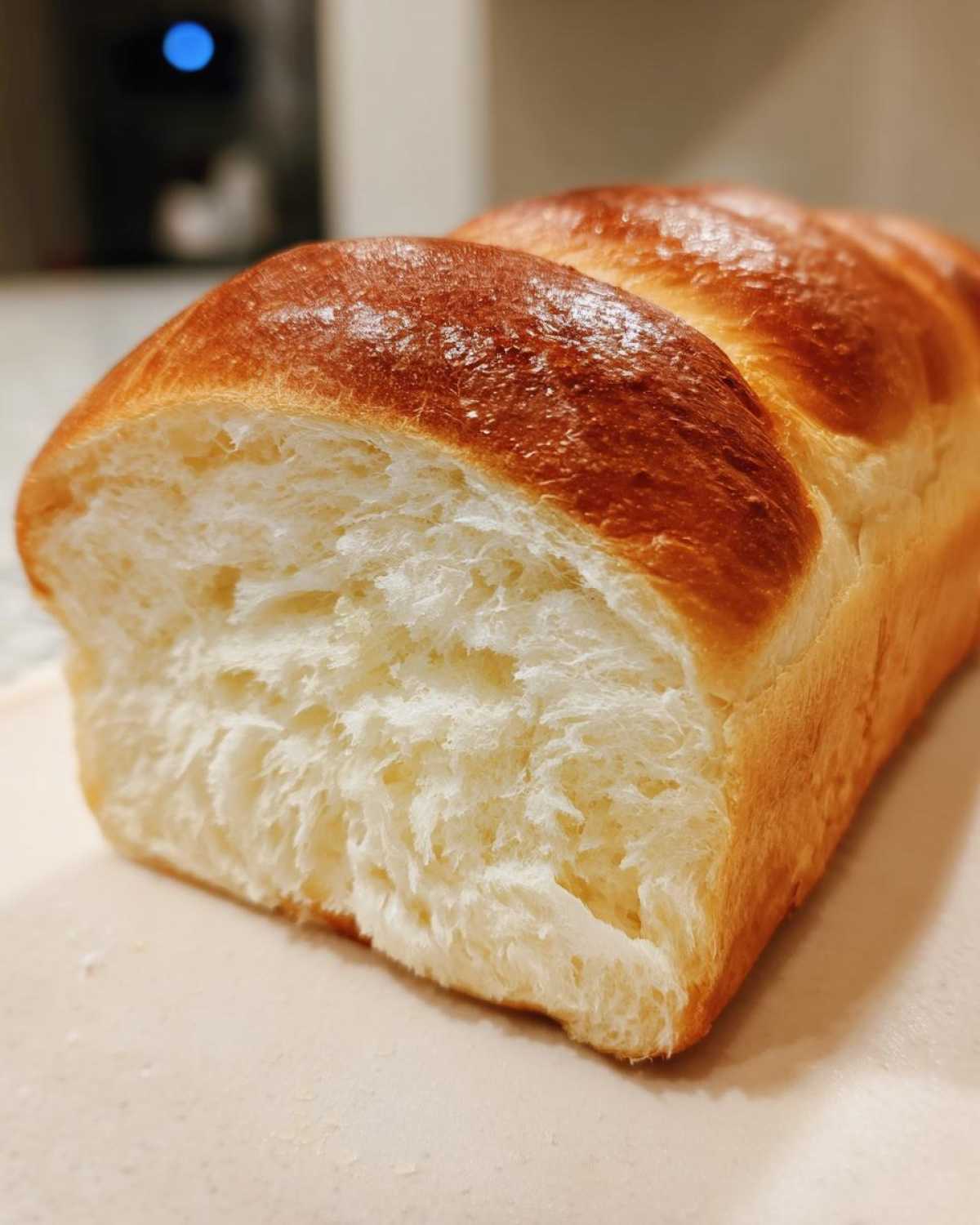
Here is the biggest non-negotiable step, my friends: As soon as it hits that temperature, you have to get it out of the pan immediately! Don’t let it sit in there warming up. If you leave this rich, moist **milk bread** in the hot metal loaf pan, the residual heat will continue to steam the sides and bottom, and you’ll end up with a slightly damp, sticky crust. Nope! Turn it out right away onto a wire cooling rack. That open air circulation around all sides lets it breathe and sets that perfect crust. And please, promise me you’ll let it cool completely before you even *think* about slicing it. Cutting into this **fluffy bread recipe** while warm is just asking for a gummy mess where the crumb collapses. Patience, my budding baker!
Ingredient Notes and Substitutions for Milk Bread
Grandma always said that even the most straightforward recipes deserve a couple of personal touches for that extra ‘wow’ factor. Since this **milk bread** is so tender, small variations in the richness really shine through. Don’t feel constrained by the basic list—these notes are just my personal attempts to make the loaf even better for special occasions!
You’ll see in the instructions that we bake the loaf plain, but if you want that gorgeous, professional-looking sheen on the crust, you absolutely must try an egg wash. It’s so simple: just whisk one egg yolk together with just a tiny splash—maybe a teaspoon—of milk. Brush that mixture lightly over the top of the dough just before it goes into the oven. It gives the final **Shokupan recipe easy** a beautiful, deep golden, bakery-style finish. It’s an optional step, but wow, does it make a difference!

Also, let’s talk about richness. This is a **buttery bread recipe** already, but if you want to lean into that richness for decadent weekend slices, you can swap a little of the required cold whole milk for heavy cream. I usually substitute about a quarter cup of the milk with cream. It makes the dough feel a little heavy during mixing, but that extra fat just translates into an even more luxurious crumb. It’s wonderful when you plan on freezing slices for later toast, too!
Serving Suggestions for Your Fluffy Bread Recipe
Okay, so you’ve wrestled the **milk bread** loaf out of the pan, heard that delightful *thunk* as it cools on the rack, and now you know you’ve created something truly special. The best part about this **fluffy bread recipe** is that it’s almost *too* good for complex recipes! Because the texture is already so soft and inherently buttery, the simplest preparations let that beautiful crumb shine through. You don’t need much to dress this loaf up!
Obviously, the number one use has to be for sandwiches. Forget flimsy supermarket bread; this **homemade sandwich bread** holds up beautifully without squishing entirely, yet it’s soft enough that you don’t need to press hard when eating. Think about grilled cheese—my favorite way to enjoy the leftovers when they’re a day old! The bread toasts up perfectly golden on the outside while staying incredibly tender inside. It’s the absolute best start to any lunch.
But don’t stop at lunch! This enriched dough loaf is fantastic for breakfast too. A thick slice, lightly toasted, with just a smear of good quality butter and maybe a tiny drizzle of honey? Heaven. It has a slight natural sweetness from the fermentation and sugar, so it works wonderfully as a quick snack bread or even used in place of brioche for French toast—though you might want to use slightly less soak time since it’s already so moist!
If you happen to have a small batch leftover or made mini rolls instead of a loaf, these are fantastic when brushed with garlic butter and served alongside dinner. They are superb for soaking up sauces! Need some garlic bread inspiration? I have a great basic recipe for homemade garlic breadsticks that you could adapt beautifully using slices of this **soft homemade bread**.
Storage and Reheating Instructions for Milk Bread
We did all this work to achieve ultimate softness, so let’s make sure that softness lasts! This is where the **Tangzhong bread method** really pays off because it forces the bread to hold onto moisture much longer than standard loaves. But even the best **milk bread** eventually dries out if you leave it sitting on the counter unwrapped.
For daily eating, say for the next two or three days, I just keep mine in a good quality zip-top bag, pressing out as much air as possible before sealing it shut. Keep it on the counter, not in the fridge! Refrigeration is the enemy of soft bread—it makes it stale faster, even if it stays technically safe to eat longer. The little bit of moisture leftover from the Tangzhong should keep it perfect for a few days.
Now, if you know you’re not going to devour the whole loaf in that time frame, or if you happen to have some extra baked-off rolls, you absolutely must freeze it. This is what I do every time! The recipe notes mentioned that this bread freezes well, and they aren’t kidding. The trick here, as I mentioned before, is to slice the cooled loaf *entirely* before you wrap it. You can wrap the slices together in plastic wrap, and then tuck that whole bundle into a freezer bag or an airtight container. This way, you can just grab two or three slices whenever you want toast!
When you are ready to enjoy those frozen slices, don’t just let them thaw; reheat them! You can pop them straight from the freezer into the toaster—they toast beautifully, though maybe on a slightly lower setting. Or, if you want to bring back that fresh-out-of-the-oven springiness, toss that frozen slice onto a baking sheet in a 325°F (160°C) oven for about 5-7 minutes. It warms right up, and that **pillowy soft** interior returns! If you’re looking for other breads that freeze well, check out how I handle storing my fluffy naan bread!
Frequently Asked Questions About Making Milk Bread
I know this recipe has a few extra steps with that Tangzhong, so it’s totally normal to have questions before you start. This is hands-down one of the most rewarding **beginner bread recipes soft** recipes once you get the hang of it, but we have to troubleshoot the common hiccups so you can succeed on your first try!
Can I use the Yudane method instead of Tangzhong for this Milk Bread?
Yes, you absolutely can! They are cousins in the world of fluffy bread. The Tangzhong cooks the flour with milk, but the Yudane method simply scalds the flour with hot water instead. It achieves a very similar result by gelatinizing the starch, which lets the dough hold onto moisture. If you use the Yudane method, just be sure to adjust your total milk/water needs slightly, as the ratios are different when using water versus milk in the initial scald. Either way, you’re guaranteeing a beautiful **Shokupan recipe easy** result!
My Milk Bread loaf did not rise well. What went wrong?
Oh, the dreaded flat loaf! Don’t get discouraged; this is usually temperature or dead yeast. First, check your yeast. Was it new? Did you accidentally add hot liquid to it before the Tangzhong cooled? Yeast hates heat! Second, check your kneading. If the dough didn’t pass that windowpane test, it didn’t develop enough gluten structure to trap those rising gases. You need that elastic network to hold the shape. Finally, proofing boxes aside, make sure your warm spot is actually warm, not hot. Slow, steady warmth is the secret sauce for a great rise.
What is the best way to slice this Pillowy Soft Bread?
This is crucial advice for any **milk bread** lover: You must, must, *must* let it cool completely before slicing. I know the smell is driving you crazy, and you want that first glorious slice immediately, but if you cut it warm, that beautiful, airy crumb—the one we worked so hard for—will tear, compress, and stick to the knife, giving you a gummy texture. Don’t let that happen! Wait until it’s totally cool to the touch, then use a long, sharp, serrated bread knife. Use a gentle sawing motion rather than pressing down hard. That way, you preserve every bit of that **pillowy soft** airiness!
Share Your Milk Bread Success
Seriously, now it’s your turn! I’ve shared every nerdy detail I know about achieving that cloud-like texture, from managing the starches in the **Tangzhong bread method** to making sure you pull it out of the oven at the exact right moment. Now that you’ve mastered **how to make milk bread**, I want to hear about it!
Did it pass the squish test? Did your family devour the entire loaf before you even got a chance to make toast? Drop a rating down below! Knowing that this recipe brings that incredible, **bakery style bread at home** feeling to your kitchen makes all the testing and writing worth it. Don’t forget to snap a picture of your beautiful, tall loaf and tag me when you share it online. I love seeing everyone’s **milk bread** creations. Happy baking, everyone!
Print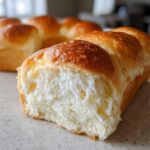
Fluffy Japanese Milk Bread (Shokupan) with Tangzhong
- Total Time: 2 hr 40 min
- Yield: 1 loaf
- Diet: Vegetarian
Description
This recipe produces extremely soft, pillowy Japanese Milk Bread using the Tangzhong method for a tender crumb perfect for sandwiches or toast.
Ingredients
- 60g Milk
- 15g Bread Flour
- 1g Granulated Sugar
- 1g Instant Yeast
- 250g Bread Flour
- 30g Granulated Sugar
- 4g Salt
- 6g Instant Yeast
- 120ml Whole Milk (cold)
- 40g Unsalted Butter (softened)
- 1 Large Egg
Instructions
- Prepare the Tangzhong: Whisk 60g milk, 15g bread flour, 1g sugar, and 1g yeast in a small saucepan. Heat over low heat, stirring constantly until the mixture thickens to a paste (about 65°C or 150°F). Remove from heat and let it cool completely.
- Combine Dry Ingredients: In a large bowl or stand mixer, whisk together 250g bread flour, 30g sugar, 4g salt, and 6g yeast.
- Mix Dough: Add the cooled Tangzhong, 120ml cold whole milk, and the egg to the dry ingredients. Mix on low speed until a shaggy dough forms.
- Knead: Increase speed to medium-low and knead for 5-7 minutes until the dough starts to come together.
- Add Butter: Add the softened butter. Continue kneading for another 10-15 minutes until the dough is smooth, elastic, and passes the windowpane test.
- First Proof: Place the dough in a lightly oiled bowl, cover, and let it rise in a warm place until doubled in size (about 1 to 1.5 hours).
- Shape: Gently deflate the dough. Divide it into three equal pieces. Roll each piece into a tight ball. Let them rest for 15 minutes, covered.
- Final Shaping: Roll each rested ball into an oval shape. Roll each oval tightly into a log. Place the three logs side-by-side in a greased 9×5 inch loaf pan, seam-side down.
- Second Proof: Cover the pan and let it proof again until the dough has risen about 1 inch above the rim of the pan (about 45-60 minutes).
- Bake: Preheat your oven to 175°C (350°F). Bake for 30-35 minutes, or until the top is golden brown and the internal temperature reaches 93°C (200°F).
- Cool: Immediately remove the bread from the pan and cool completely on a wire rack before slicing.
Notes
- For an extra shiny crust, brush the top of the loaf with a mixture of 1 egg yolk and 1 teaspoon of milk before baking.
- If you prefer a richer flavor, substitute 1/4 cup of the milk with heavy cream.
- This bread freezes well. Slice before freezing for easy toast portions later.
- Prep Time: 30 min
- Cook Time: 35 min
- Category: Baking
- Method: Baking
- Cuisine: Japanese
Nutrition
- Serving Size: 1 slice
- Calories: 160
- Sugar: 6
- Sodium: 180
- Fat: 4
- Saturated Fat: 2
- Unsaturated Fat: 2
- Trans Fat: 0
- Carbohydrates: 27
- Fiber: 1
- Protein: 5
- Cholesterol: 30



Comments are closed.